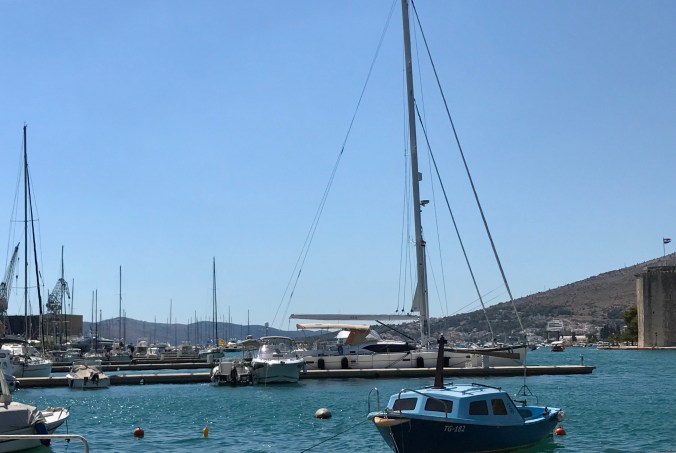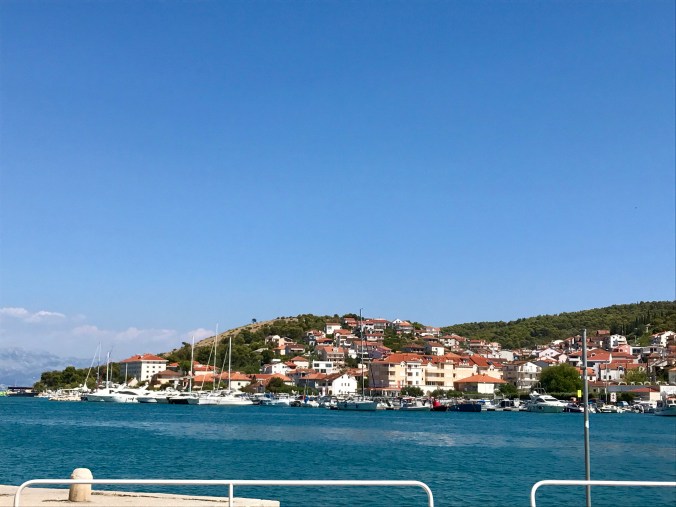
Goodbye to Croatia

. . . and to the Mediterranean.

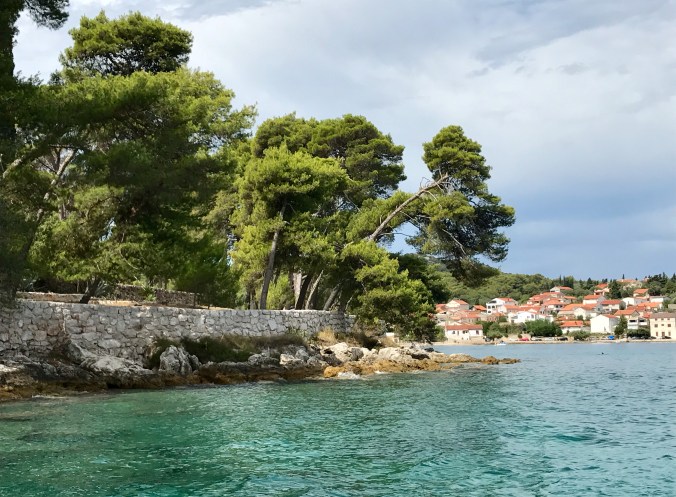
No amount of time would be enough to make me insensitive to the beauty of this place, or of the many other spectacularly beautiful  places we have visited over the past two months. There was not a single one we were not sorry to leave. But without leaving, there is no chance to arrive! 🤔

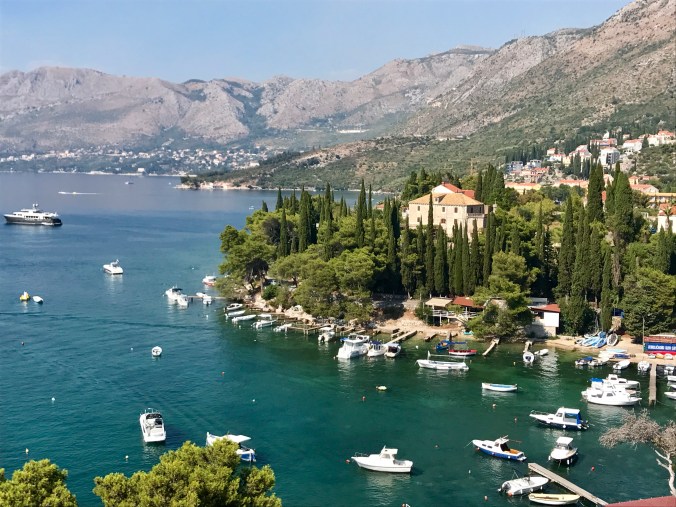
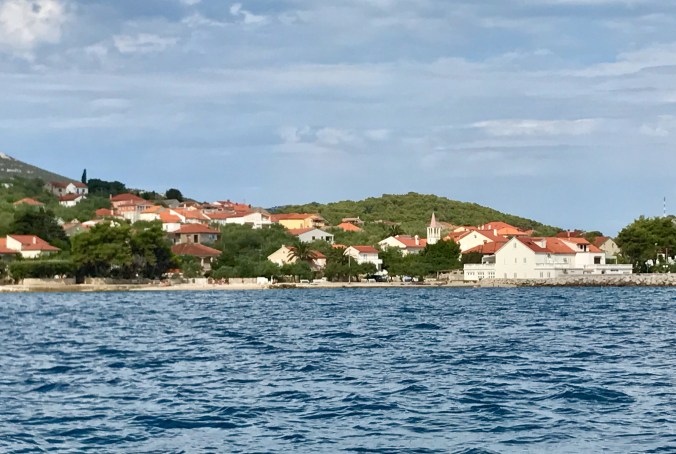
I am writing this from the balcony of our hotel in Cavtat.  Here is our view of the Adriatic, now my favorite sea.

IMG_3253

Tonight, an early dinner.

Tomorrow . . .

Montenegro

IMG_3005

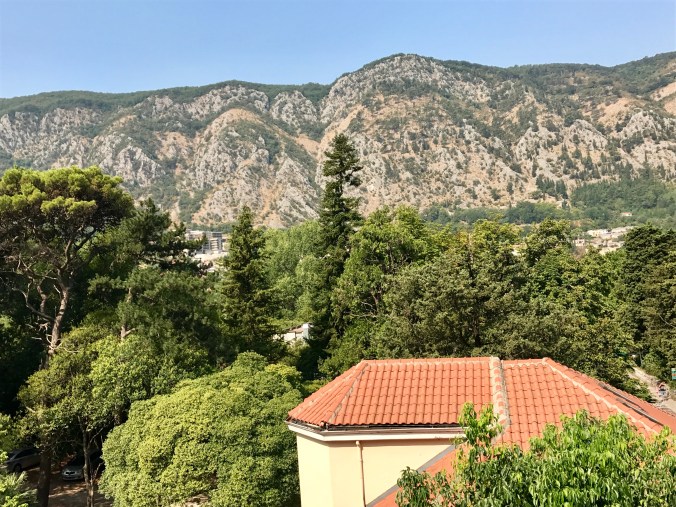
While Jay was planning our trip, I read an article about Kotor, Montenegro,  It was described as beautiful, remote, and on the brink of being taken over by luxury resorts catering to Russian billionaires. So it seemed like a good time to go.

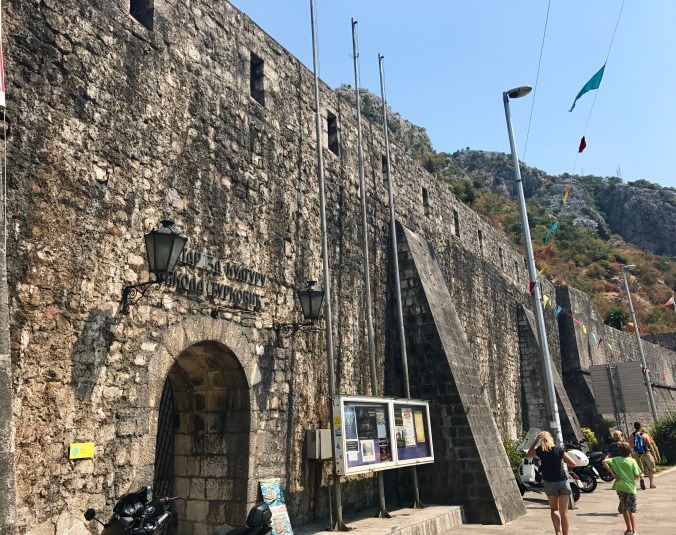
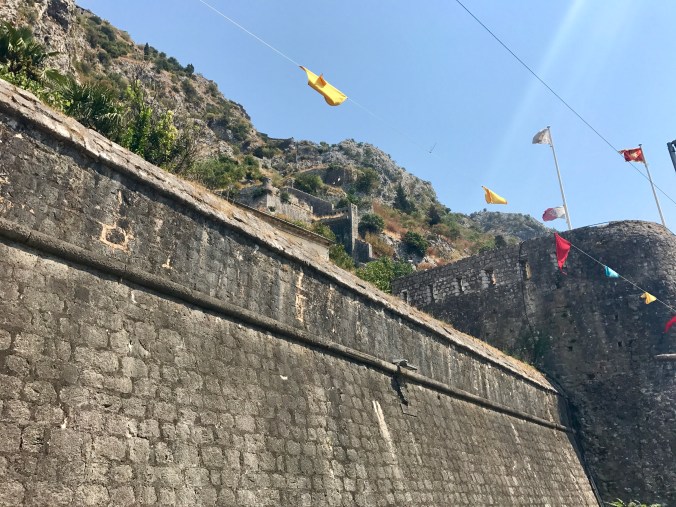
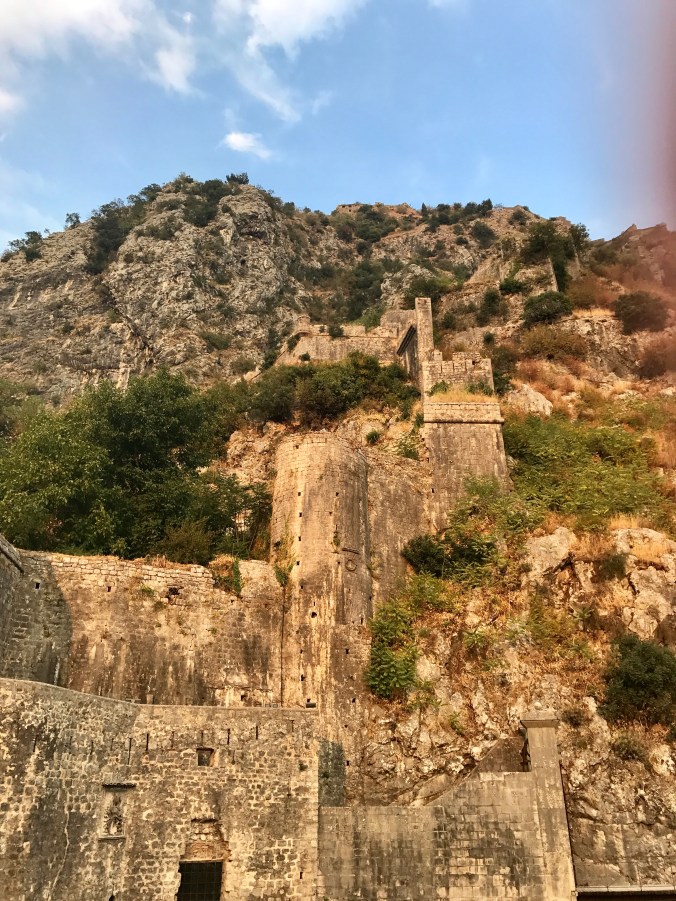
Kotor is a classic example of a fortified town. It is surrounded by a wall that extended to the Adriatic on one side, and by a wall built into the mountain and going up to the peak on the other. Here’s the wall  that faces the sea:

IMG_3217

IMG_3220

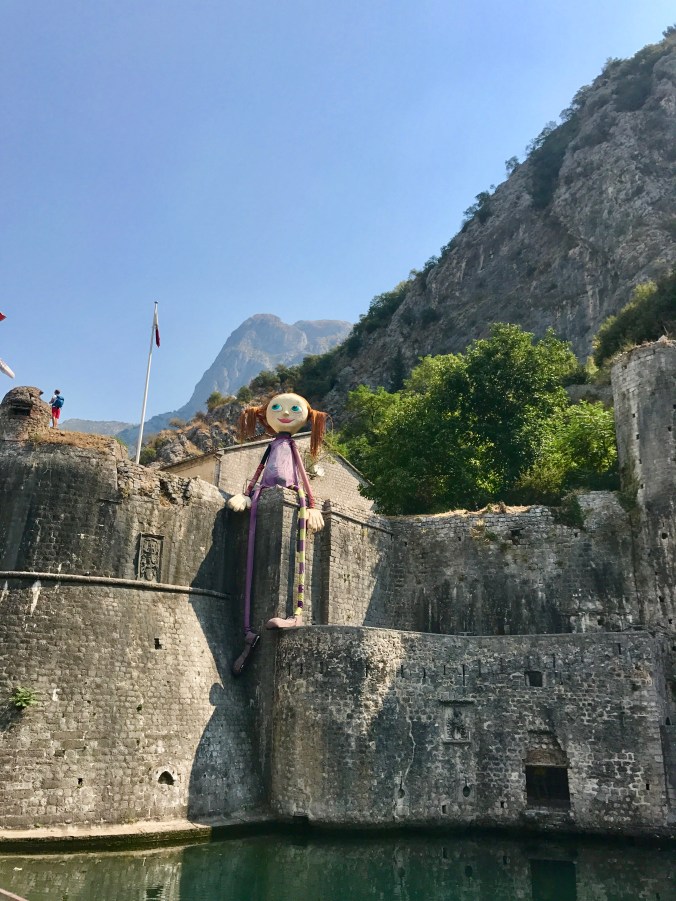
On the day we arrived, the city was being guarded by Pippi Longstocking.

IMG_3026

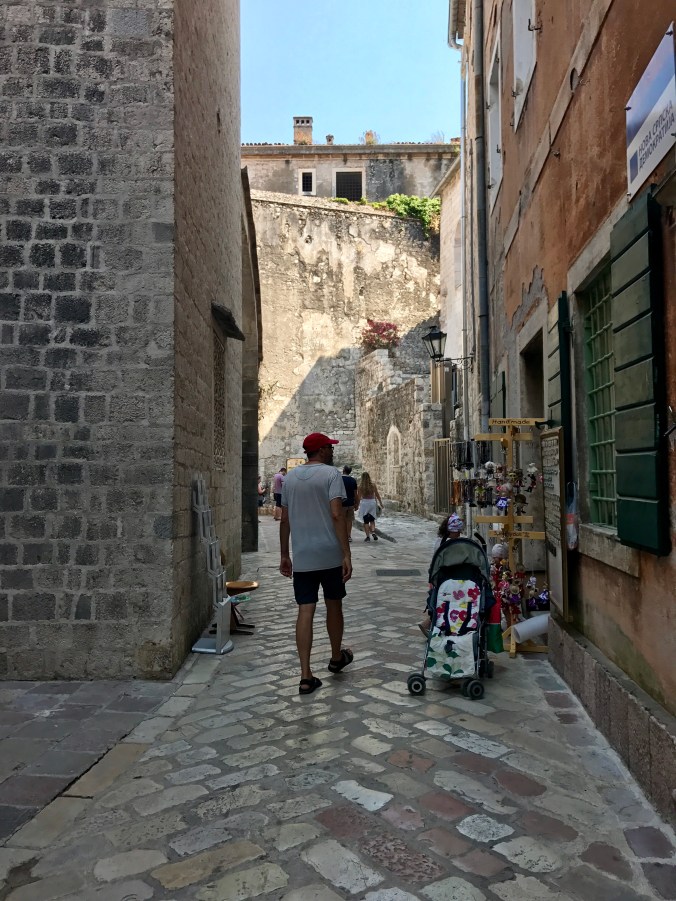
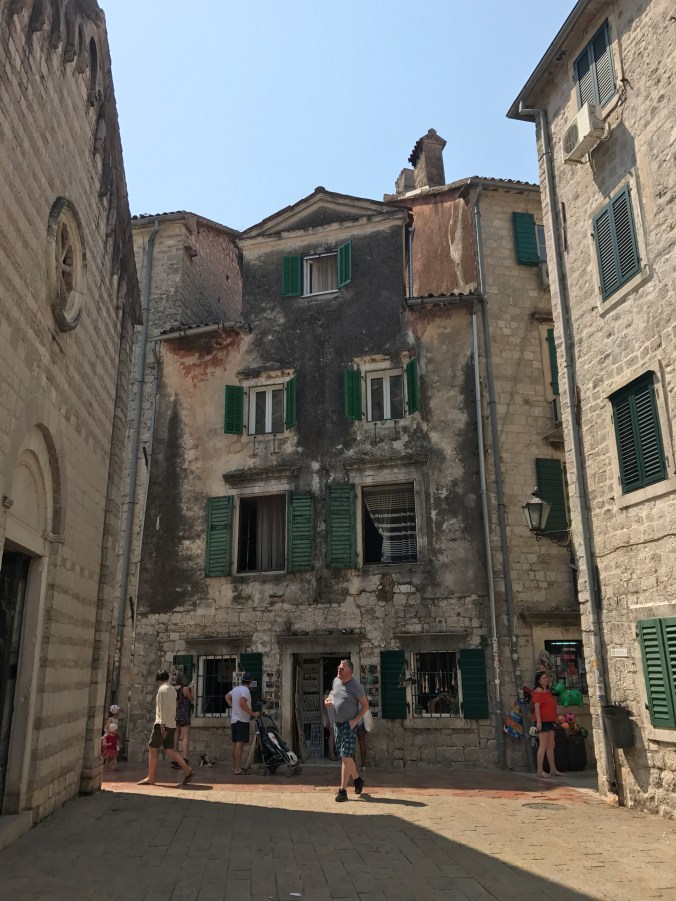
Entering through one of two gates we found the maze of streets that is Kotor

IMG_3044

IMG_3060

IMG_3038

IMG_3042

IMG_3049

IMG_3224

IMG_3073

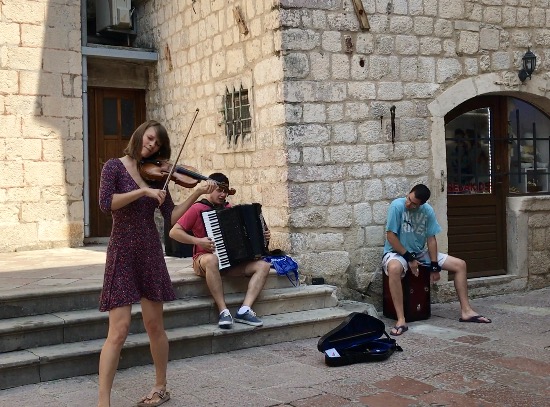
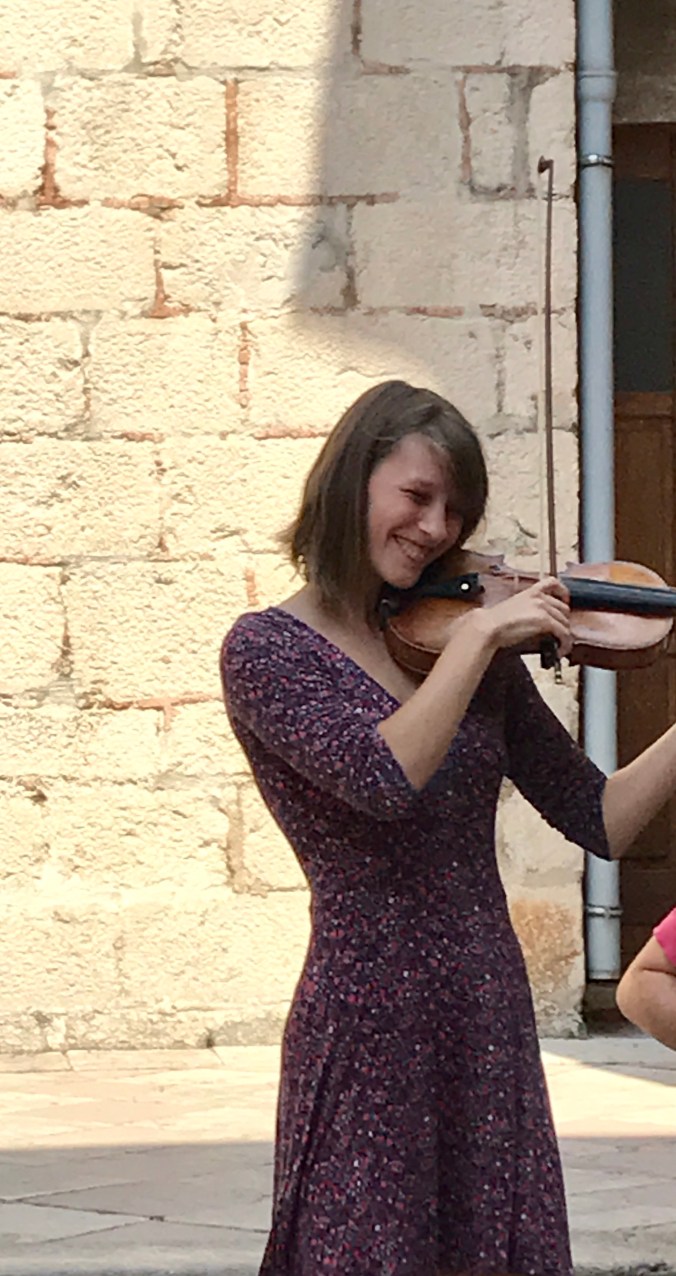
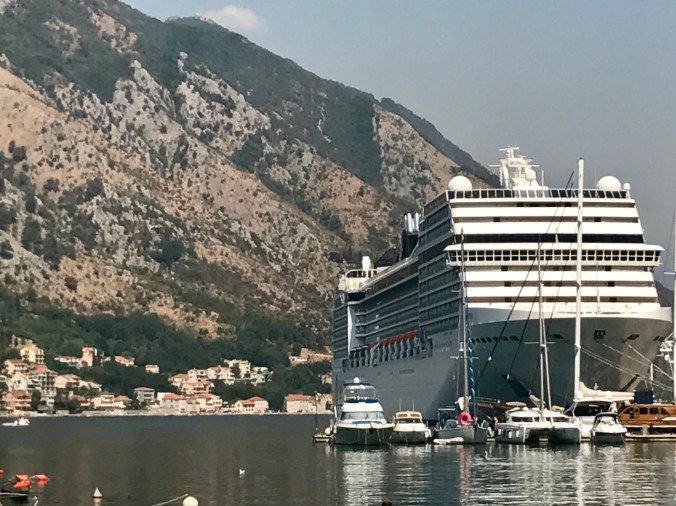
We we’re in town by 10;00  to avoid the crush of cruise passengers. We wandered,  listened to some fantastically energetic street musicians, had a bite, and headed back to our hotel in the early afternoon, passing this behemoth on the way. Note the size in comparison to the other boats. And the mountains.

IMG_3018

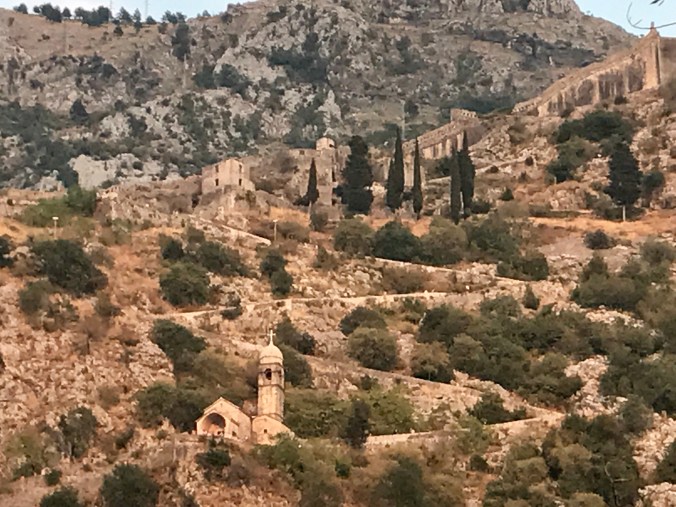
We returned later for dinner and a short walk up the first steps along Kotor’s other defensive wall, this one designed to deter invasions from the side or from over the mountains to the rear of the city.

IMG_3101

In this picture you can see the castle.

IMG_3095

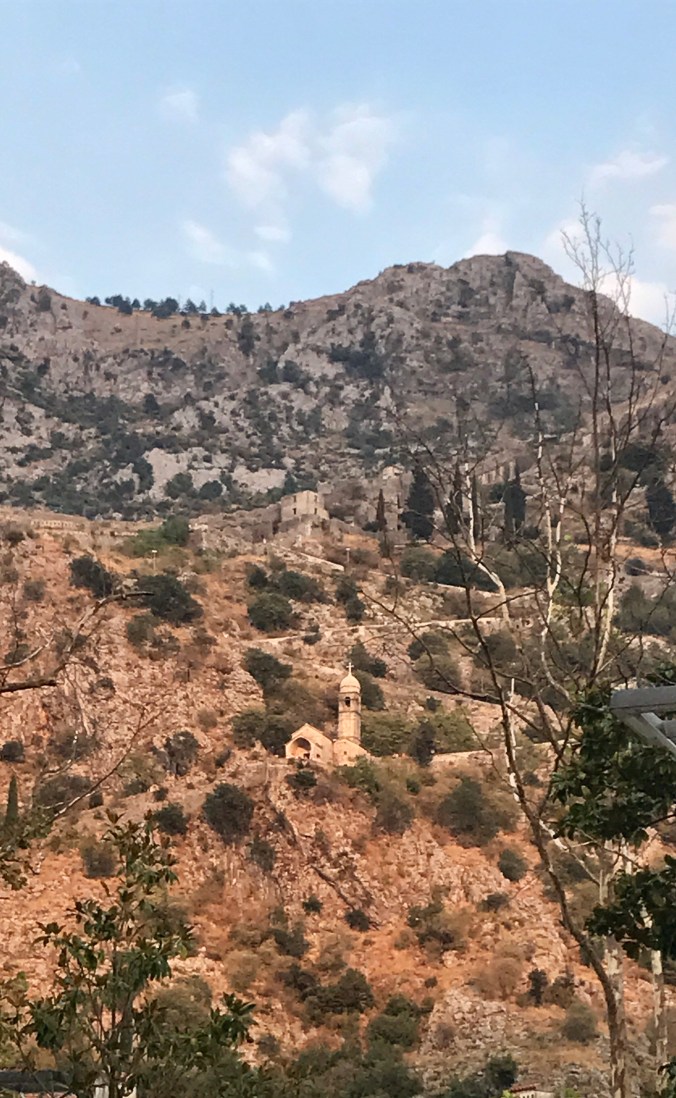
Another view. The church is Our Lady of Remedy, built in 1518 to mark the end of the Plague.

IMG_3099

It’s hard to capture the scale of these walls. The wall in the mountains is nearly three miles long and sits on sheer rock face. The sea wall is similarly massive. But it was all worth it  – Kotor was protected from many attacks, including a two month siege by the Ottomans in 1657.  In the 16th century, at least, it seems like walls were  the way to go.


The Dragon’s Cave

IMG_2935

This excursion gets its own post because it was just that amazing.

The Dragon’s Cave is accessible only by hiking up a steep trail, with the one person in Croatia who has the key. Our guide, Zoran Kojdic, has been guarding, and guiding people through this cave, for 17 years.

We rose at 6:00 and drove to Split, an hour away, to catch the 7:30 a.m. catamaran to the island of Brac, where Zoran picked us up.

Our first stop was the old house of his grandparents, who now live with him and his family on the island.  This was Zoran’s home for the first five years of his life and   he remembers that time with great fondness.
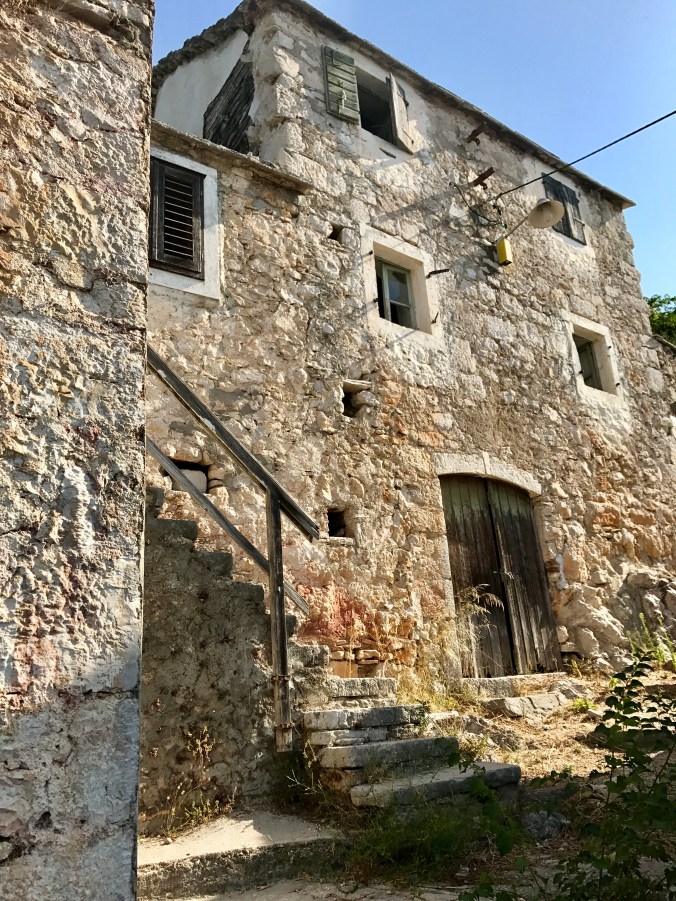
IMG_2901

A nearby house with a new red roof faces the one remaining wall of an old house.
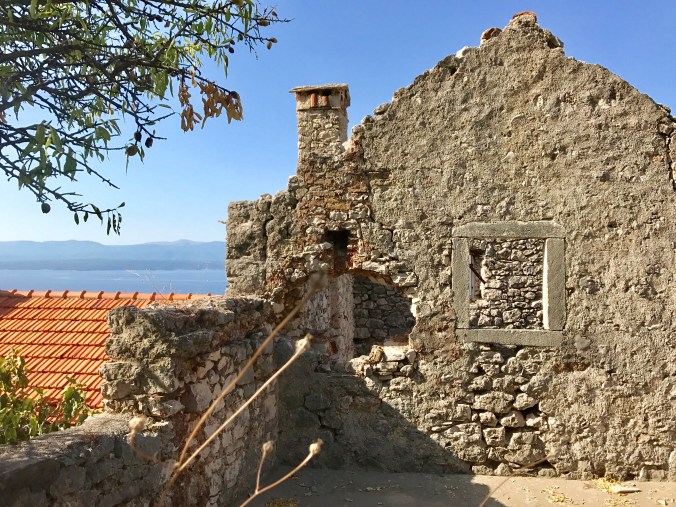
IMG_2905

We were now on our way to the cave. There are two paths to the cave, one quite steep, and one longer and less difficult. I was not sure how I would do on the steep  path. But unlike the longer path, it is mostly shaded, and given the heat (94 degrees at 9:30 in the morning) Zoran encouraged us to take it, so we did.
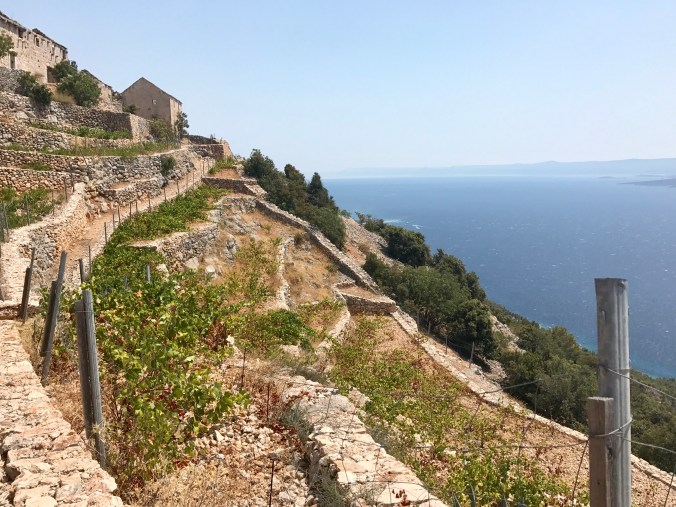
IMG_2945

It was a very difficult climb for me, close to an hour with many stops to catch my breath, but we made it.
IMG_2913

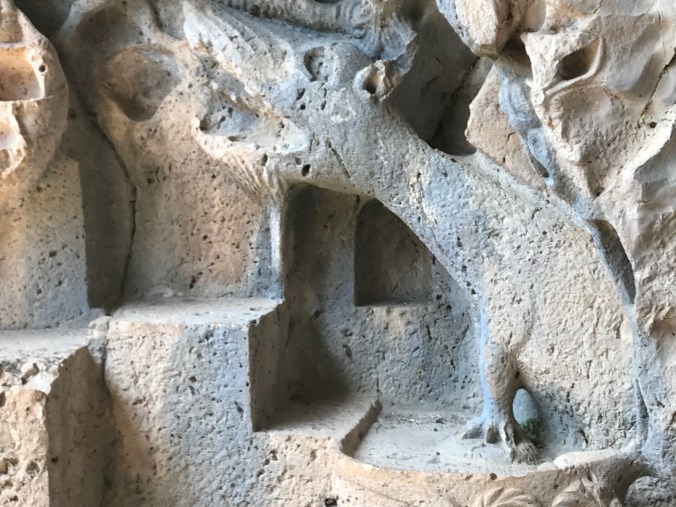
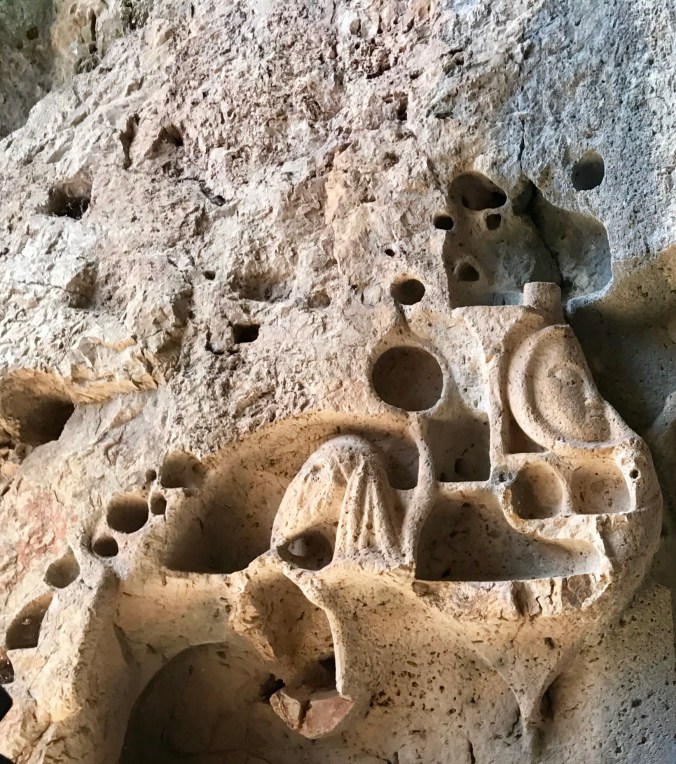
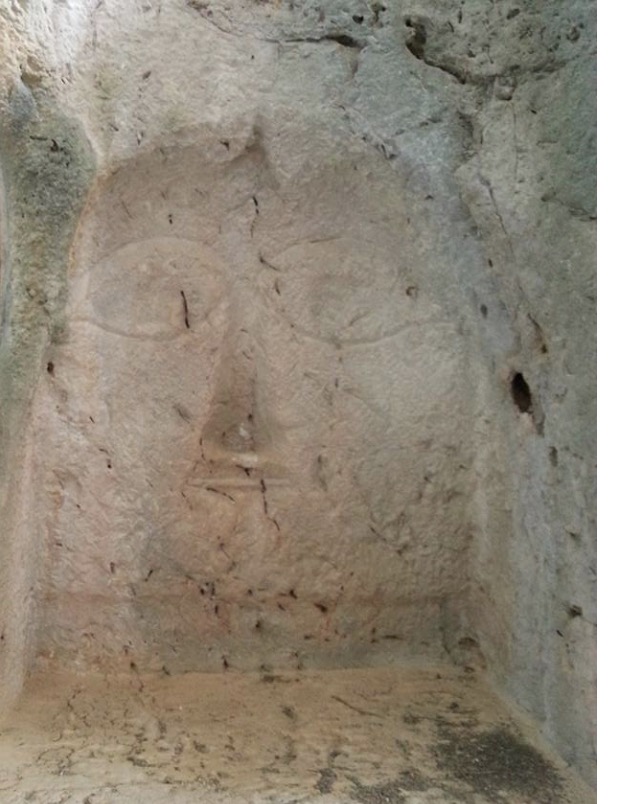
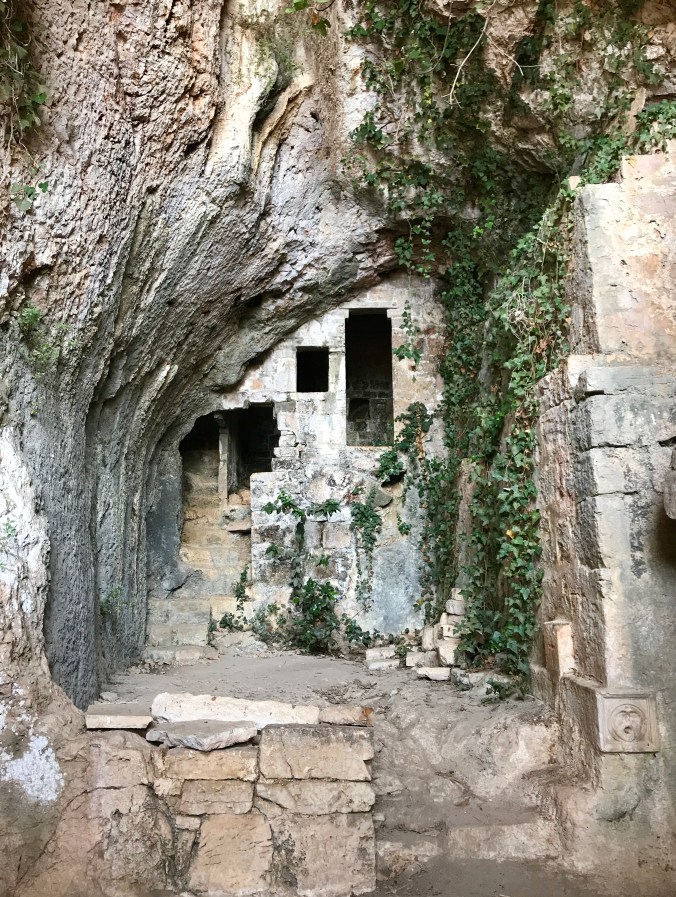
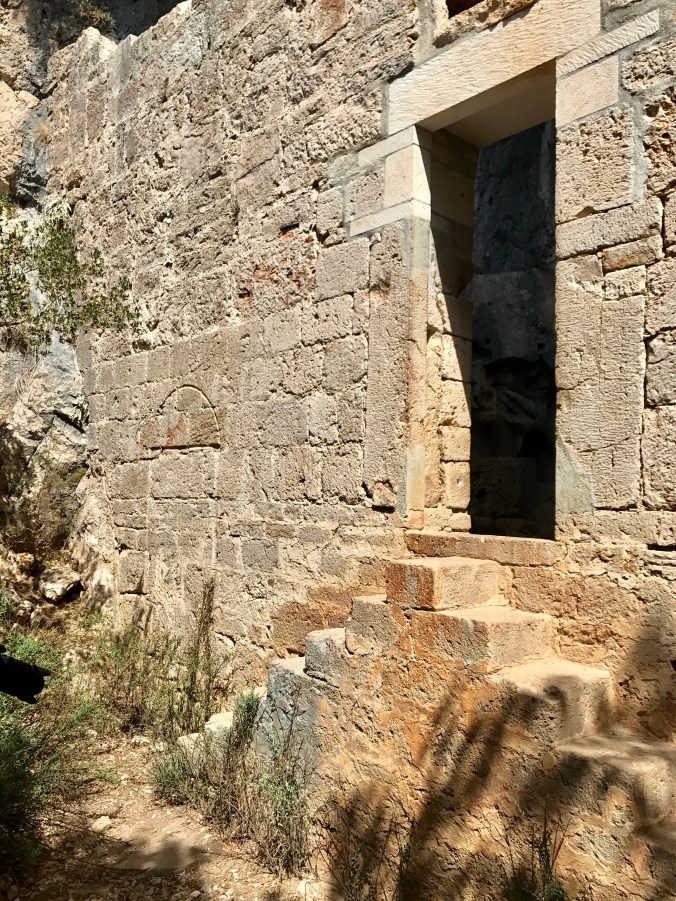
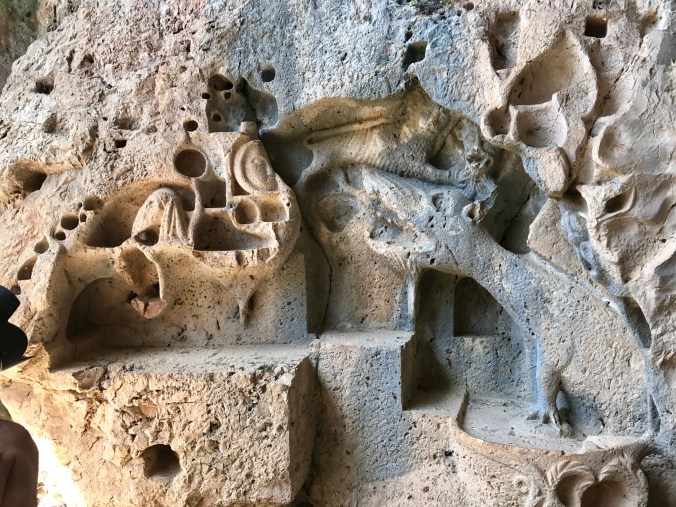
As we entered, Zoran explained to us that the Dragon’s Cave is a place that has been claimed by archeologists and by theologians. That is, there are competing explanations for the age of the carvings in the cave, who made them, what they mean, and so on. What is known is that the cave was used by monks in the 15th century. Archeologists, however, point to evidence that some of the carvings are as much as 1000 years older than that, and they suggest that these carvings were made by religious hermits who lived in the cave in isolation over a period of years.

Here are a few of the wonders of the cave.
IMG_2931

IMG_2941

IMG_2931

IMG_2986

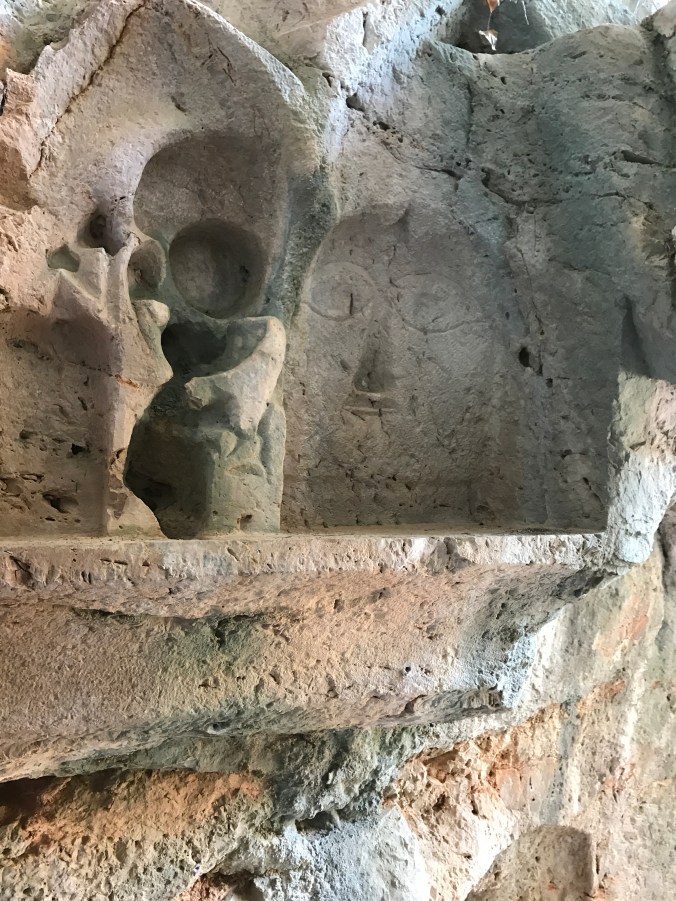
Here’s a carving that I immediately responded to, to Zoran’s surprise.
IMG_2927

What I said was  “It’s the Virgin Mary and baby Jesus”. What made me say this was the position of the two heads – the small one to the left of the larger one was so recognizable. Zoran was clearly impressed. I said: “I’ve seen a lot of the Virgin Mary and baby Jesus in the last two months”.

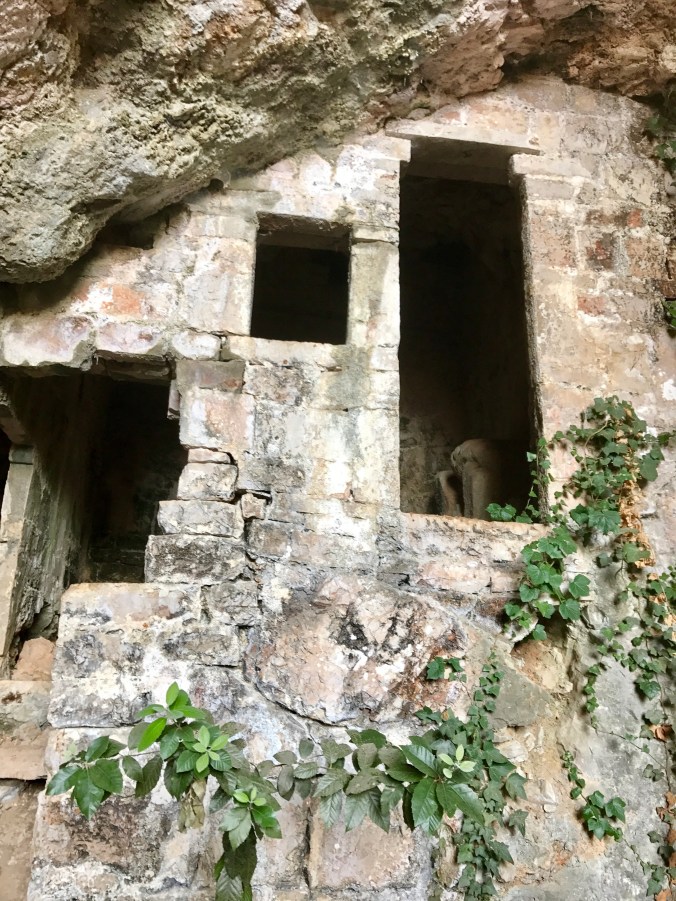
Below, one of several small chambers that may have been used for meditation or prayer.
IMG_2917

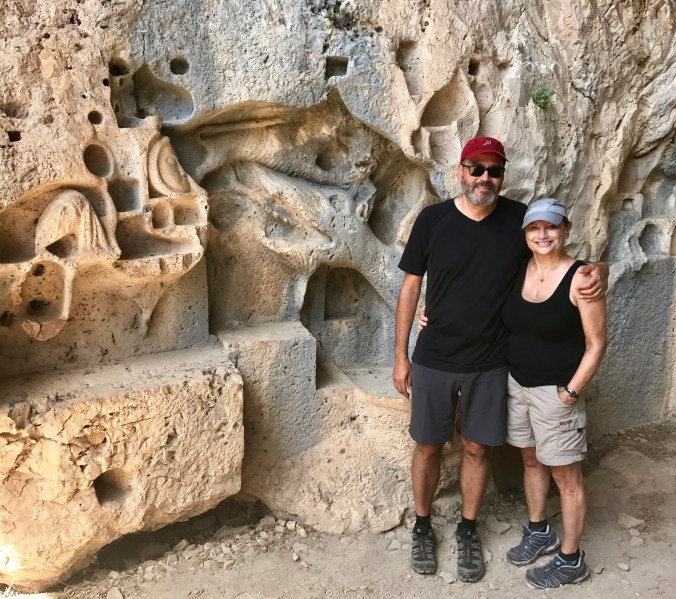
This is a very very special place.

The descent was long and hard, we were exhausted, and we had hours of travel ahead of us to get back to Trogir.

It was all totally worth it.
IMG_2933

IMG_2945

Trogir

IMG_2894

IMG_2892

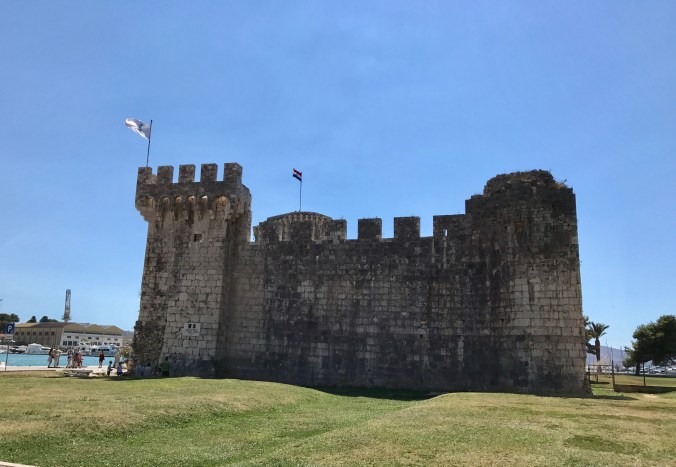
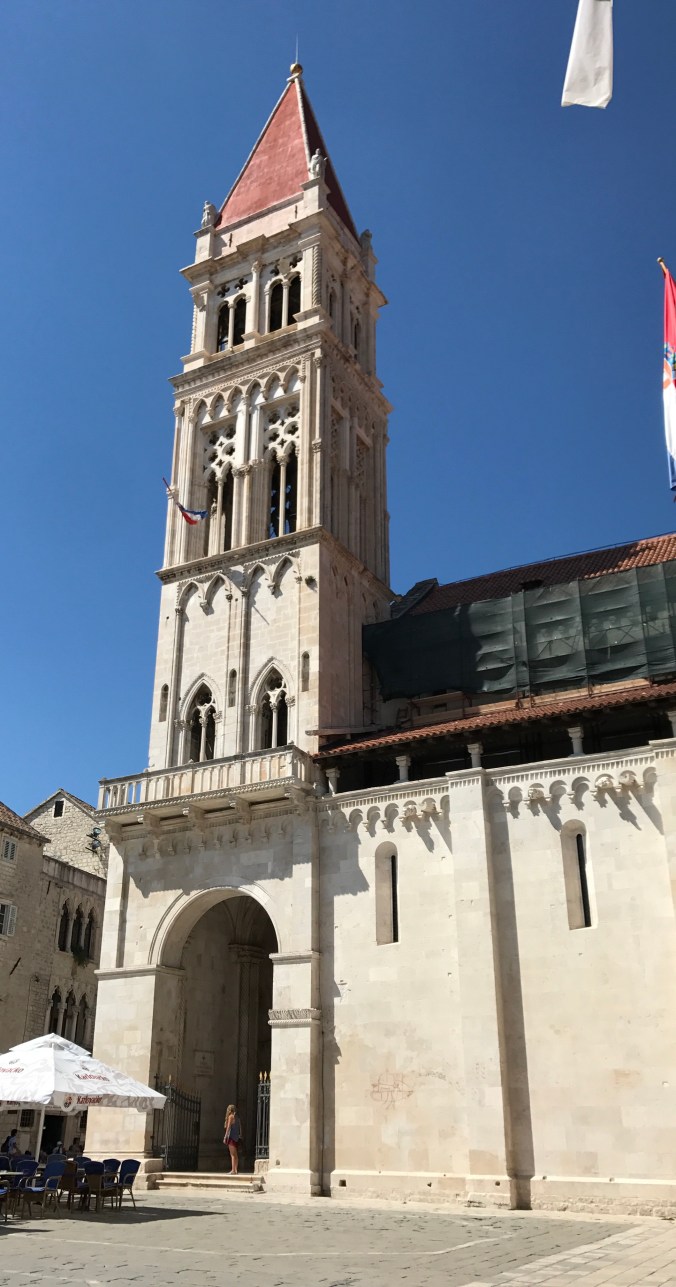
We arrived on Tuesday afternoon in Trogir, a lovely seaside town with what have come to be the familiar Roman ruins. I must admit that Jay and I have become a bit blasé  about Roman ruins. But here are the local castle and the local Cathedral

and here’s what’s across the street from our lodging, which is across the bridge from the Old Town.

IMG_2887

IMG_2890

We had time for a stroll, a nap and an early dinner. The following day would be a long one.


Three days in Zadar

IMG_2724

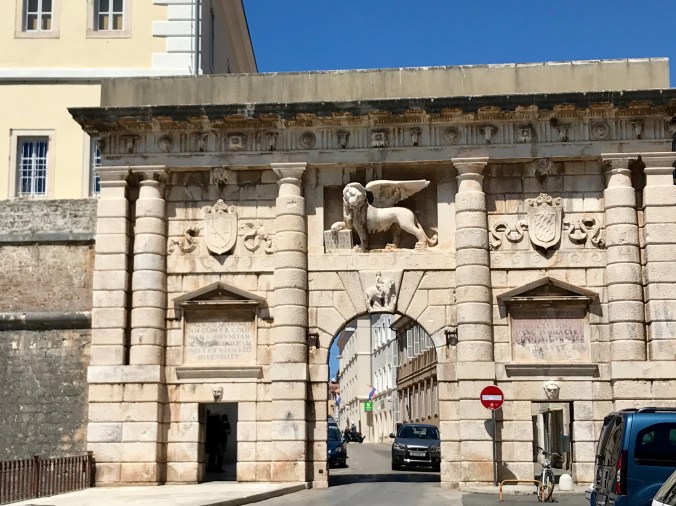
We headed to the coast and arrived in Zadar in time for dinner and a stroll through town, which is known for its Roman and Venetian ruins. No cars allowed in the Old Town, so we parked our rental car by one of a number of gates in city walls built by the Venetians.

IMG_2857

IMG_2858

Our hotel is right off a large square, one of several that are ringed by buildings from the 9th to 12th centuries.

IMG_2871

IMG_2869

On the square

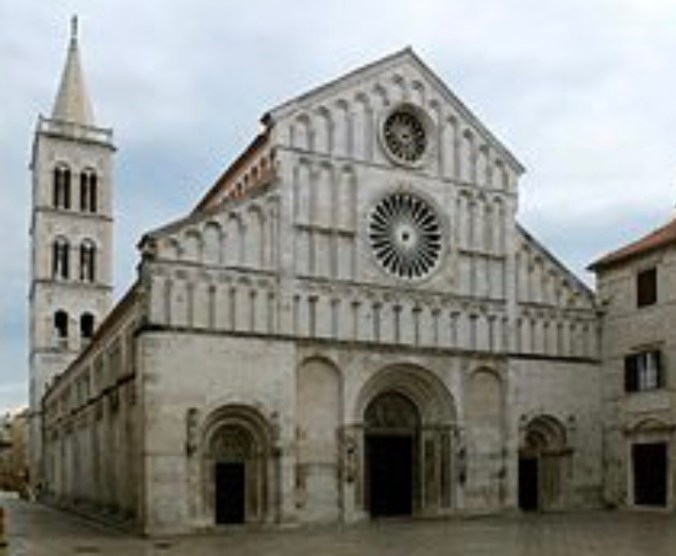
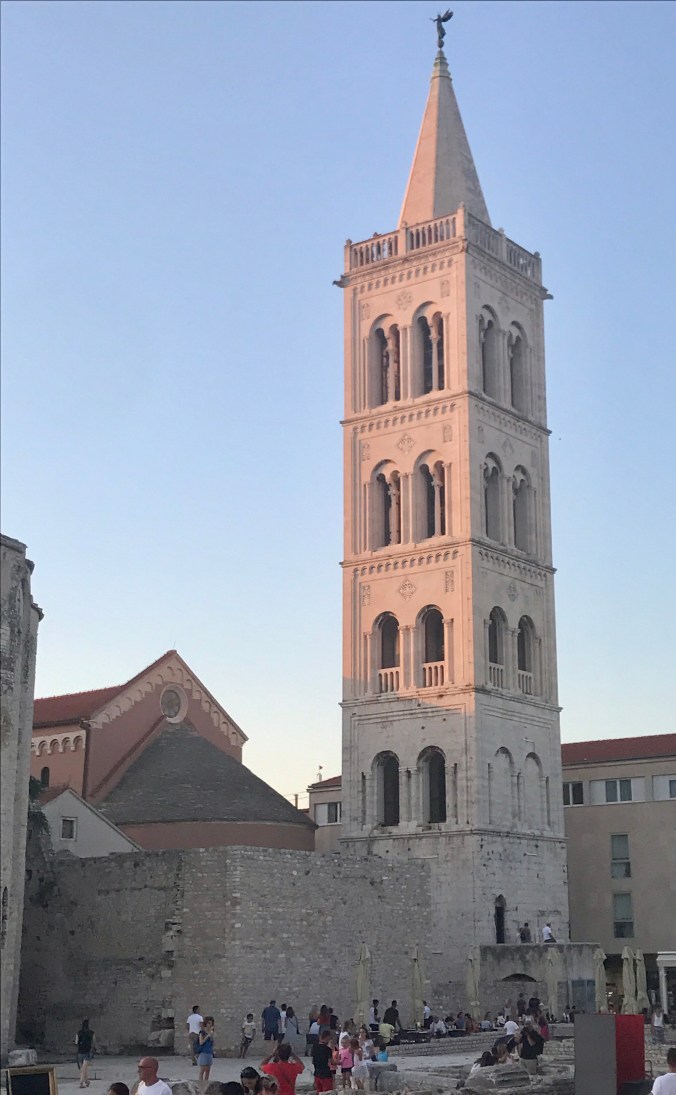
IMG_2818The Zadar Cathedral by day and by night
IMG_2848

Nearby

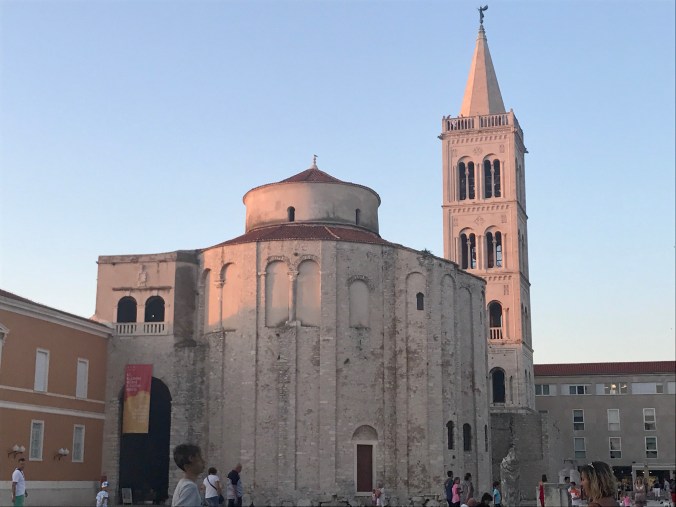
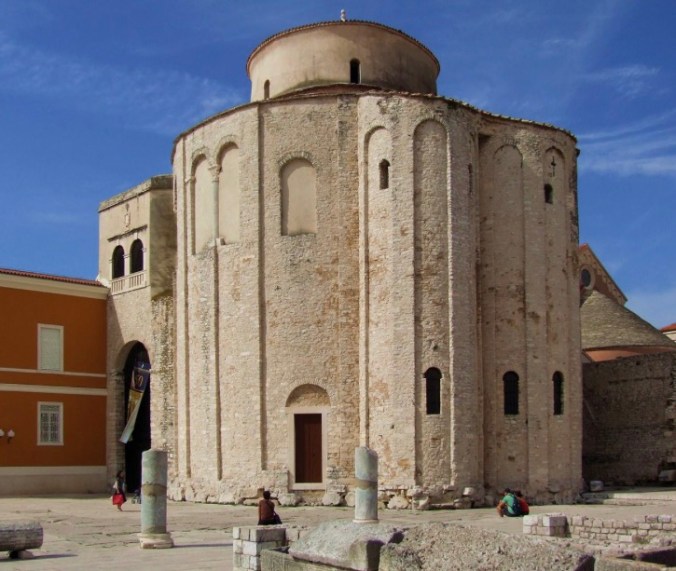
IMG_2812Church of St. Donatus

IMG_2823Benedictine Convent of St. Mary
IMG_2831

We spent Sunday out on the water, stopping on several islands to swim, stroll and have a coffee, a major pastime in Zadar (and the rest of Croatia, from what I can tell).

IMG_2740

IMG_2752

IMG_2749

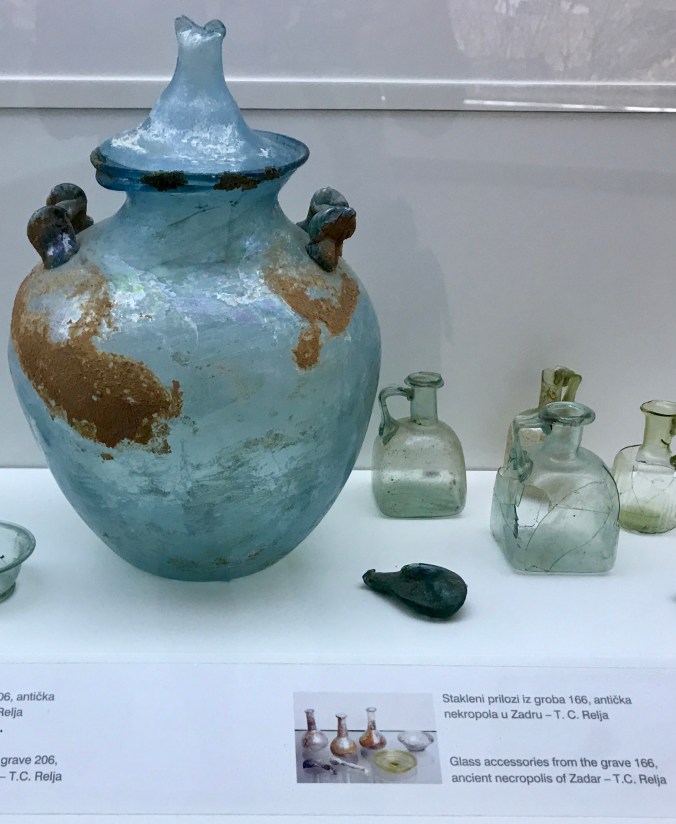
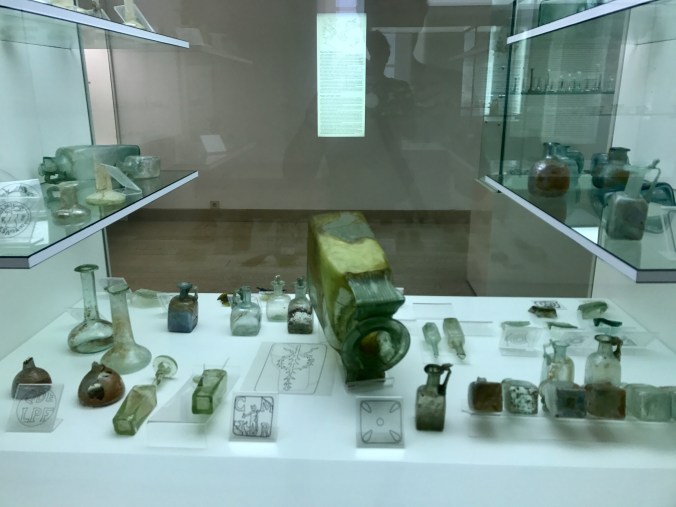
On Monday we went to the Museum of Ancient Glass. All of the extensive holdings were unearthed in Zadar.

IMG_2801

Below “glass accessories from the grave”.

IMG_2802

IMG_2796

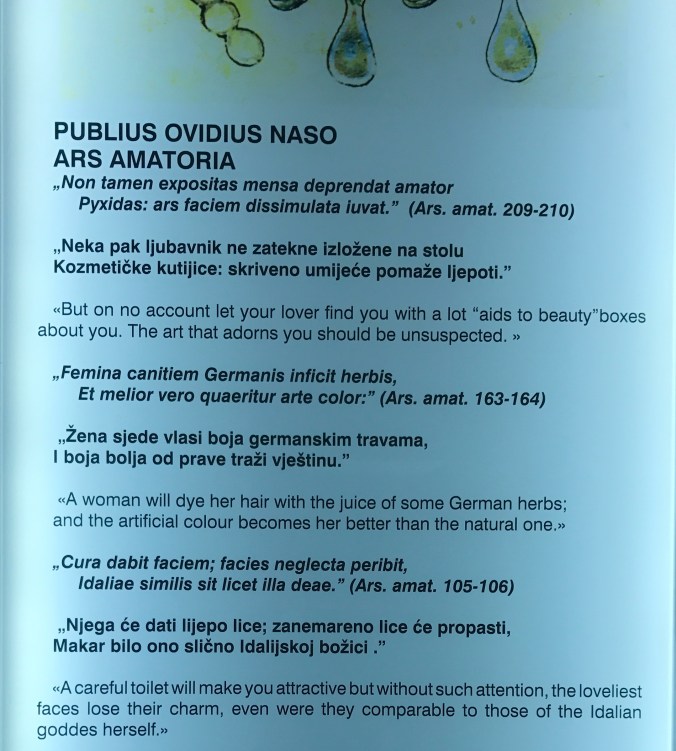
Above, various glass vessels including some used for cosmetics. Accompanied by timeless advice from Ovid, in Ars  Amatoria.

IMG_2803

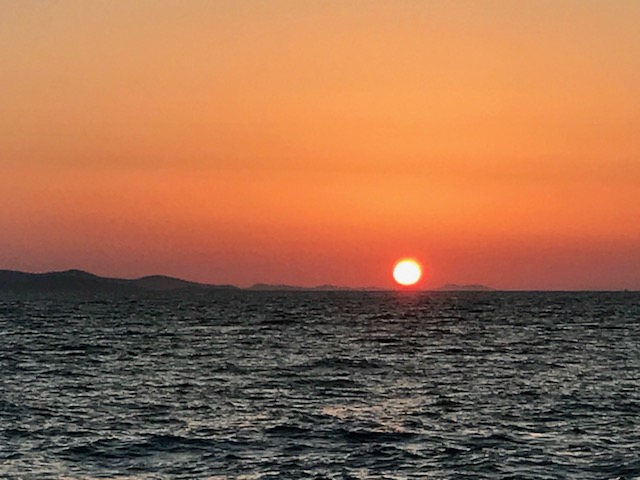
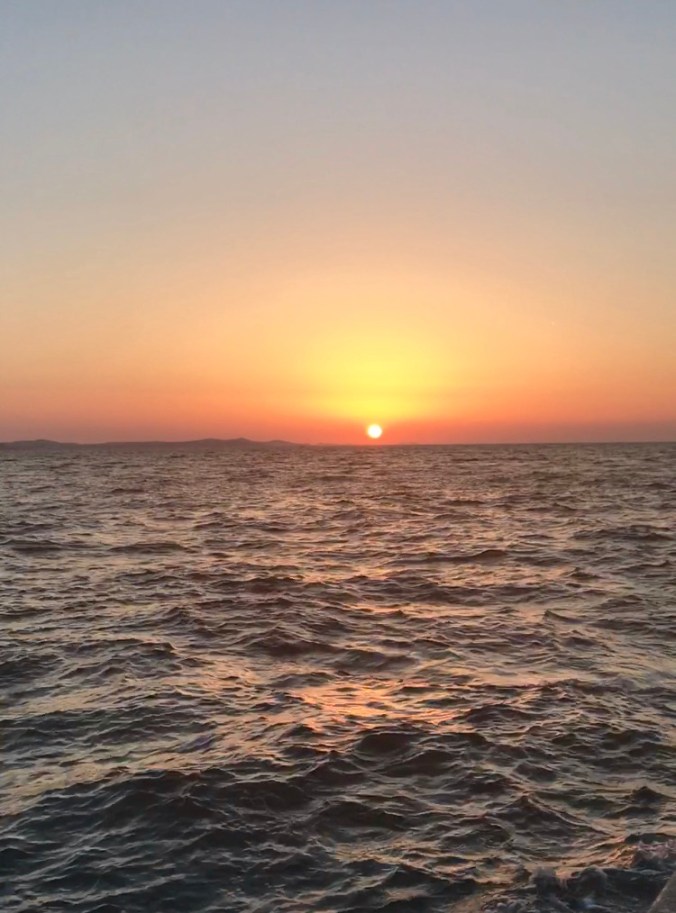
We had an early dinner so that we’d be sure to catch the sunset, along with the eerie tones of the Zadar Sea Organ.

IMG_2855

IMG_2854

Plitvica Lakes National Park

IMG_2630

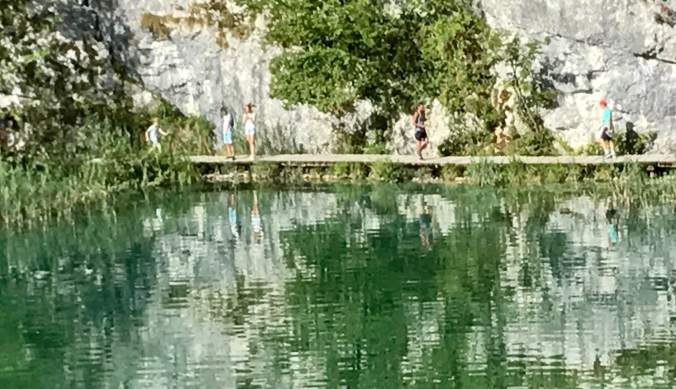
Yesterday we drove from Zagreb to just outside of the park and checked into our inn, which is described online as offering the friendliest welcome in Croatia. Also offered is a beautiful home cooked dinner and a breakfast buffet that is out of this world. To work off all that food, we set out at 8;00 for the park.

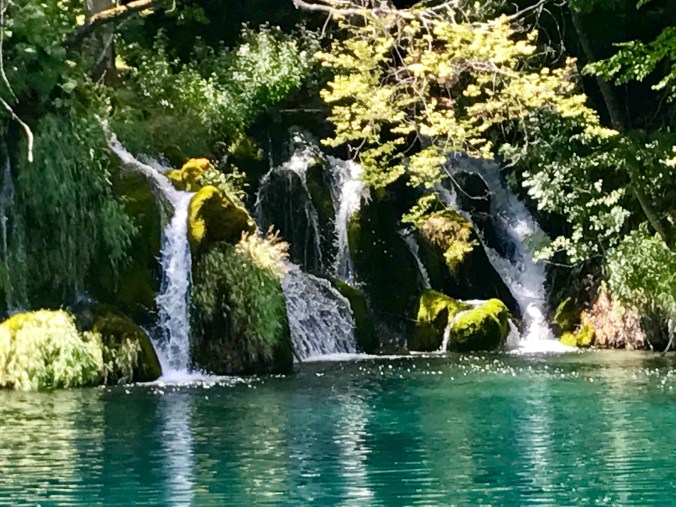
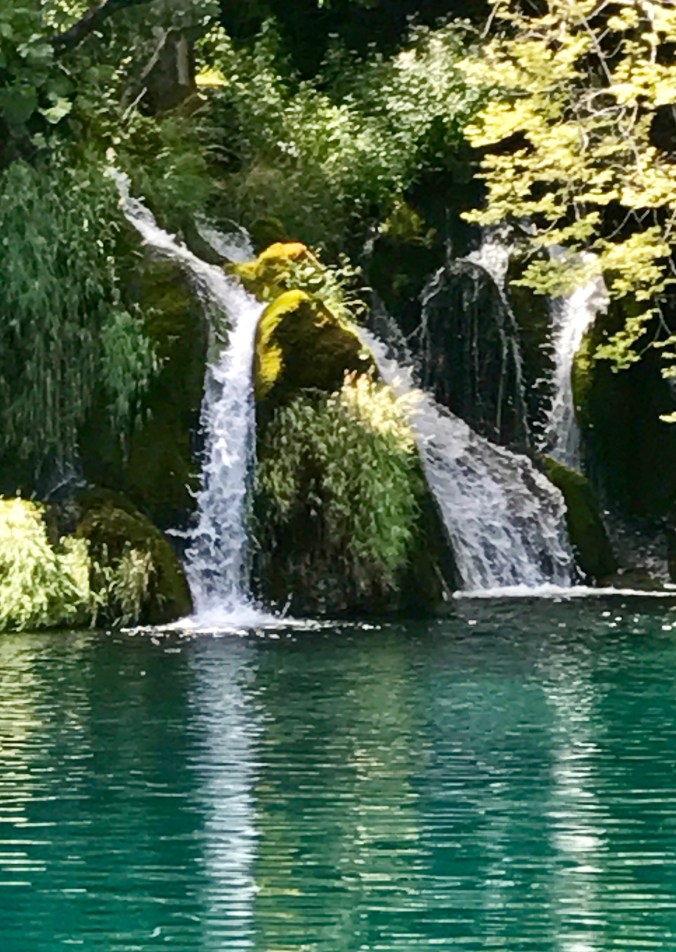
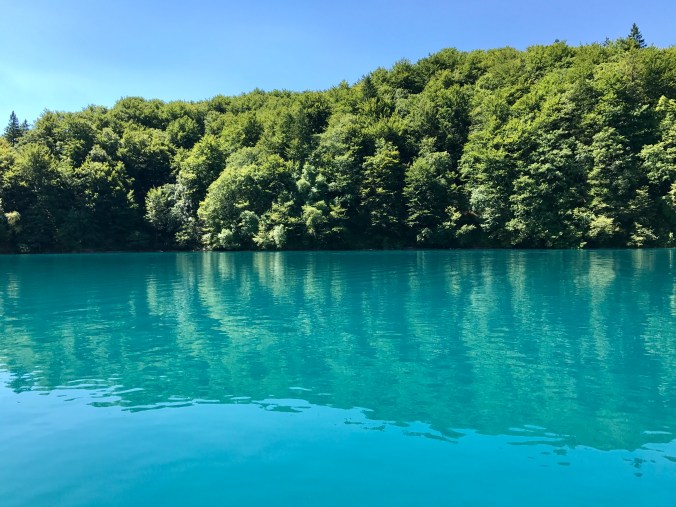
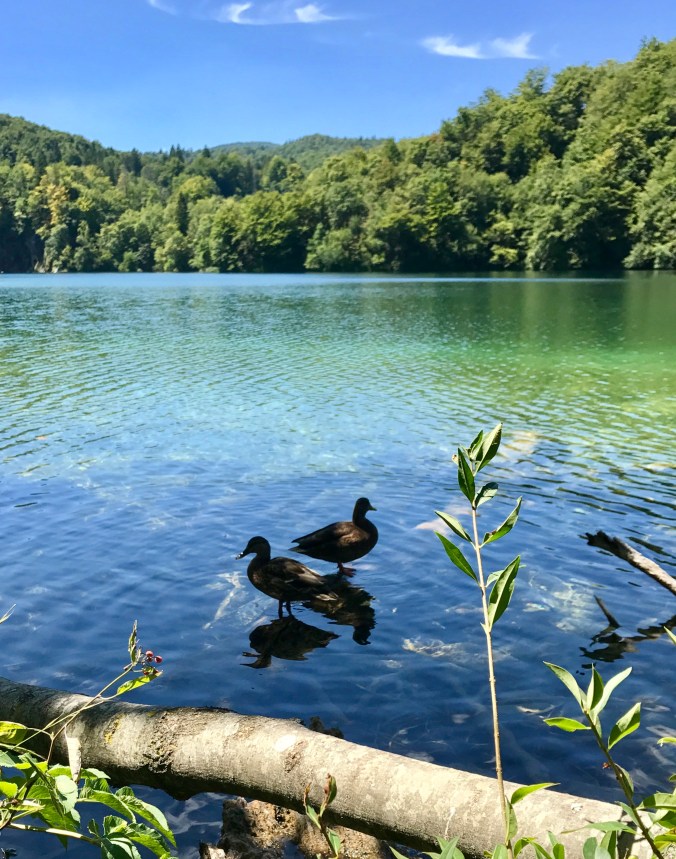
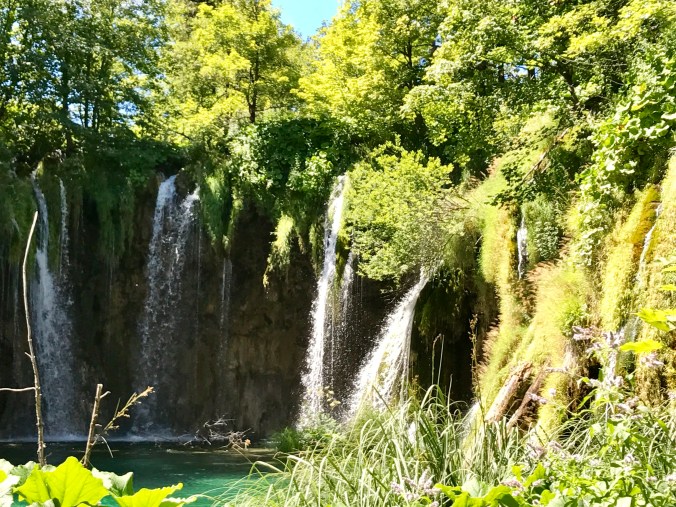
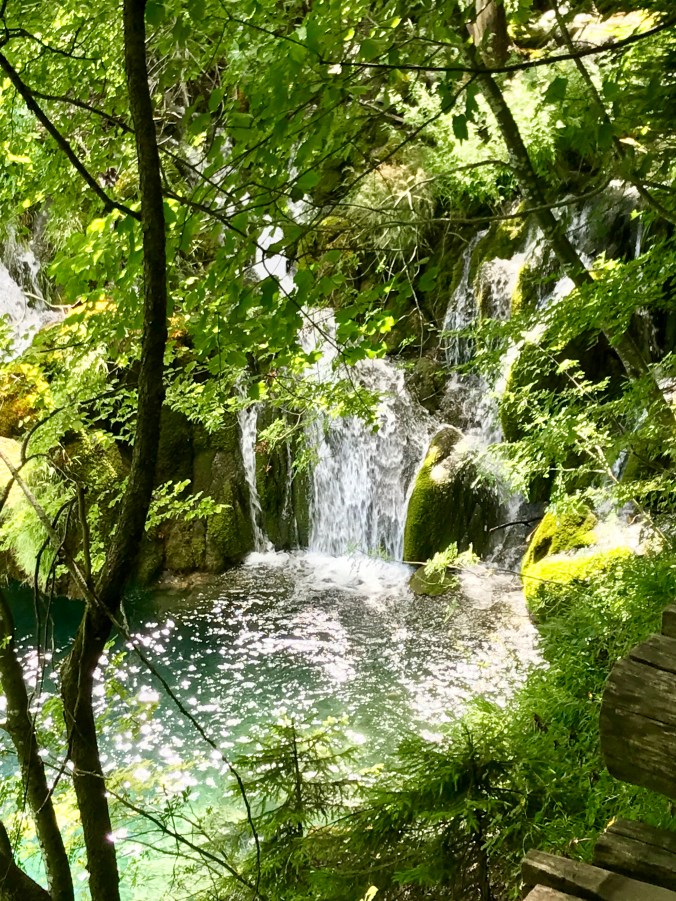
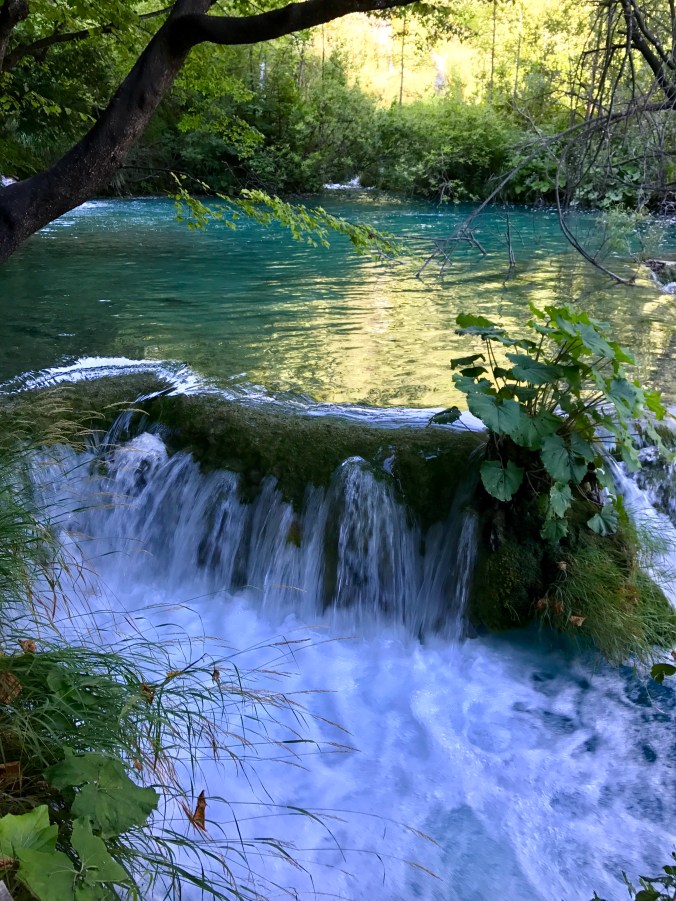
Plitvica is world famous for its lakes and waterfalls. The lakes take their colors from the minerals and organisms in the water and the angle of sunlight and range from green to turquoise to blue gray.

IMG_2632

IMG_2598

IMG_2618

IMG_2561

IMG_2678

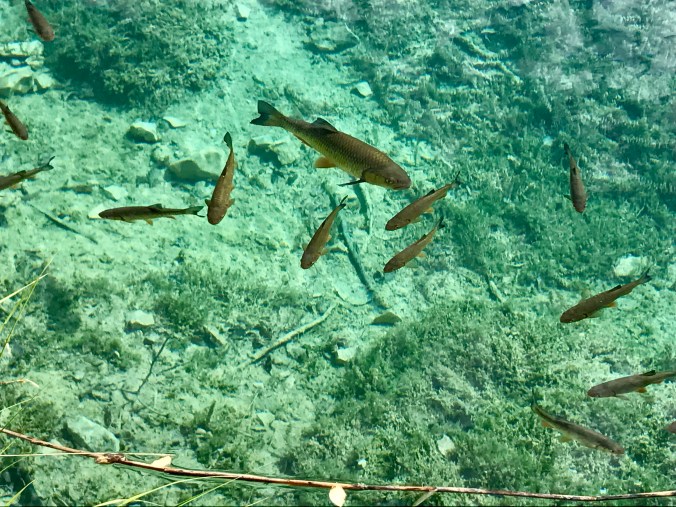
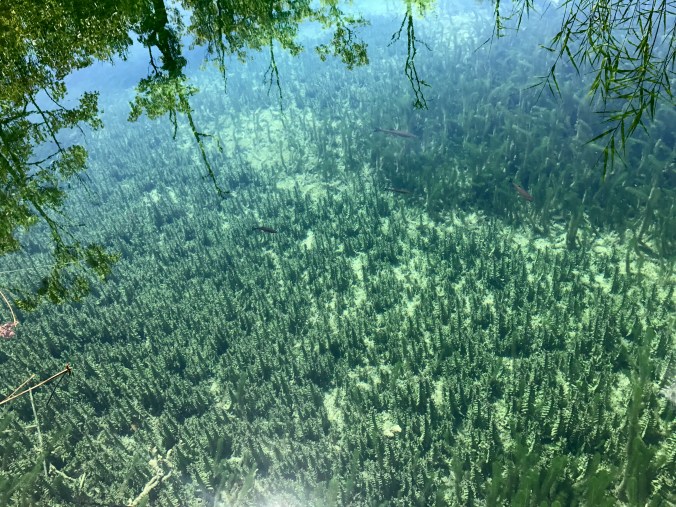
The water is so clear that you can see the fish . .

IMG_2572

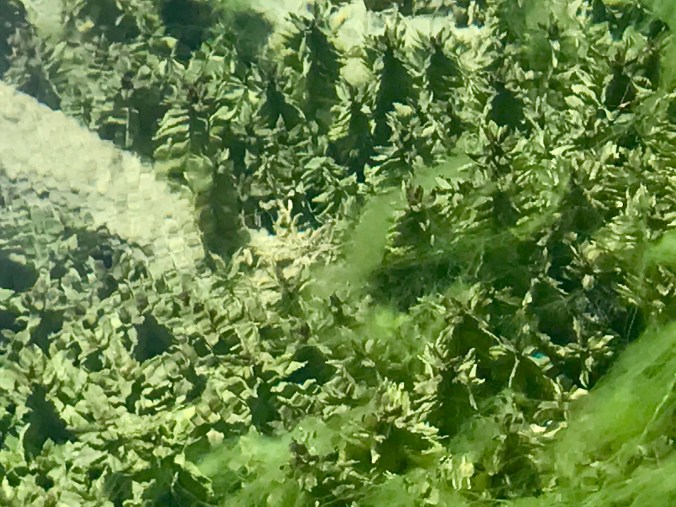
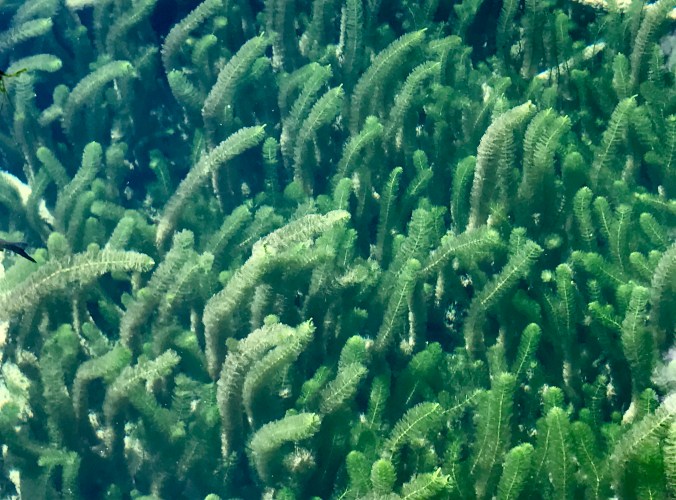
. . . and an underwater world with its own spectacular ‘landscape’.

IMG_2688

IMG_2689

IMG_2691

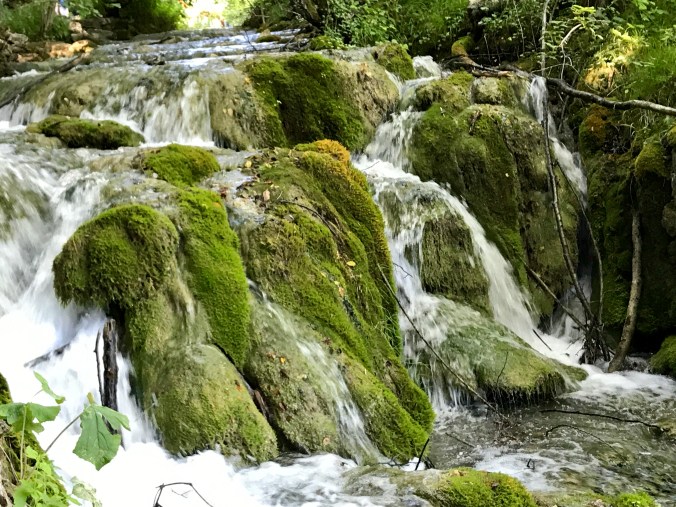
There are a total of sixteen lakes in the park, and too many waterfalls  to count.

IMG_2667

IMG_2634

IMG_2605

IMG_2614

Plitvica is a place to meander through for hours, which is just what we did, prompting Jay to refer to us as a couple of meanderthals.

IMG_2680

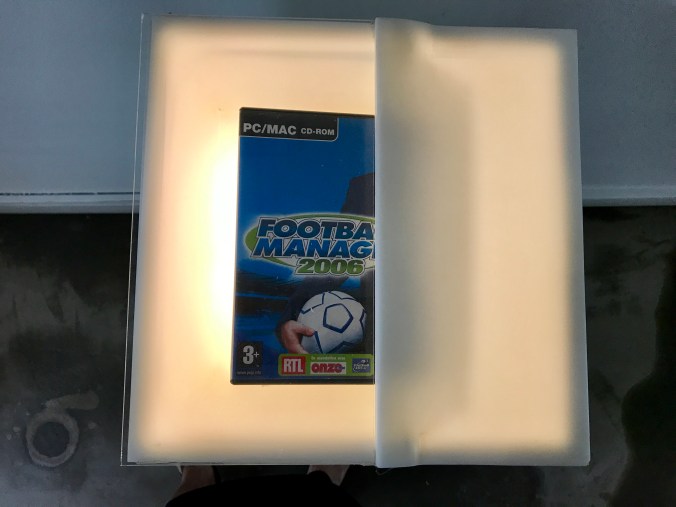
The Museum of Broken Relationships

IMG_2419

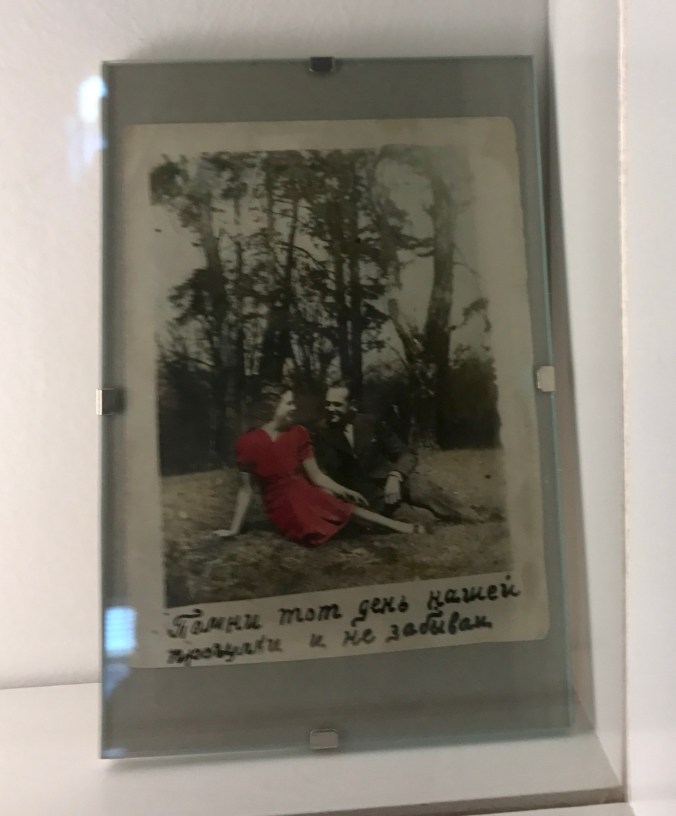
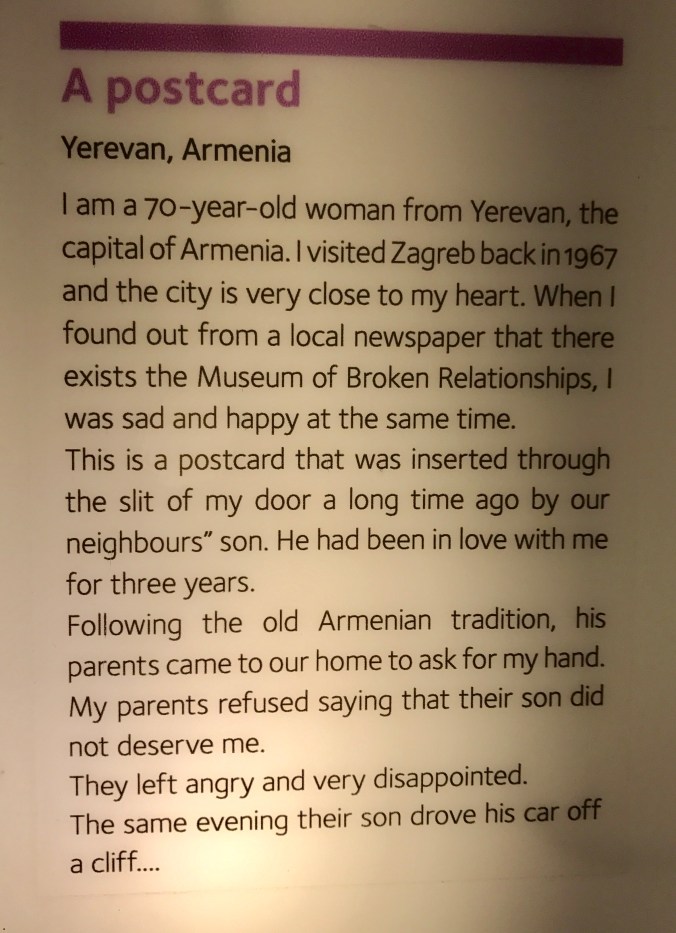
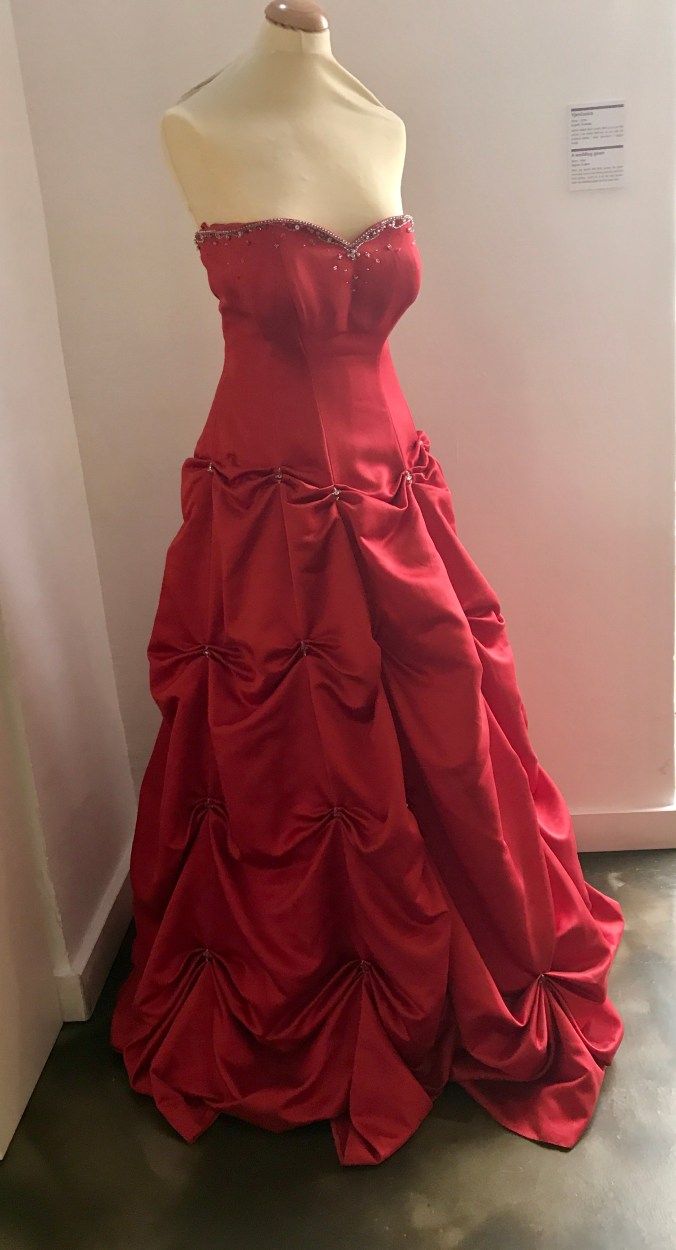
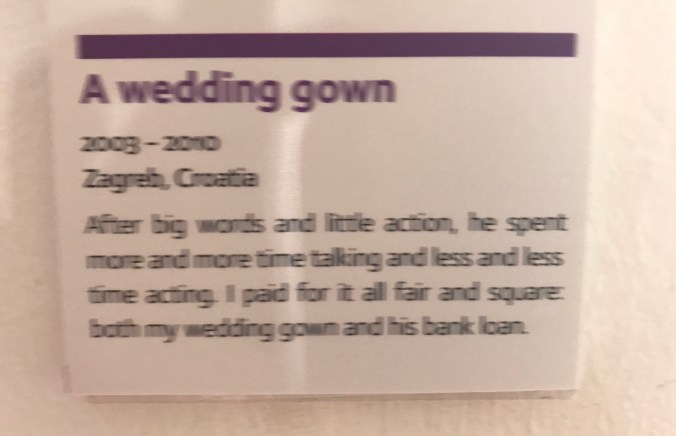
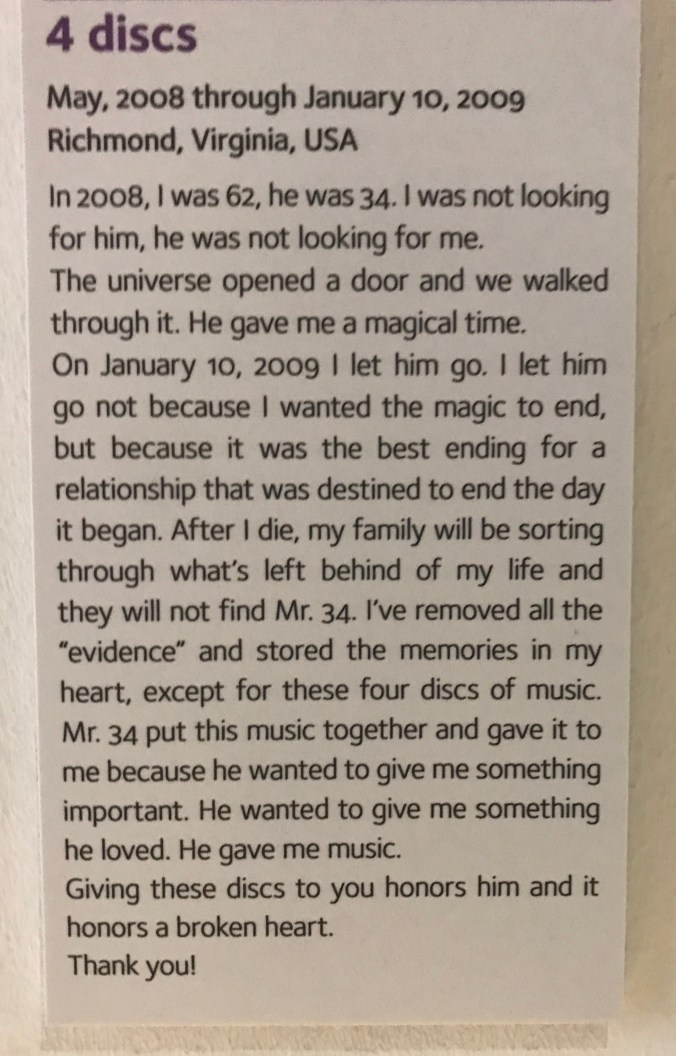
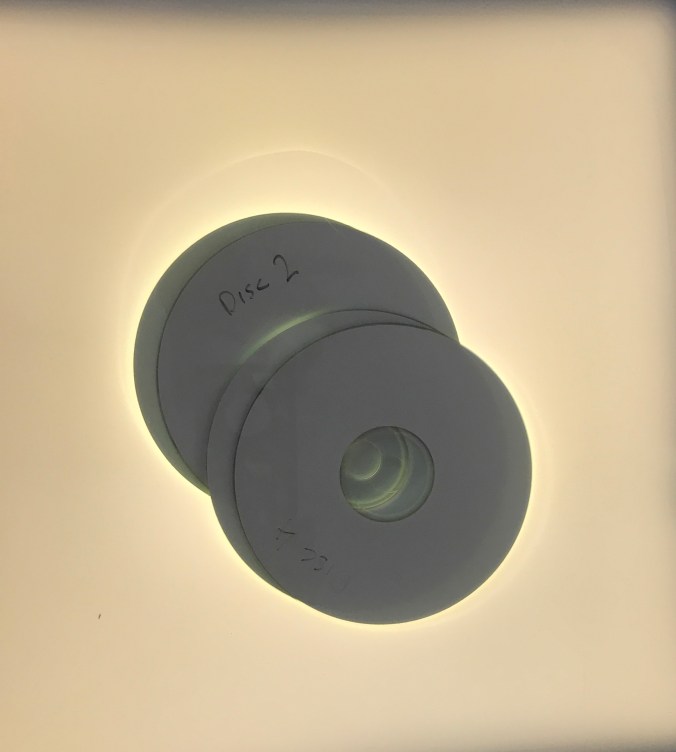
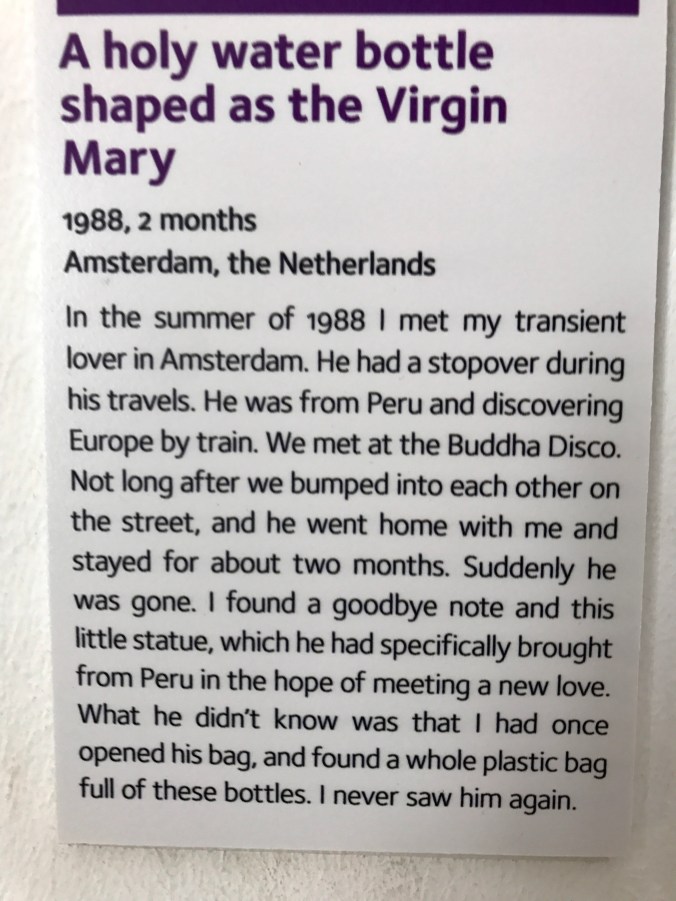
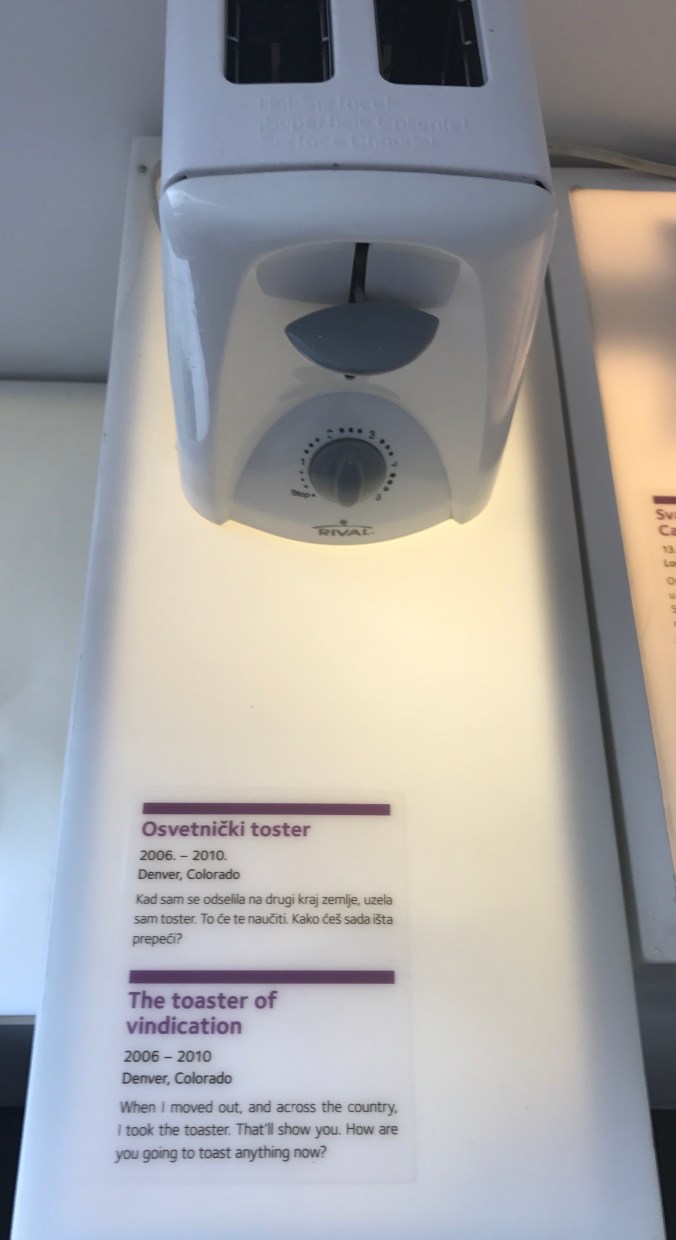
Several years ago I turned on the radio on my way home from work and came upon a fascinating pod cast on NPR. A narrator was telling stories about objects in a ‘museum of broken relationships.’ What a fantastic (fictional) premise, I thought! Only when the podcast was ending did I realize that this was a real museum, and the “‘narrator” was actually giving a tour of its holdings, all of them donations from people around the world. My immediate reaction was: I have to go there. My second reaction was: it’s in Zagreb, Croatia, so that’s not happening.

Just goes to show!

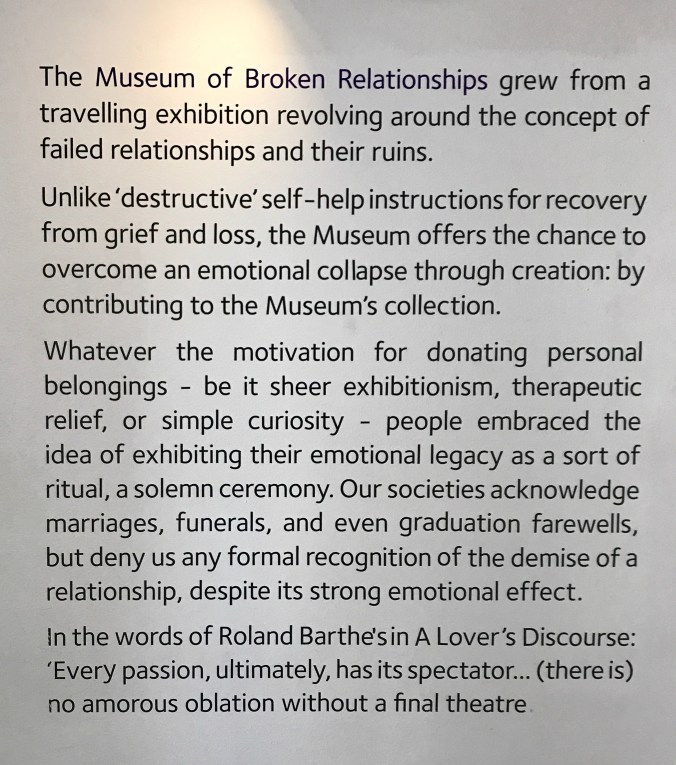
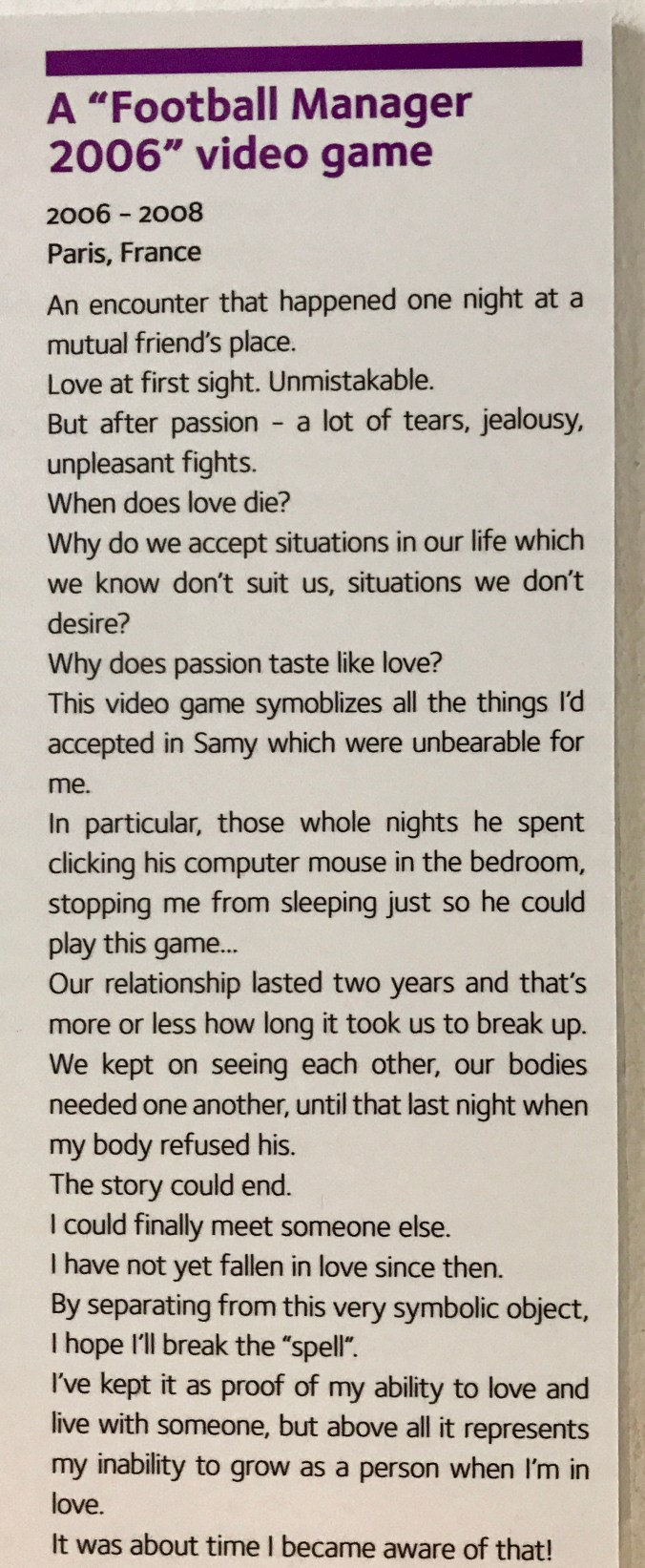
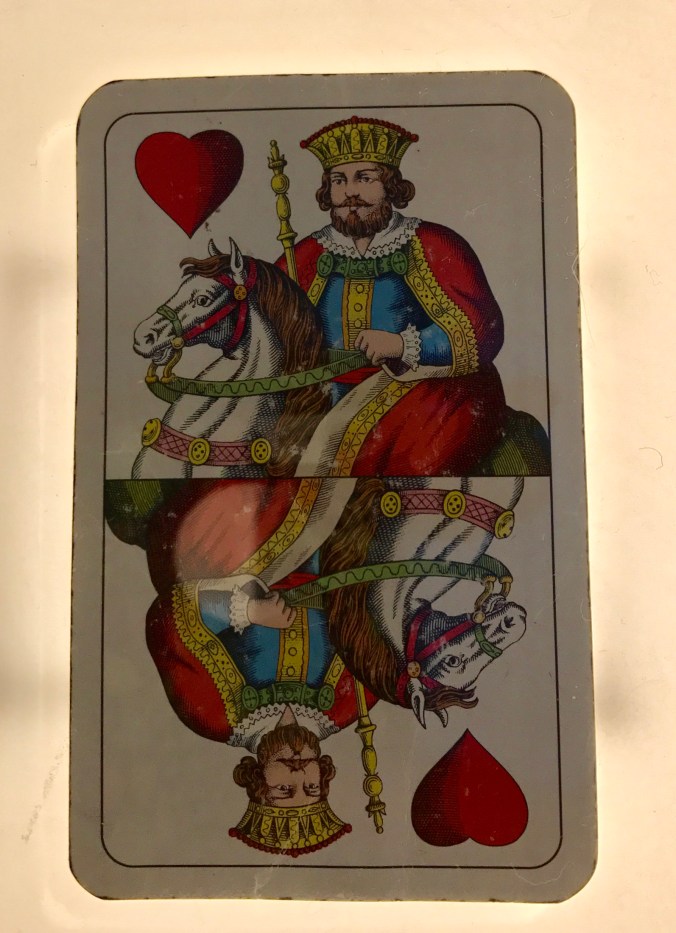
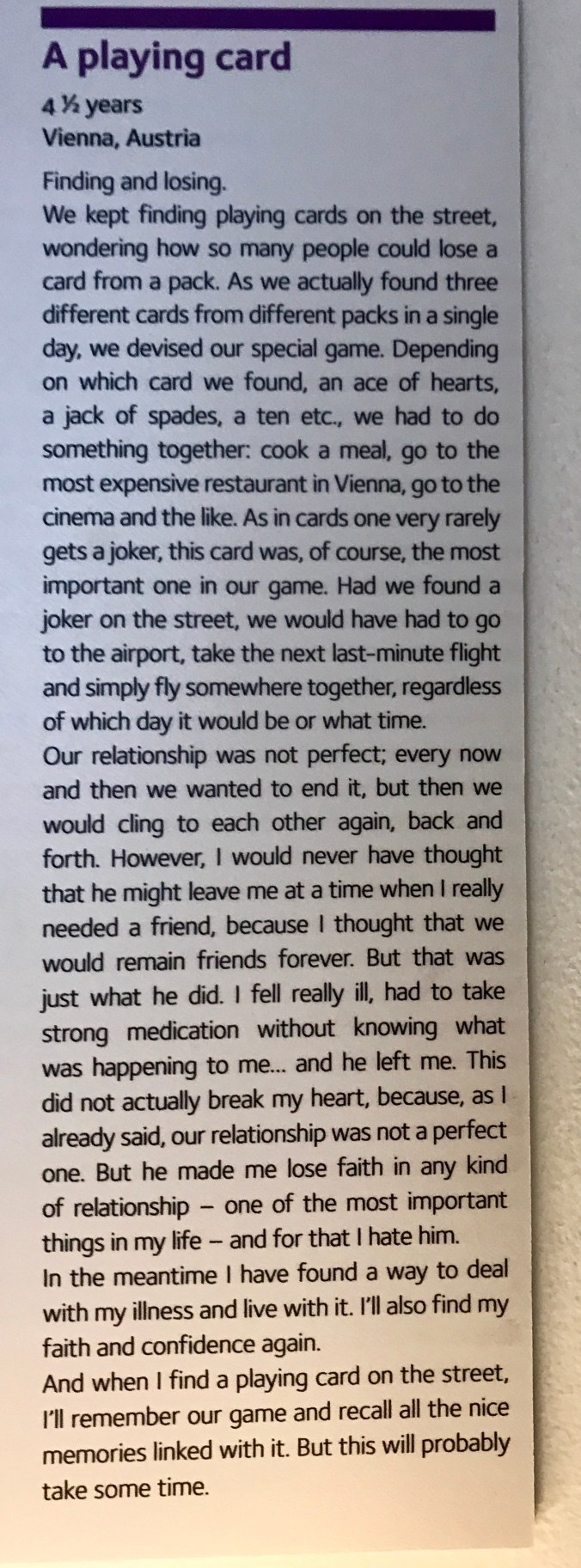
Here are my pictures. First, a description of the museum’s mission.

IMG_2425

So you get the idea. This is not a pity party. It’s a place that offers people a chance to free themselves from the past. It’s  a place to tell your story, and at the same time, to let go of an object that you need to have out of your life.

It was as wonderful as I had imagined.

IMG_2441

IMG_2439

IMG_2443

IMG_2444

Of course, this bring a museum of broken realationships, many things are unresolved, there are missed opportunities, failures of communication, regrets.

IMG_2461

IMG_2459

IMG_2480

IMG_2482

But the overriding feeling you get from people who’ve made donations is one of relief

IMG_2462

IMG_2463

. . . and in more than a few cases, a certain sense of satisfaction.

IMG_2477

IMG_2479

IMG_2474

I loved it all.

What do you think?

Roman ruins and modern art

IMG_2349

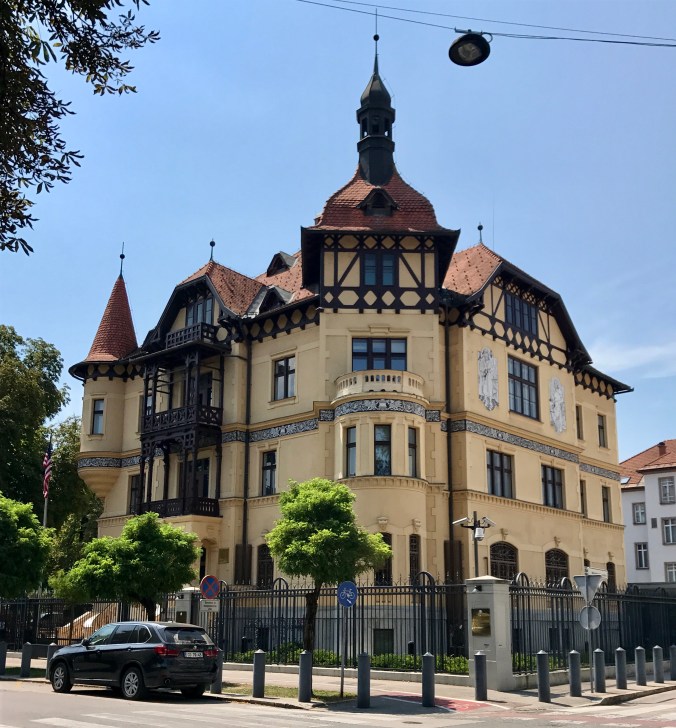
Our last full day in Ljubljana. We walked by the American Embassy

IMG_2357

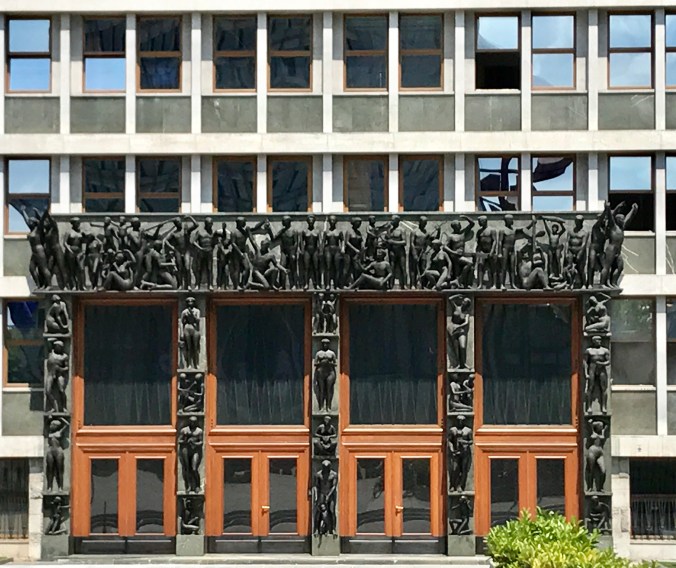
through the Square of the Republic and past the Parliament building.

IMG_2317

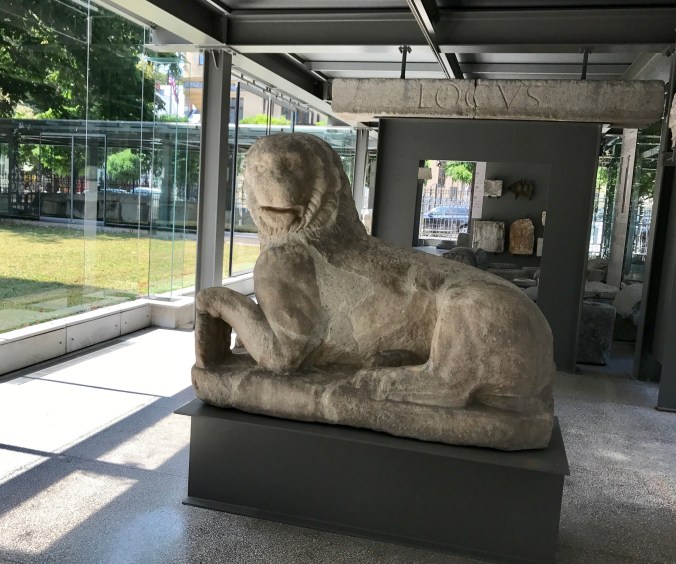
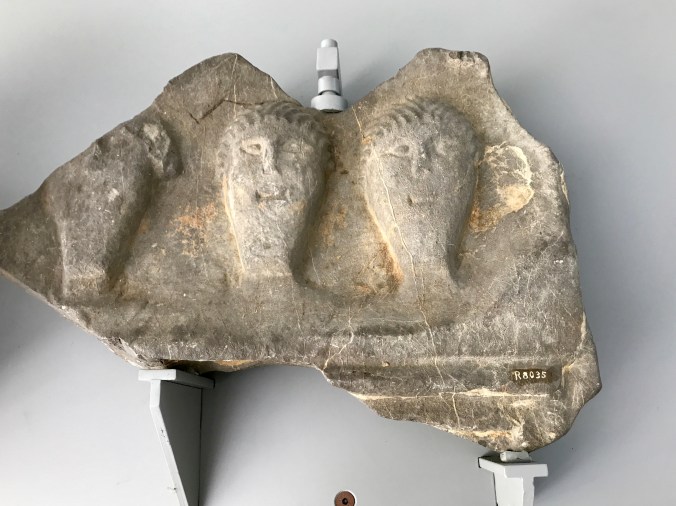
Then it was over to the Slovenian National Museum to get a look at the exhibit of Roman ruins. This lion was probably placed in a cemetery to guard the deceased.

IMG_2334

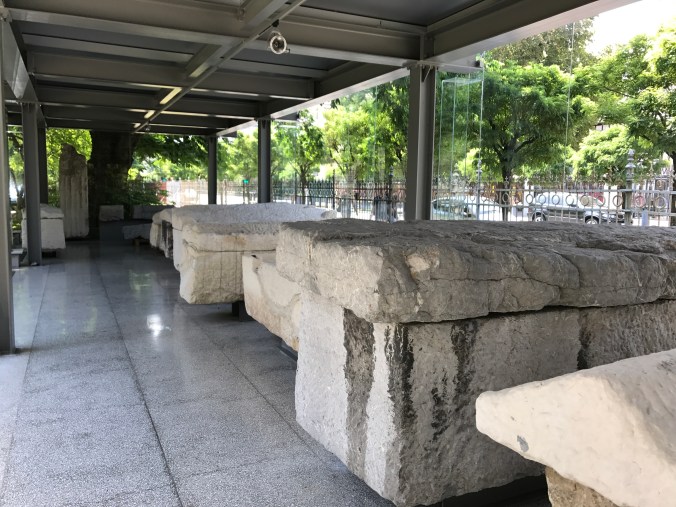
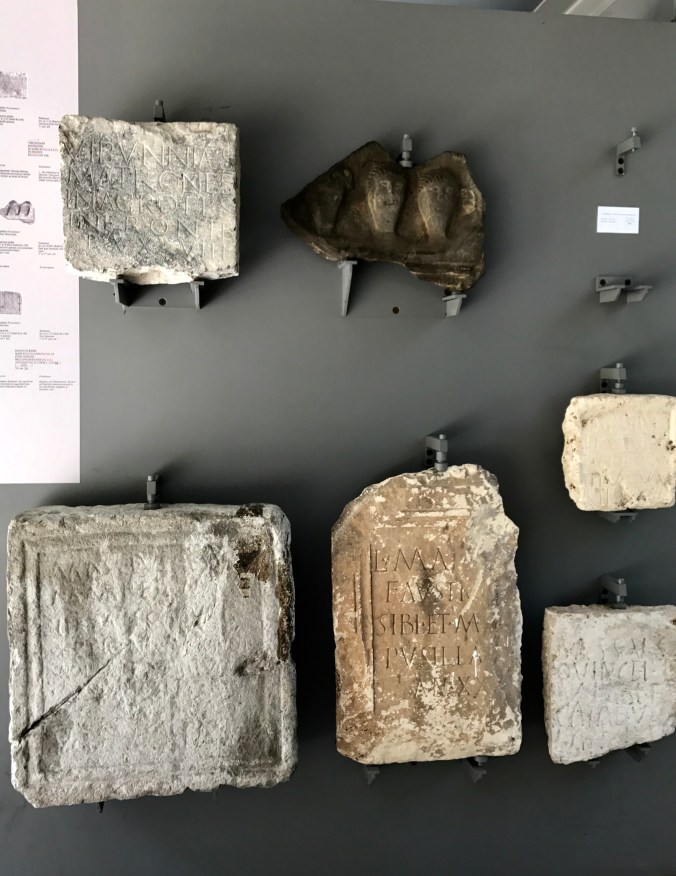
The Romans considered it important to keep track of where people were buried. Family members visited the graves for at least a year after the death. Below, tombstones and a fragment of a grave marker.

IMG_2342

IMG_2343

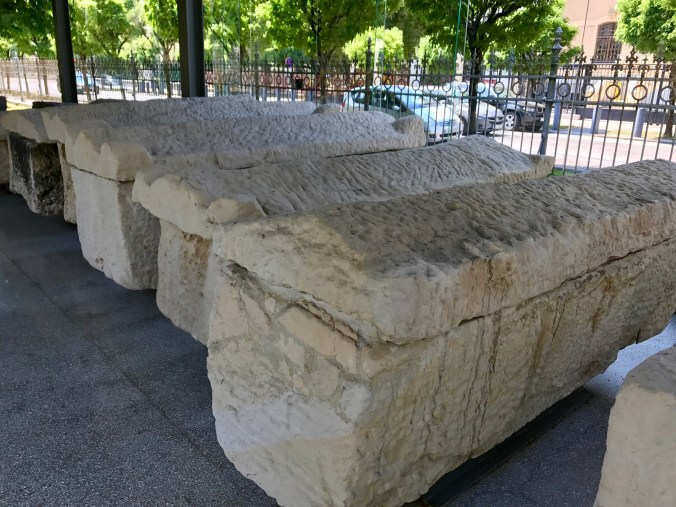
Stone coffins (sarcophagi) mostly for wealthy Romans

IMG_2351

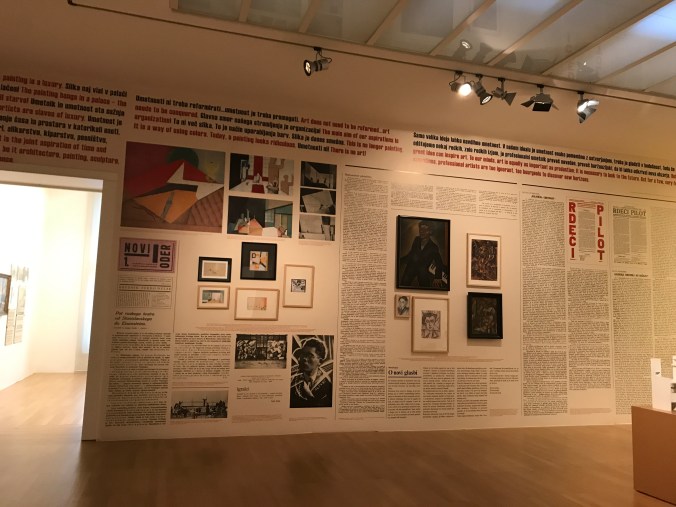
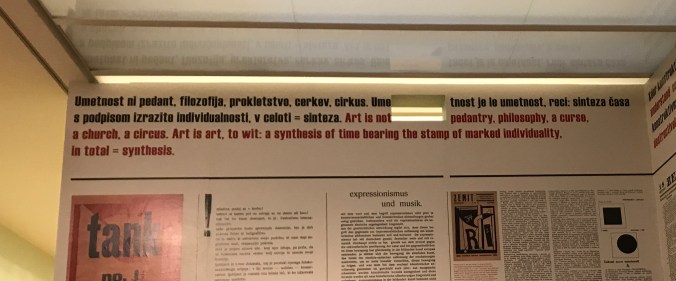
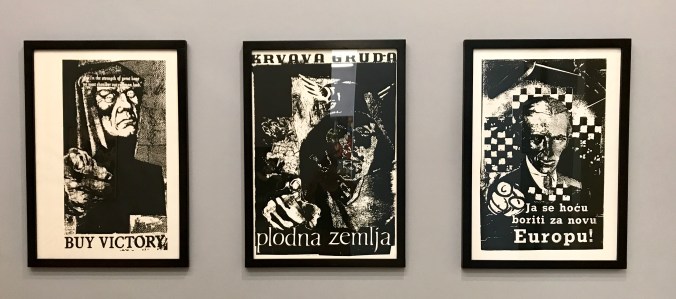
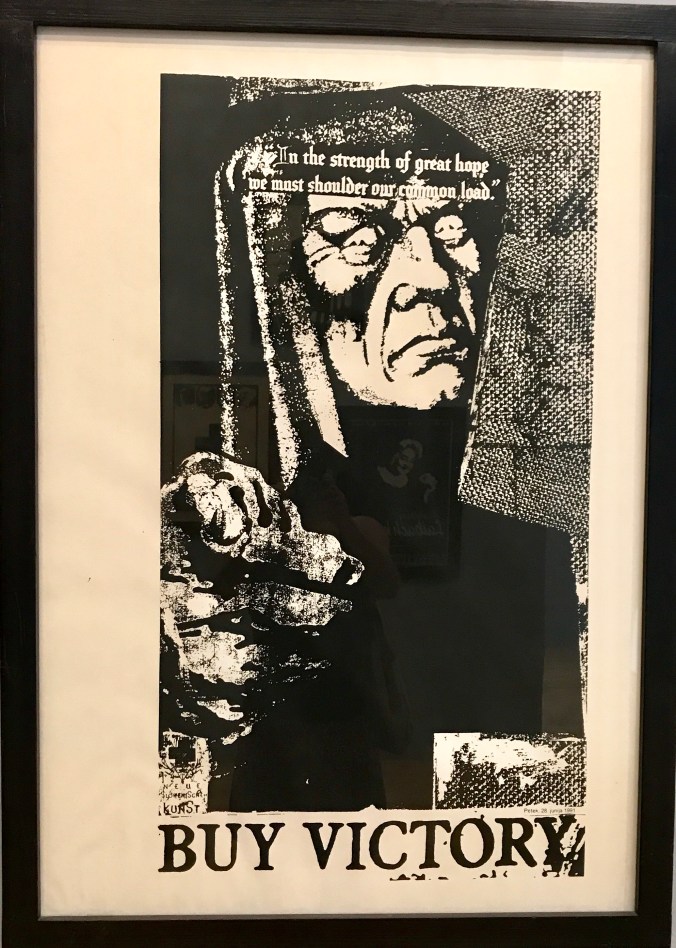
Our next stop was the Museum of Modern Art. An interesting display of art in the context of political upheaval, the collection of 20th century Slovenian painting is displayed along with newspapers from the 60’s through the war for independence. Other rooms in the exhibit trace the emergence of the art of the Partisan resistance.

IMG_2363

IMG_2362

Below, political posters urging citizens to support Slovenian independence from Yugoslavia.

IMG_2372

IMG_2374

So much history, so much art. I took as much of it all in as I could.

In the morning we said good bye to our neighborhood

IMG_2394

IMG_2395

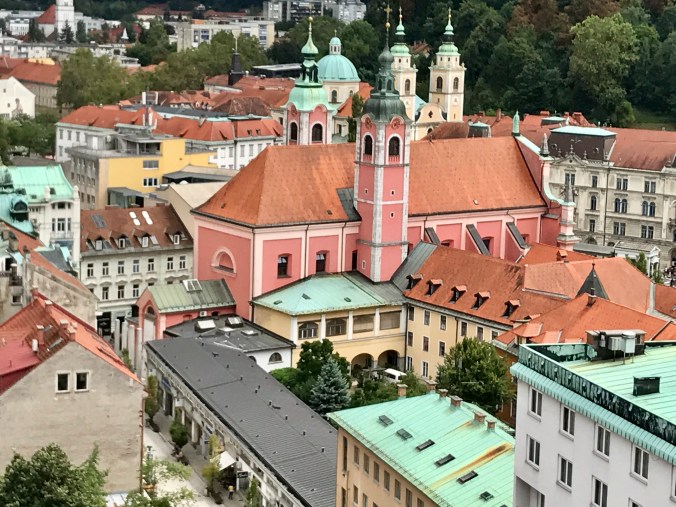
and after a final view from above, headed to the train station.

IMG_2405

Plecnik Cemetery

IMG_2276

Plecnik’s final commission and final resting place. The columns are a typical design element- he liked nodding to classical architecture.

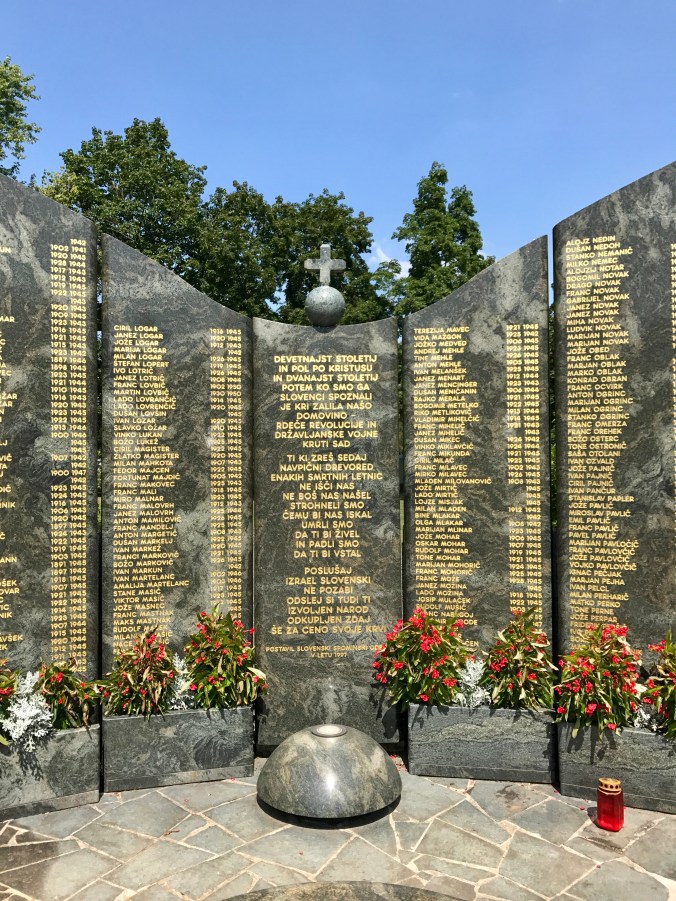
Near the entrance to the cemetery is a WW II memorial.

IMG_2278

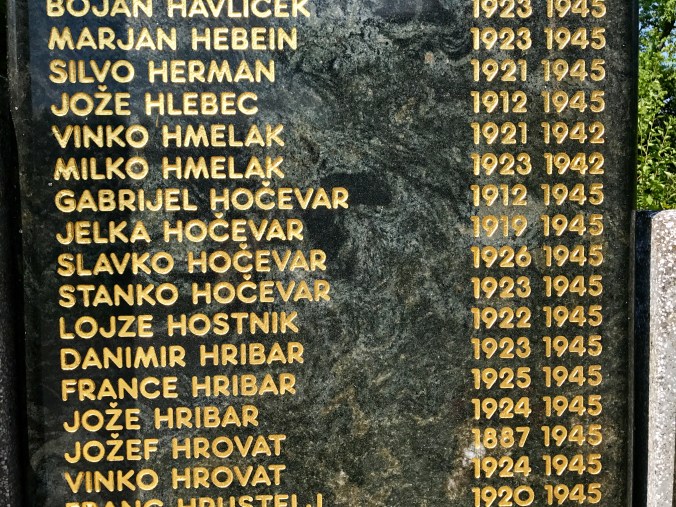
So many died so young. The devastation to families is hard to imagine.

IMG_2279

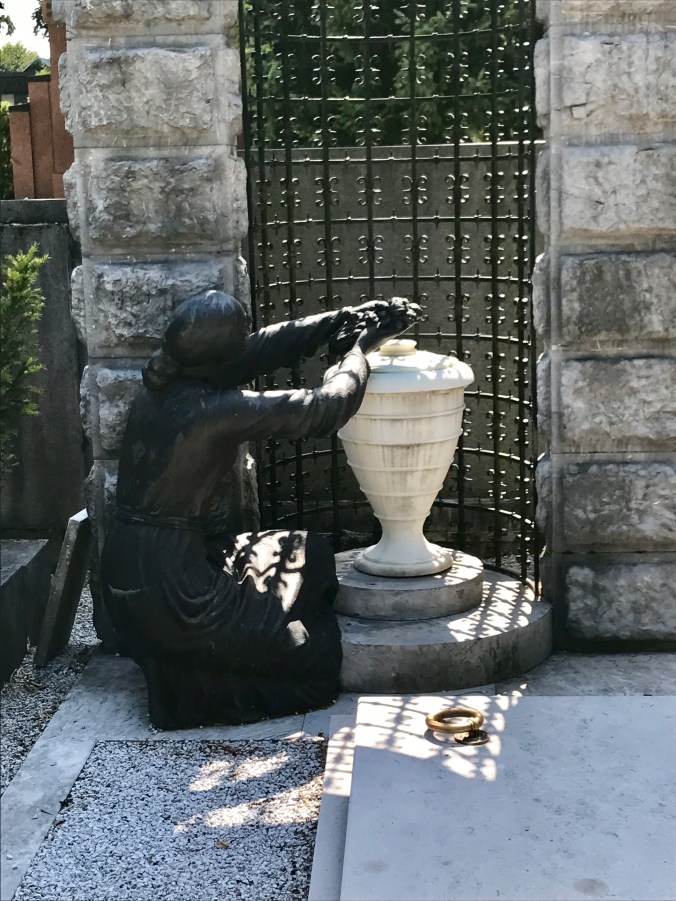
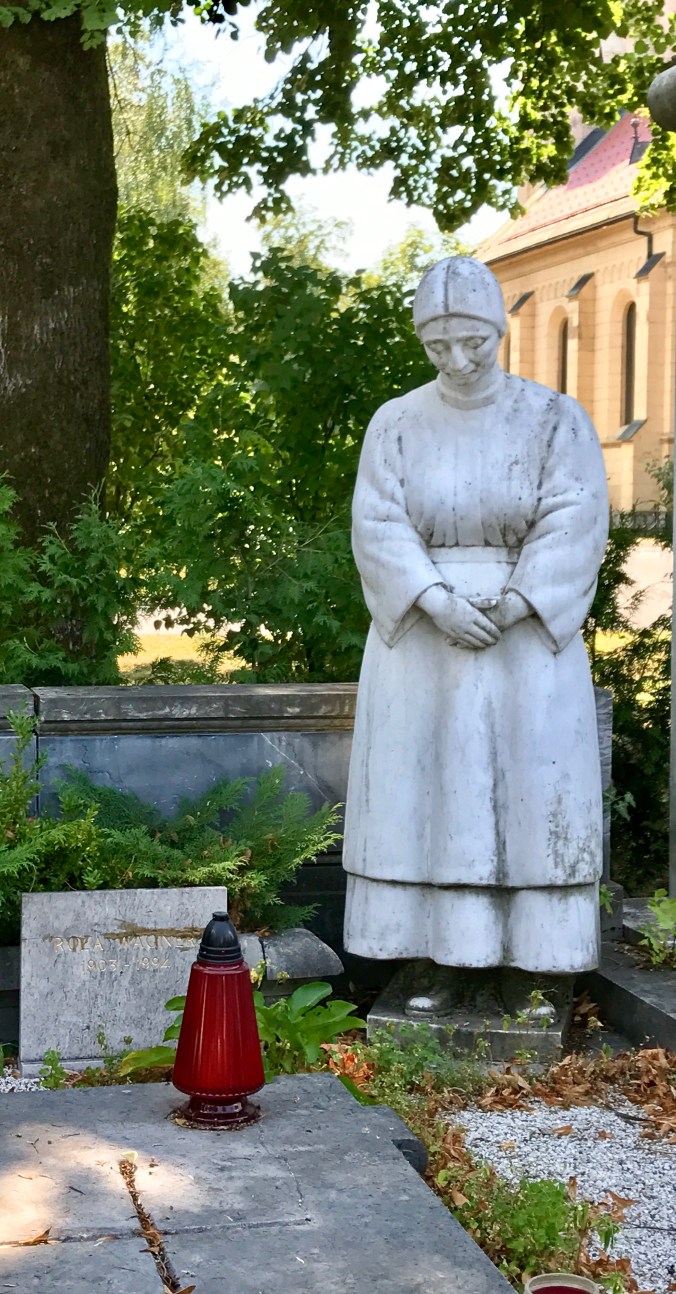
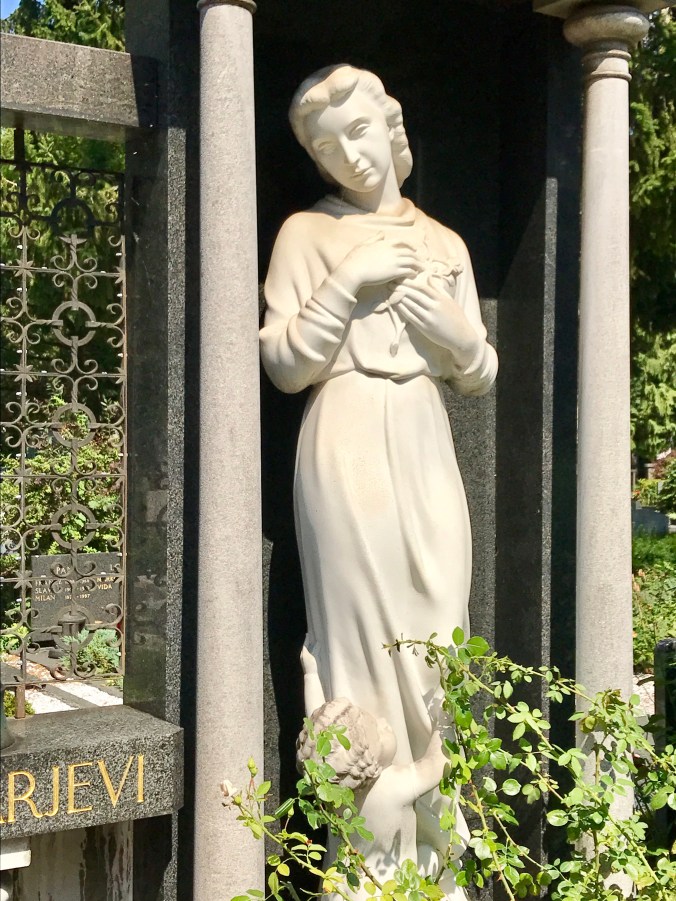
As with other cemeteries we’ve visited, this one has many deeply affecting monuments.

IMG_2286

IMG_2289

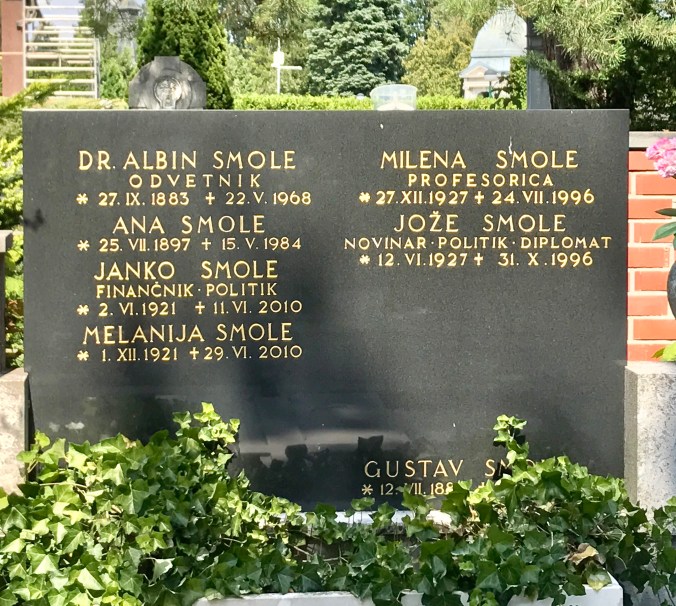
The most interesting feature of the cemetery was that the grave markers do not describe the deceased in terms of their family relationships. There’s no “beloved husband”,  “cherished grandmother”. I’ve always thought that describing s person this way is a statement about what really matters at the end of life – and about what remains, namely those connections. Here, though, it’s just names and dates, and the occasional reference to the person’s profession.

IMG_2299

The one exception I came across: Oce (father) and Mama.

A last look.

IMG_2287

Lake Bled and the Julian Alps

IMG_2154

We were planning a day trip to Lake Bled; Jay had the inspired idea to make it an overnight. We rented a car and off we went.

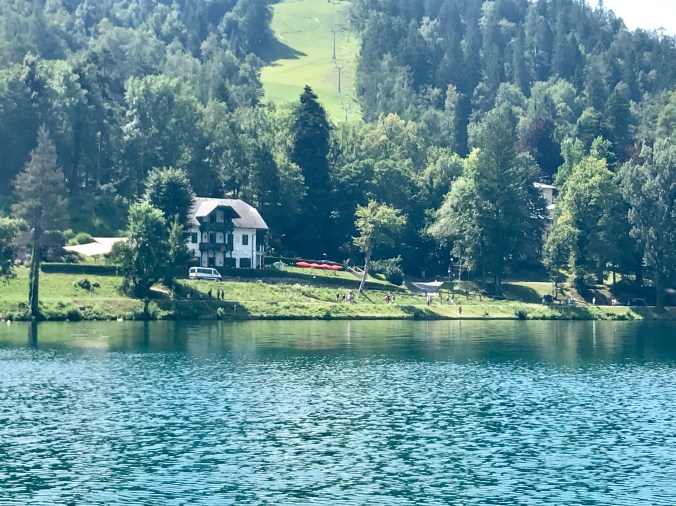
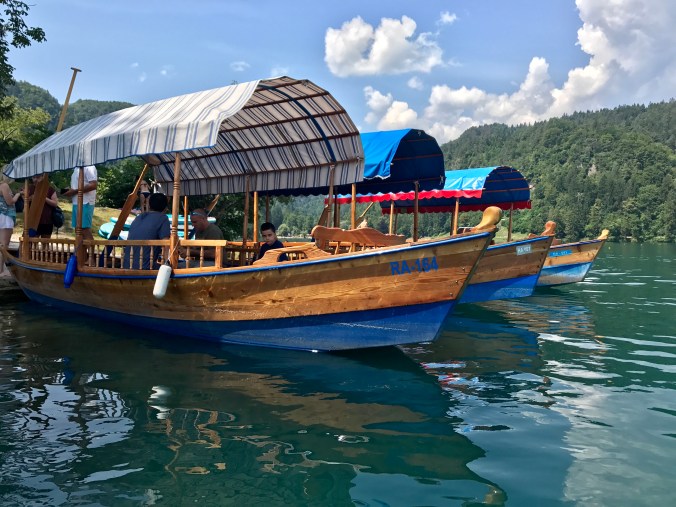
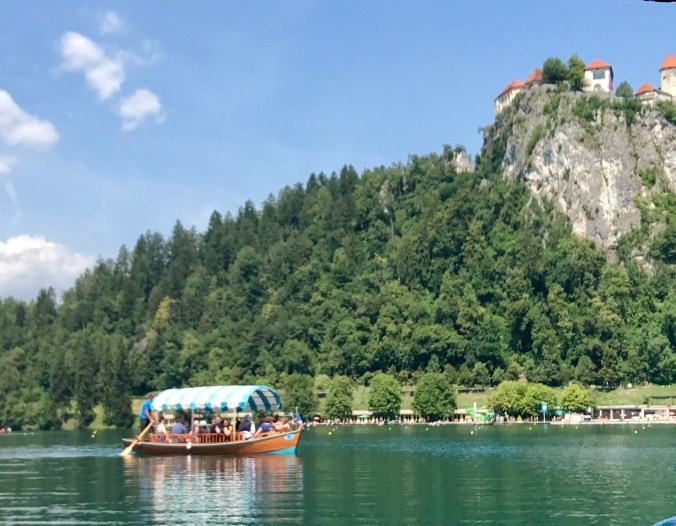
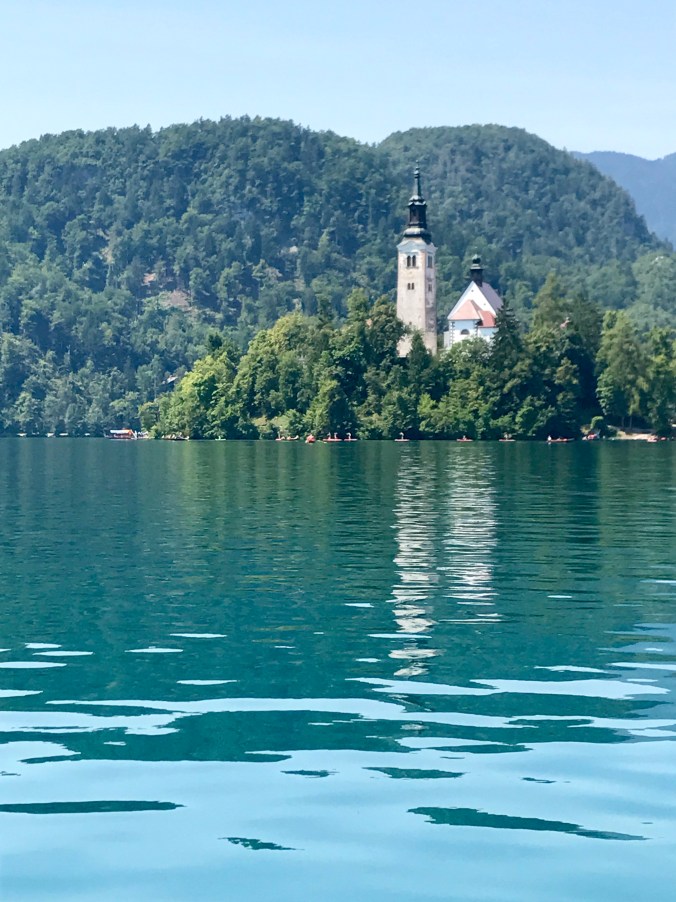
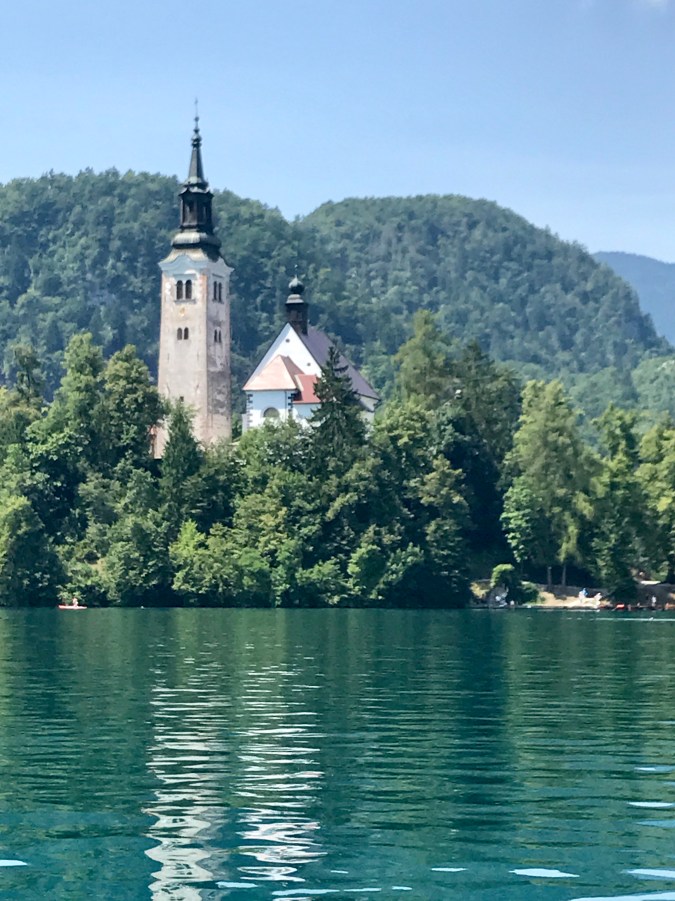
We arrived before check in time at our hotel,  so we dropped off our bags and caught a boat across the lake to the island to  see the church. The boats that ferry visitors are called Pletna boats. They were first used in the 17th century, and like the gondolas in Italy, are steered by a single skilled oarsman.

IMG_2174

IMG_2158

Crossing Lske Bled

IMG_2166

IMG_2171

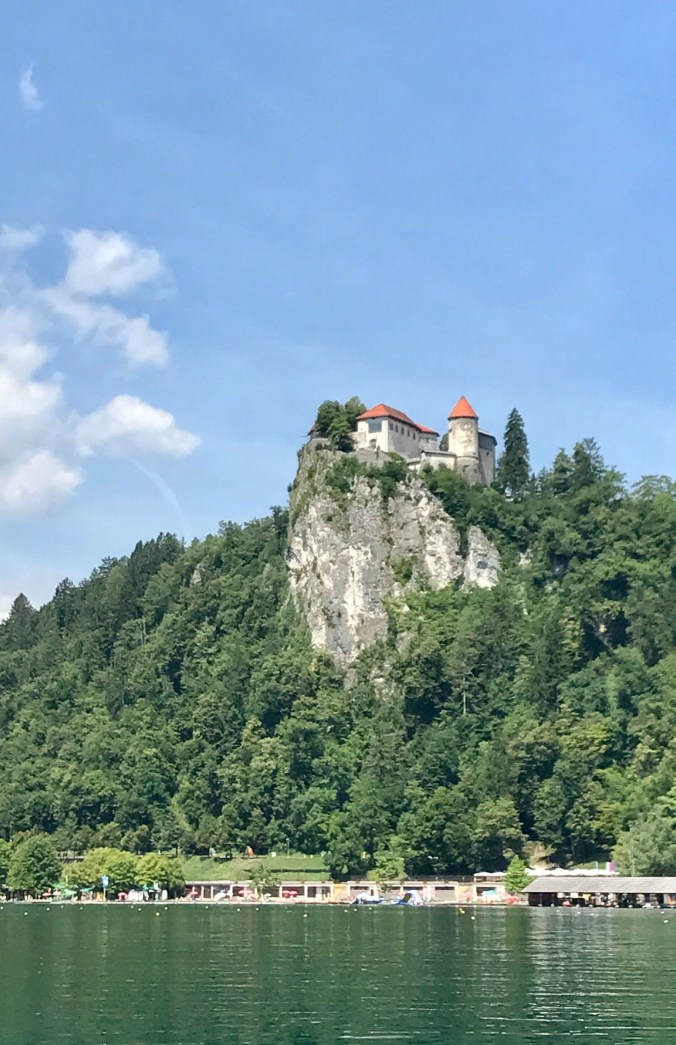
Below, a view oF Bled Castle

IMG_2152

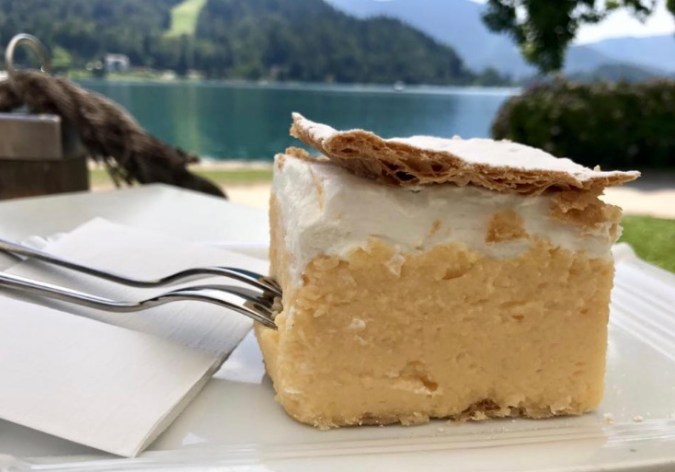
When we returned we had a nutritious lunch of creme cake, one of several Bled specialties included on Jay’s list of 100 Dessers to Eat Before You Die.

IMG_2309

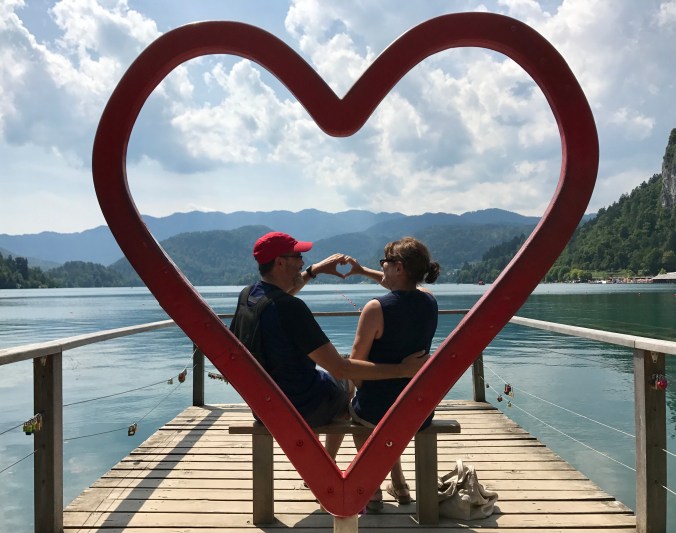
A group of friendly locals was taking pictures of each other and obligingly took several of us. Here’s my favorite, sure to be this year’s holiday card.

IMG_2191

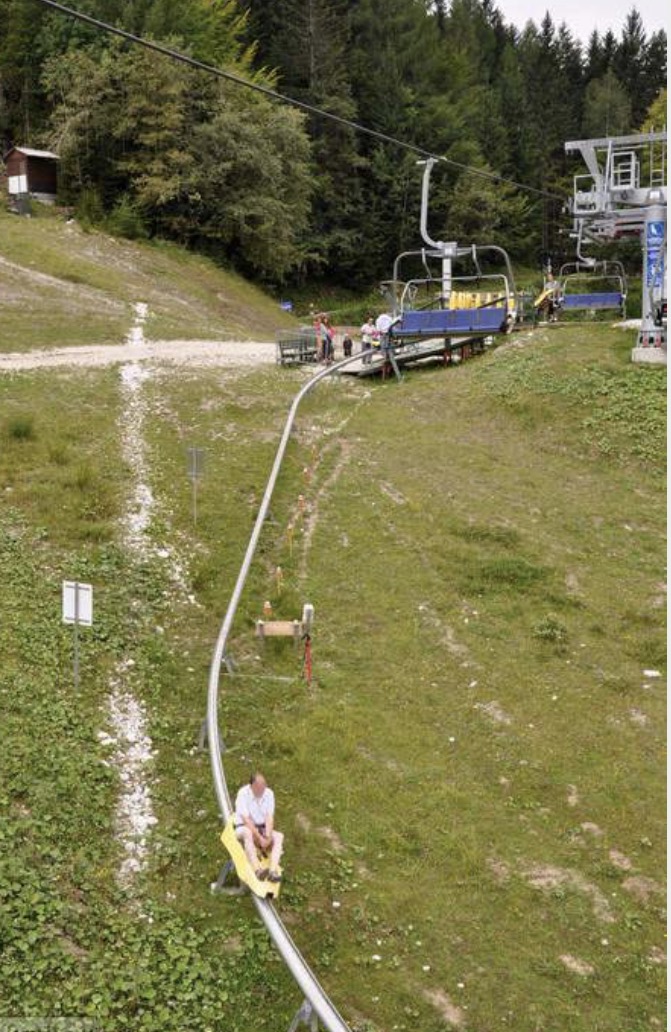
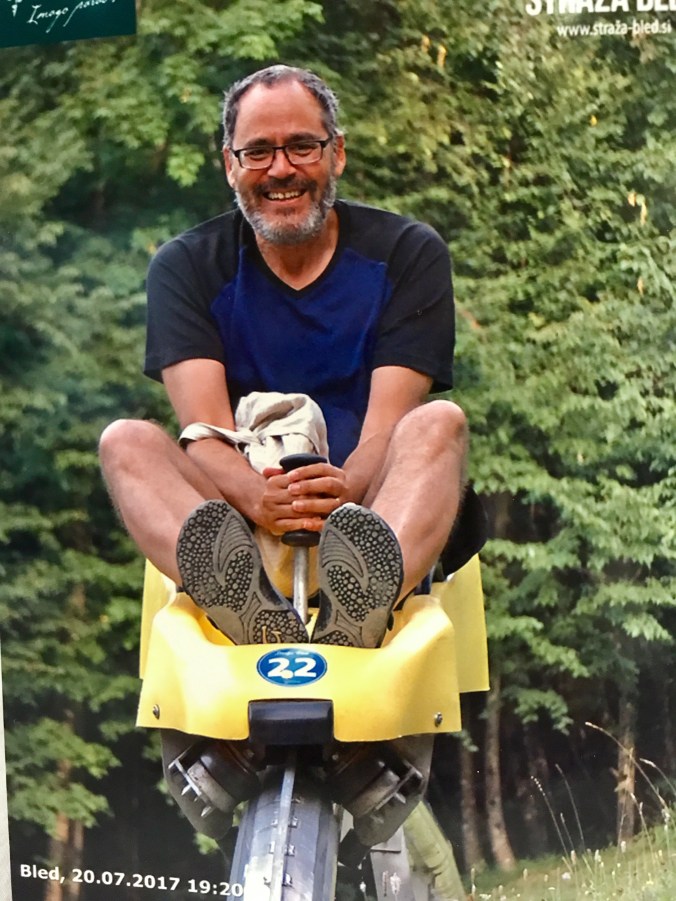
We spent some time at the lake dozing and dipping, and as we were about to head back to get ready for dinner Jay announced that he really, really wanted to go on the luge that we had seen.

IMG_2313

He had been thinking about it, this was something he’d always wanted to do, this was his chance, etc.

Reader, we both went on the luge (comfortingly referred to by the operators as the ‘summer toboggan ‘). Our pictures were taken remotely. Here is Jay.

IMG_2310

We purchased this picture. We did not purchase mine.

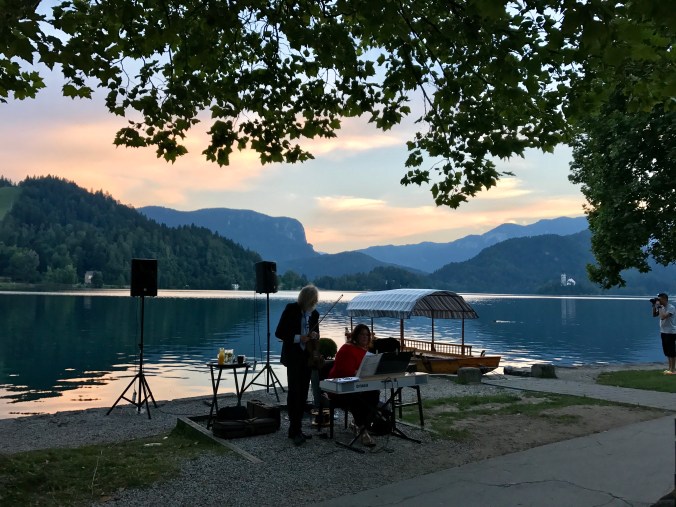
After the necessary cocktails we had a lovely dinner by the lake, soothing music included.
IMG_2202

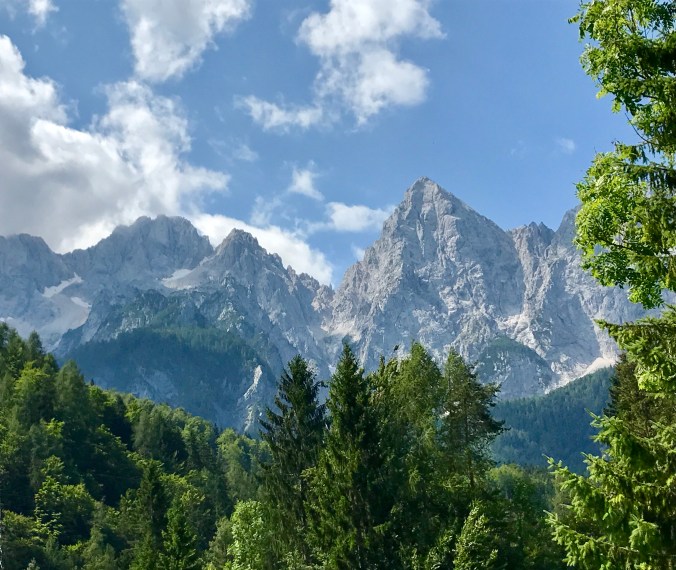
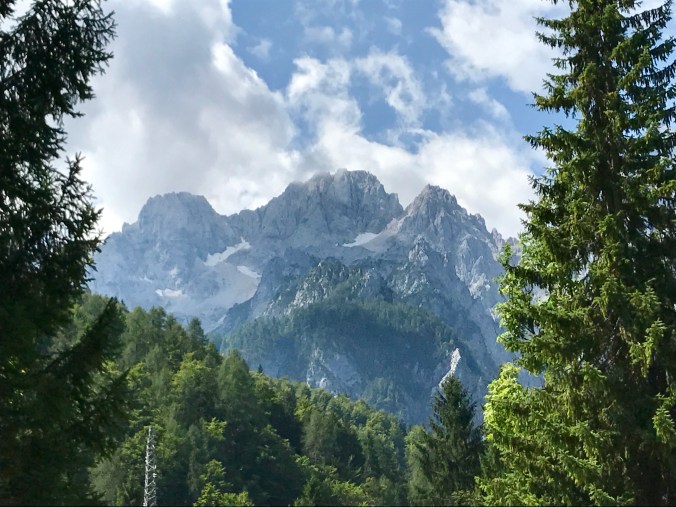
The following day we had breakfast at our hotel and then headed to Triglav National Park to get a look at the Julian Alps.

IMG_2217

Here are the three peaks of Mt. Triglav

IMG_2208

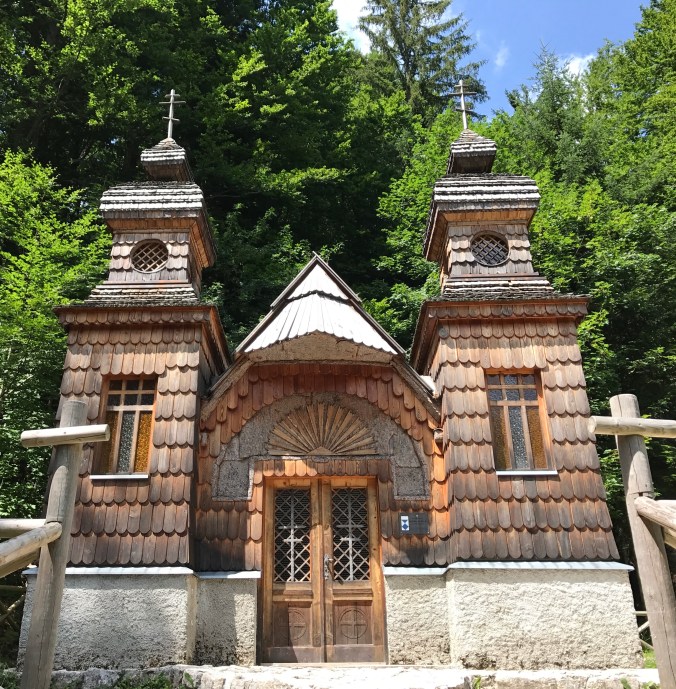
At one of the turn offs on the way up we stopped to see this chapel, a remembrance of Russian prisoners of war who died while building the road. Many of them were killed by an avalanche that occurred during construction.

IMG_2238

The road features a total of 50 hairpin turns.  We took a break at the peak.

IMG_2265

IMG_2256

IMG_2275

IMG_2260

I can’t  say I know what these guys were doing.

IMG_2248IMG_2247

We wound our way down the road and then headed home to Ljubljana.

IMG_2263