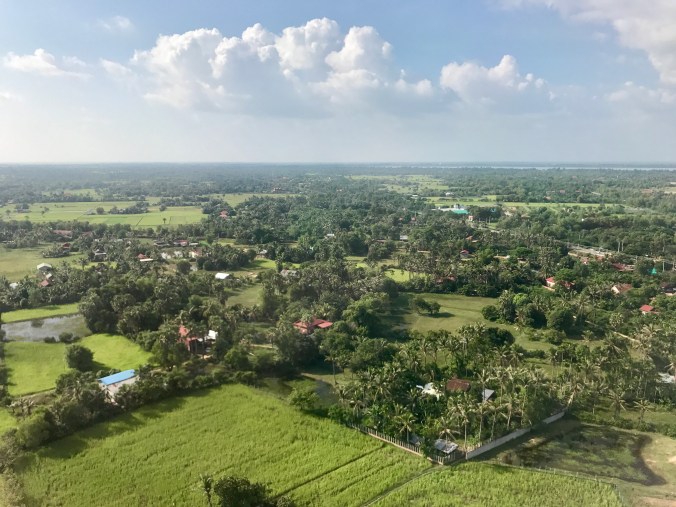
Arrival, above, and on the road to our hotel, below.
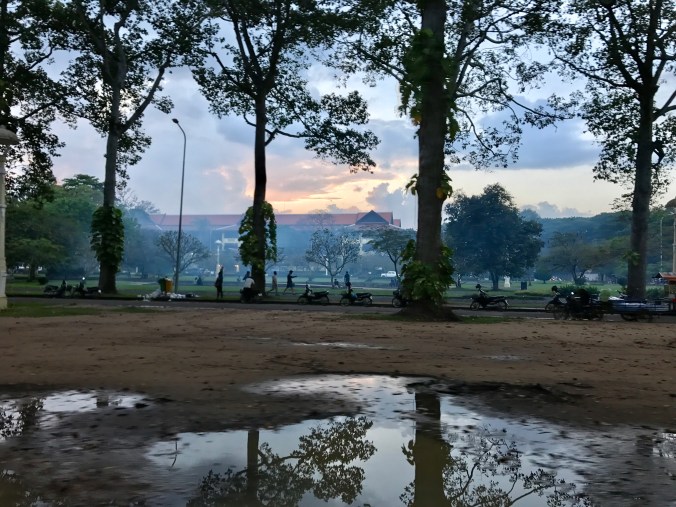
Siem Reap, in northwestern Cambodia, was the seat of the Khmer kingdom from the 9th to the 15th centuries. Today, it is the most widely visited city in the country. People come, as we did, to see the vast stone complex of Angkor Wat and other centuries’ old temples.
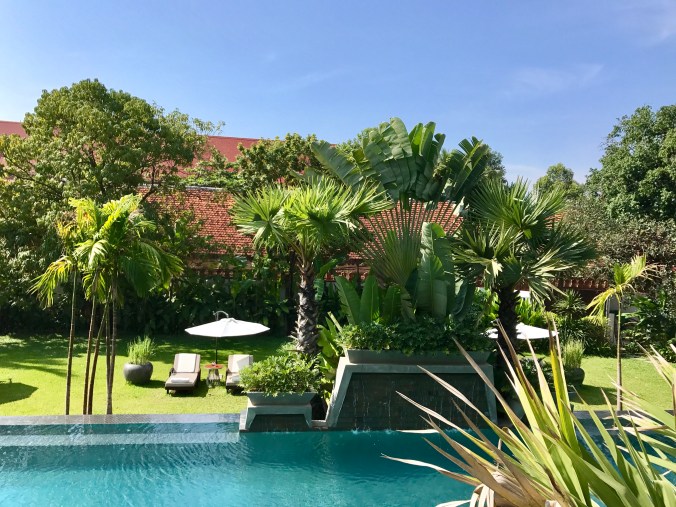
Our small hotel here is staffed by local people, many of whom grew up in Siem Reap. They are proud of their country’s rebirth, and proud of the contributions that the hotel makes to NGO’s that fund basic services for the most vulnerable residents of Siem Reap. Upon checking in, we were given an introduction to these projects, along with a tour of the grounds.
The following morning we headed to Angkor Wat with our guide and driver, stopping along the way to purchase the passes required for all the sites.
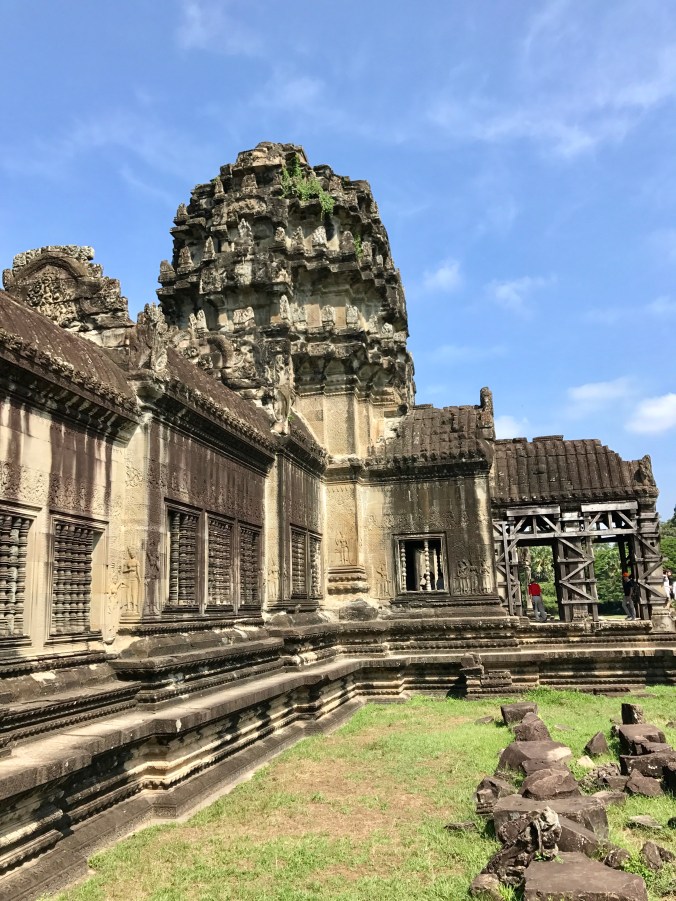
Angkor Wat is remarkable for many reasons. The scale, the architecture, the carvings that tell stories of gods and humans, love and war, heaven and hell.
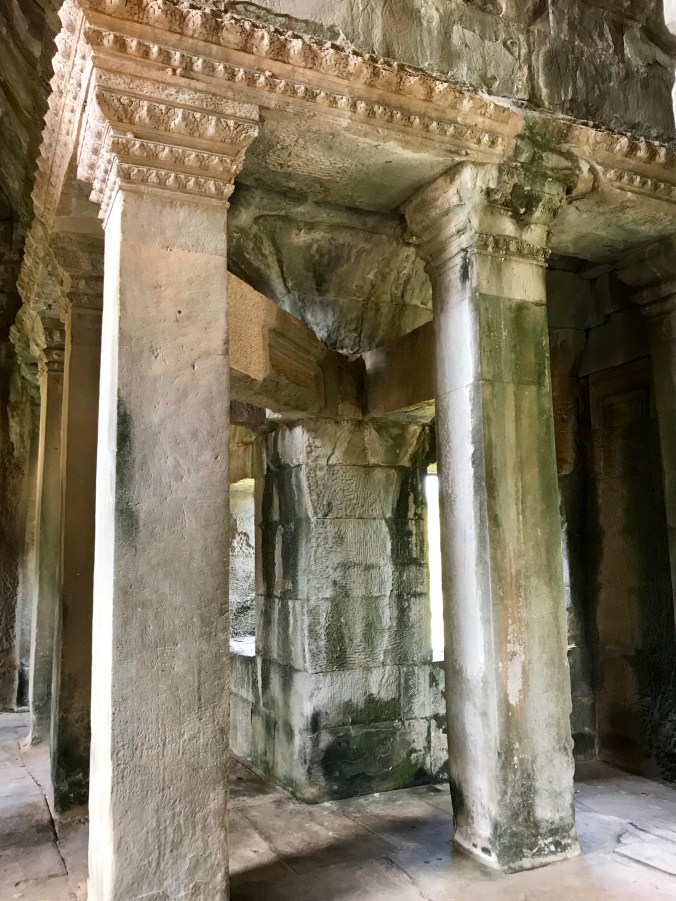
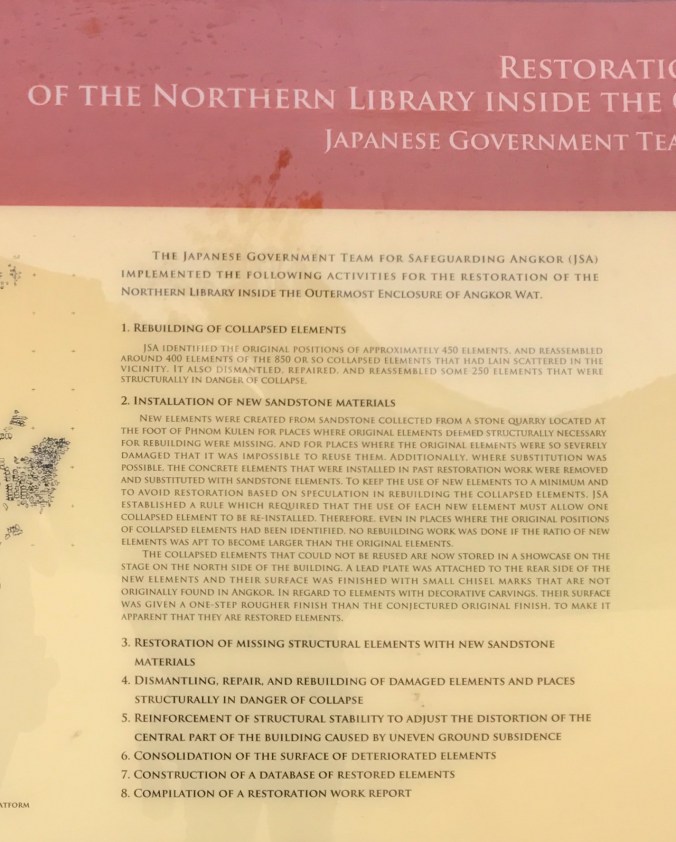
Below, restorations made to the interior of one of two libraries. Everything in the Temple complex is based on Hindu texts, 10,000 pages of which were housed in these buildings.
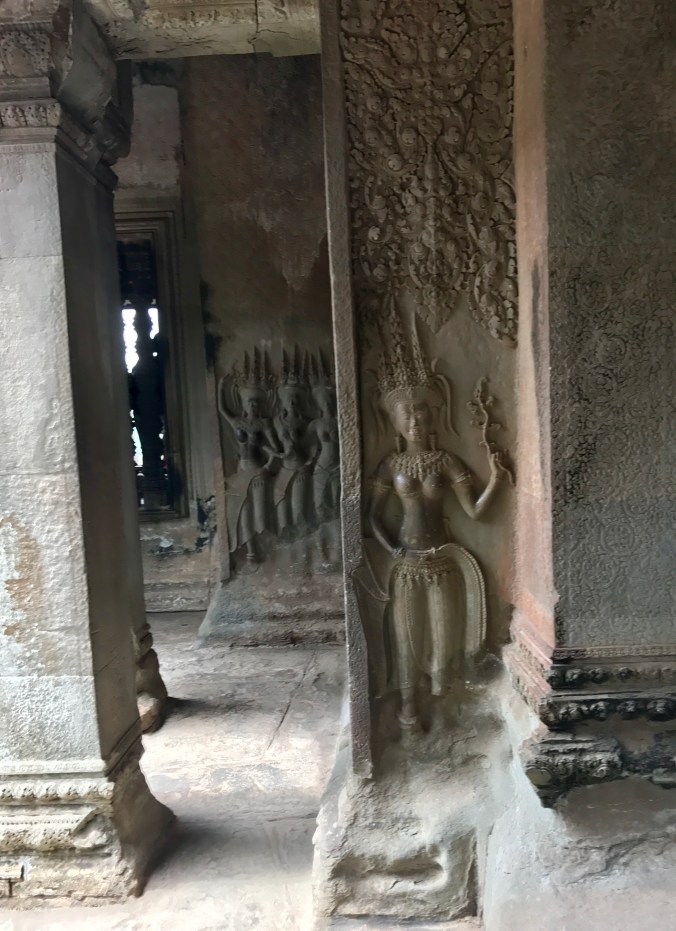
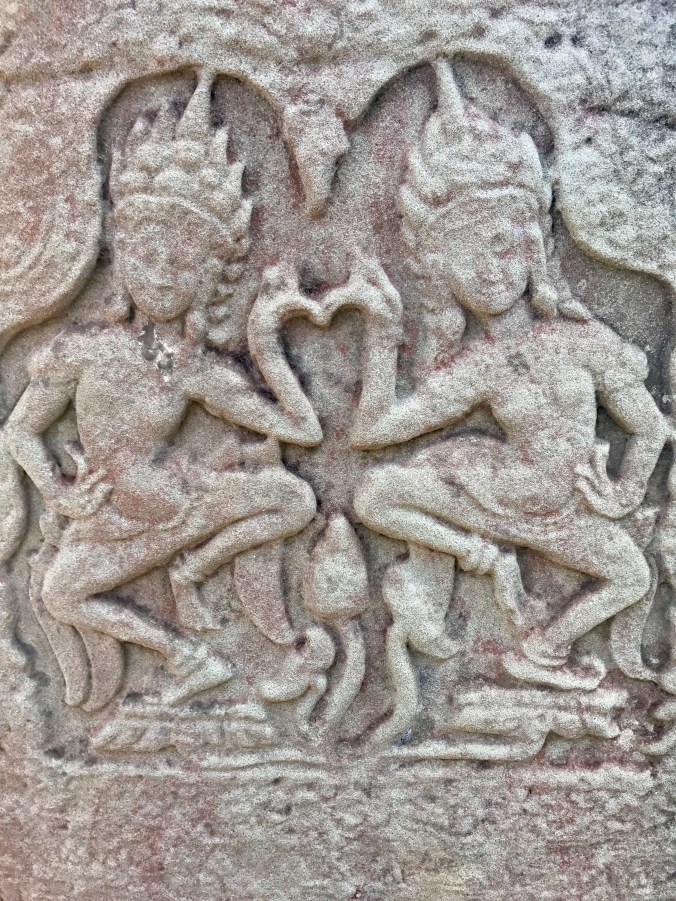
A dancer, one of many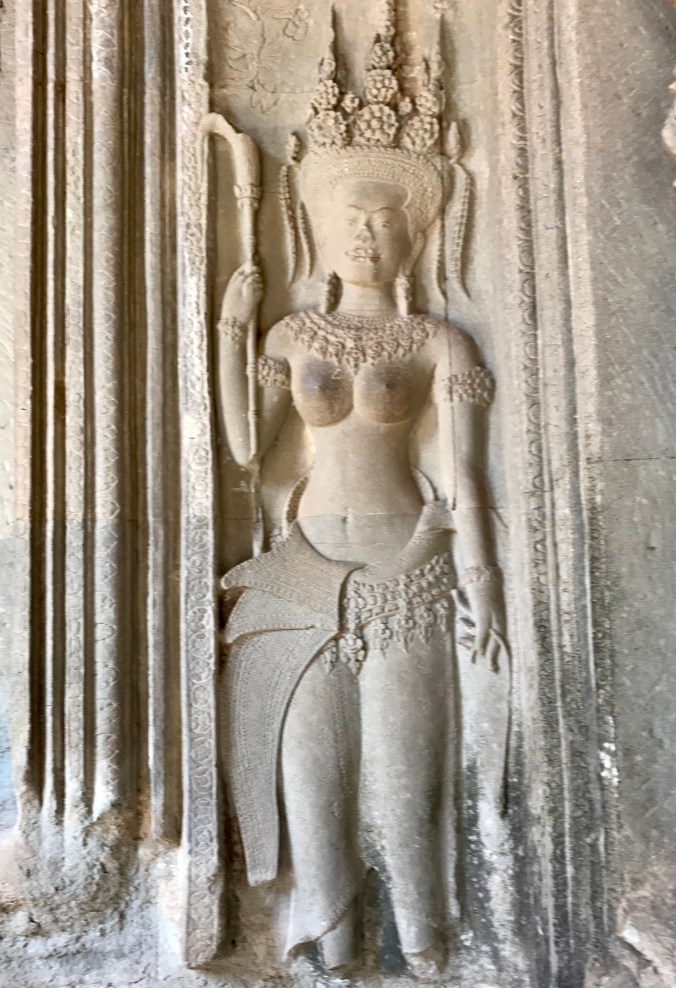
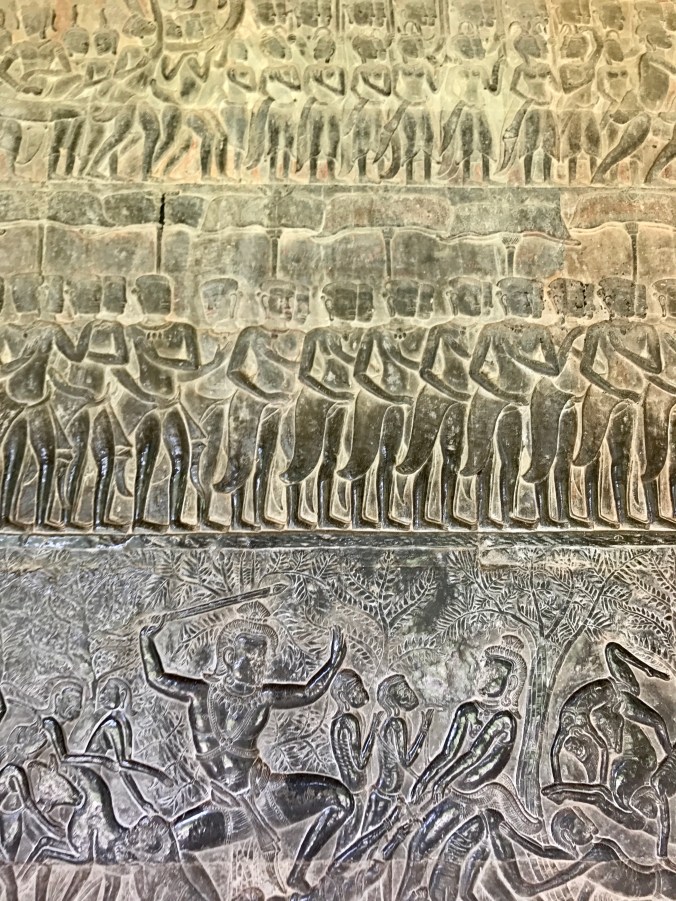 In this relief, purgatory, and beneath it, an illustration of one of the 37 different punishments suffered by wrongdoers in Hell.
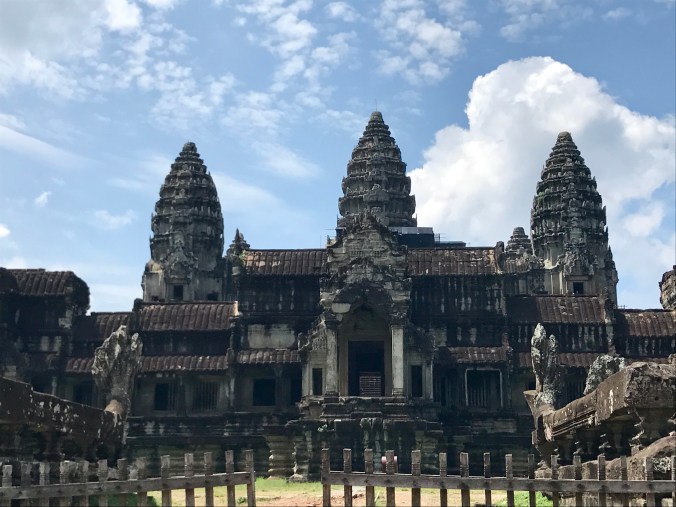 Three of the five towers.
Below, views from the main Temple tower
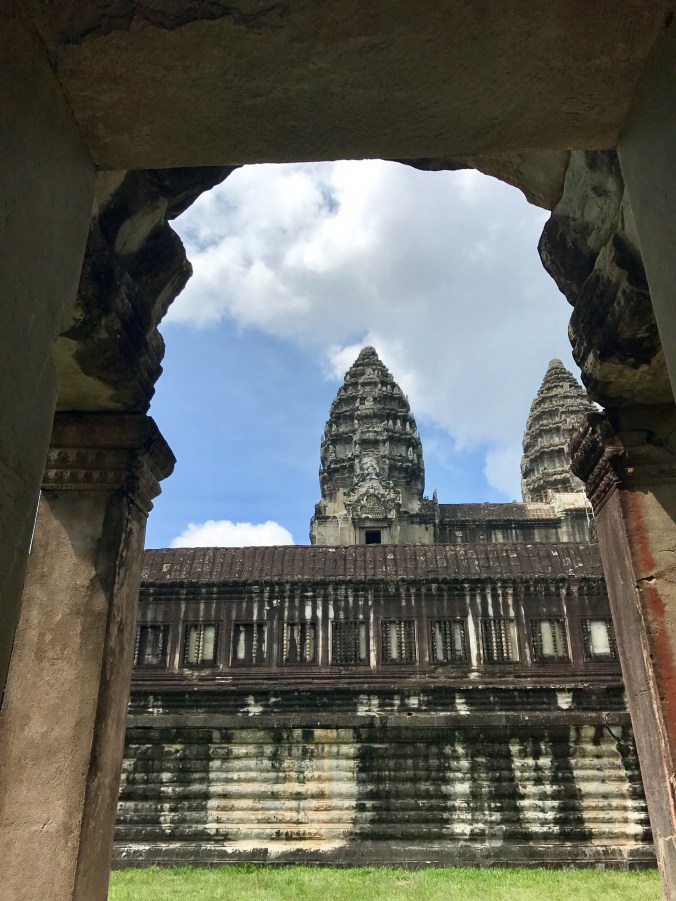
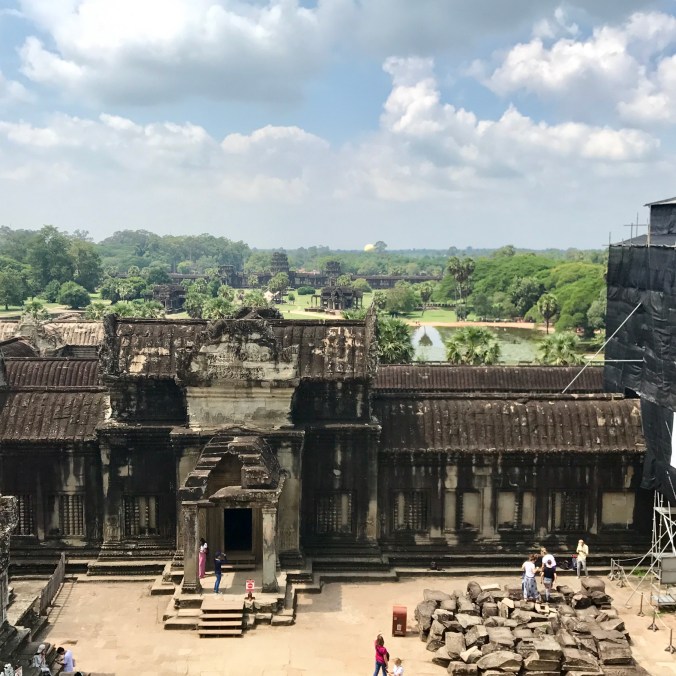
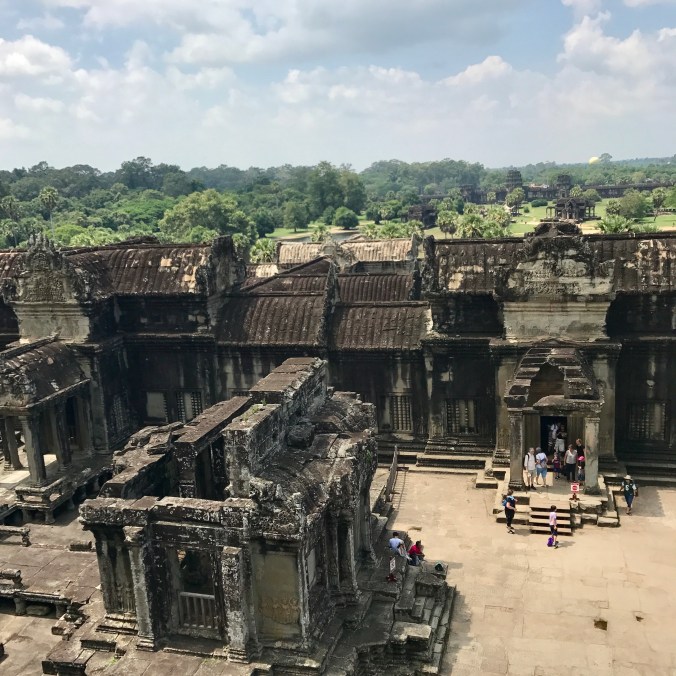
After two and a half hours here we headed for Ta Phrom, now popularly referred to as the Tomb Raider Temple. Yes, Angelina Jolie was here and made a movie. We told our guide we could skip this one, but he encouraged us to make a stop here and we were glad we did.

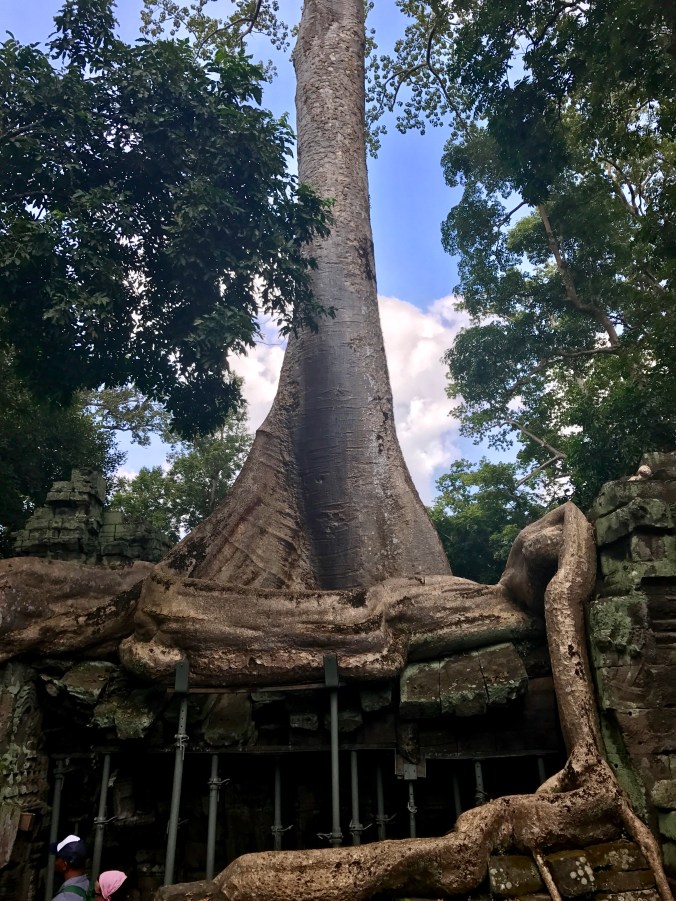
Long abandoned and left to the elements, Ta Phrom is an arresting visual of the natural world taking back what man has tried to claim.
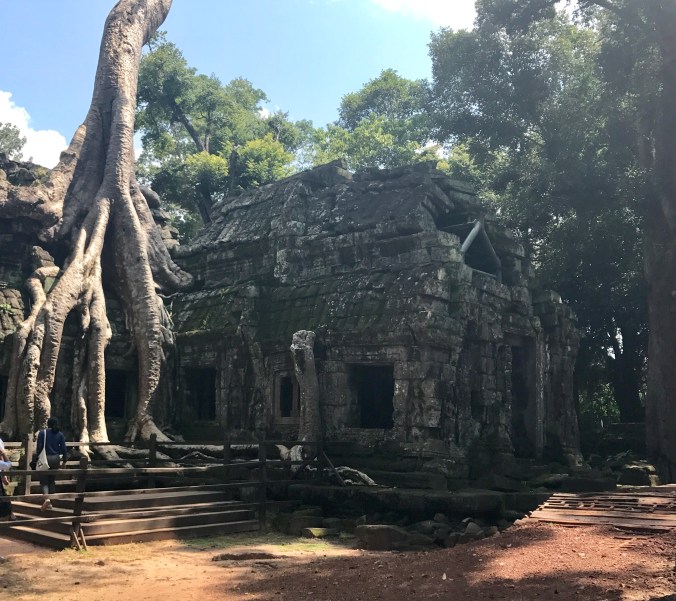
Check out the roots of these trees.

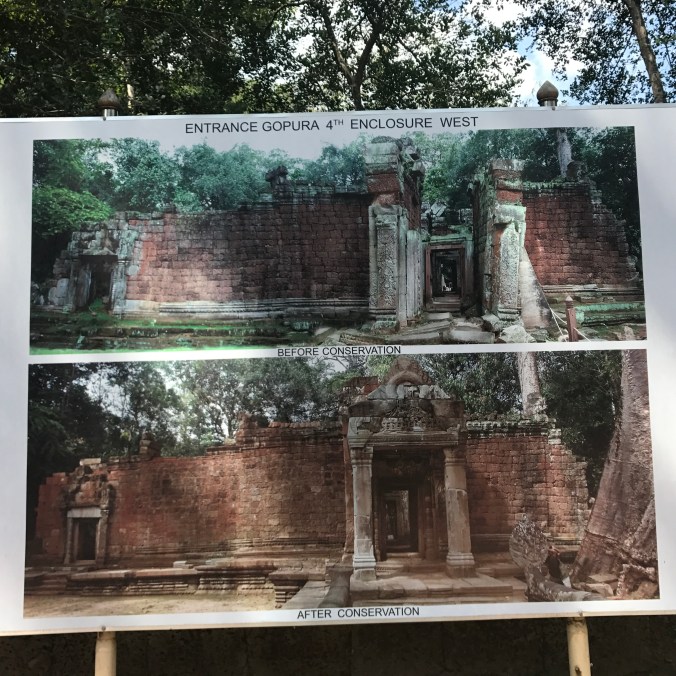
The temple is now being restored piece by piece. Before and after shots, below.
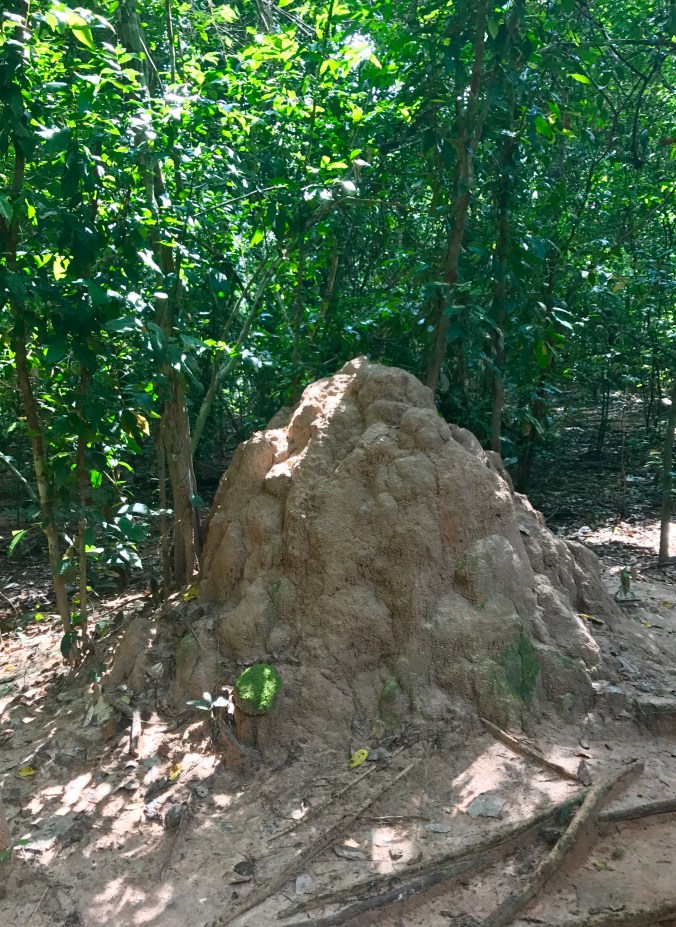
On the way out we observed the work of some tiny builders: a termite nest.
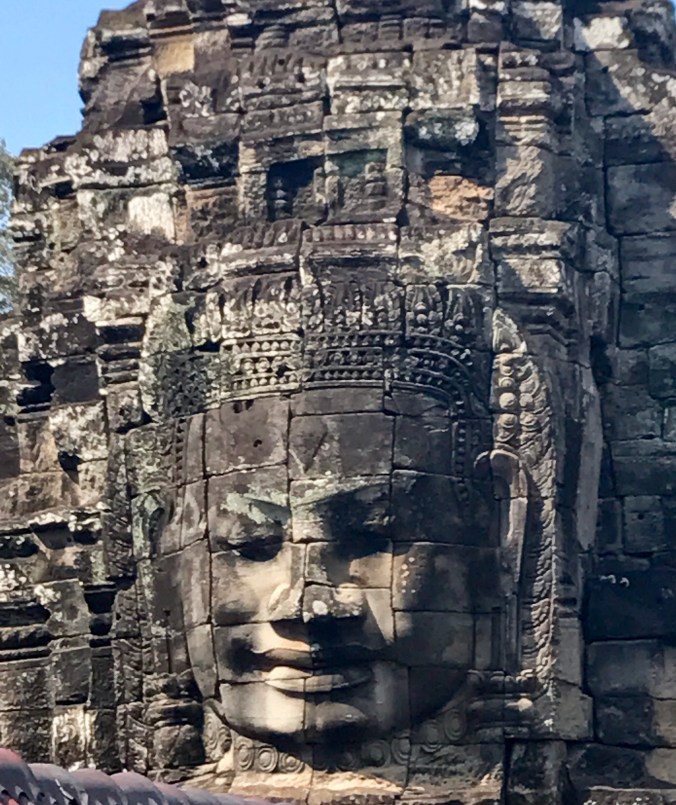
Our last stop was Bayon, built 50 years after Angkor Wat and Angkor’s first state-level Buddhist Temple. It is distinguished by many towers featuring the face of Buddha (over 200 faces!). An astonishing sight.
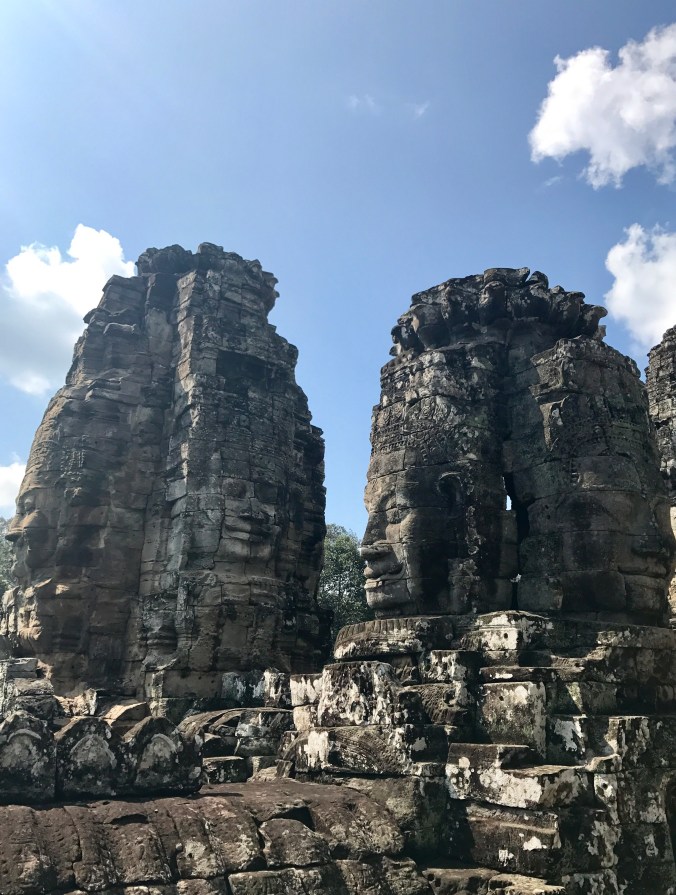
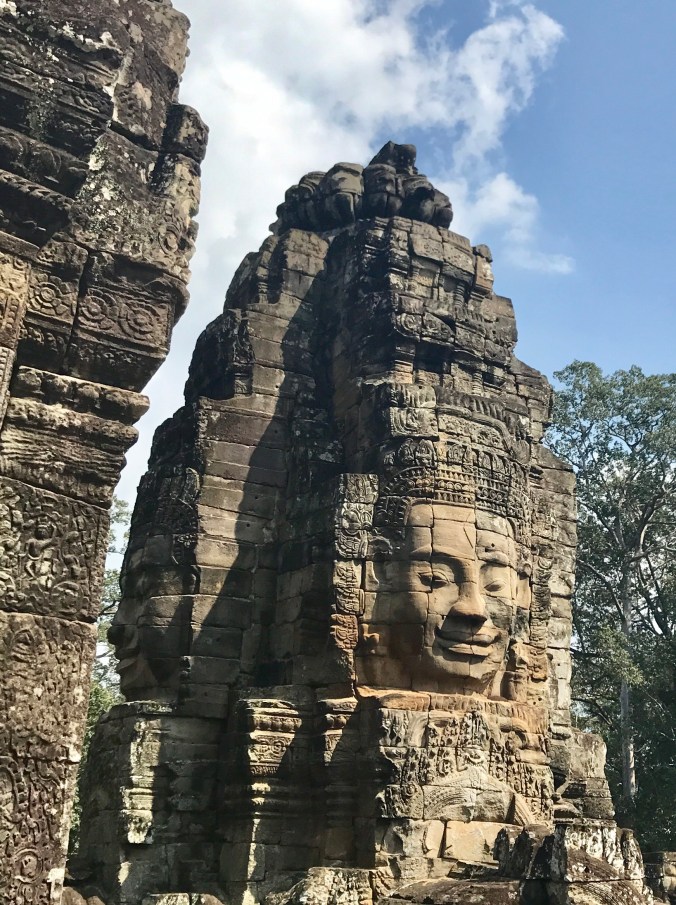
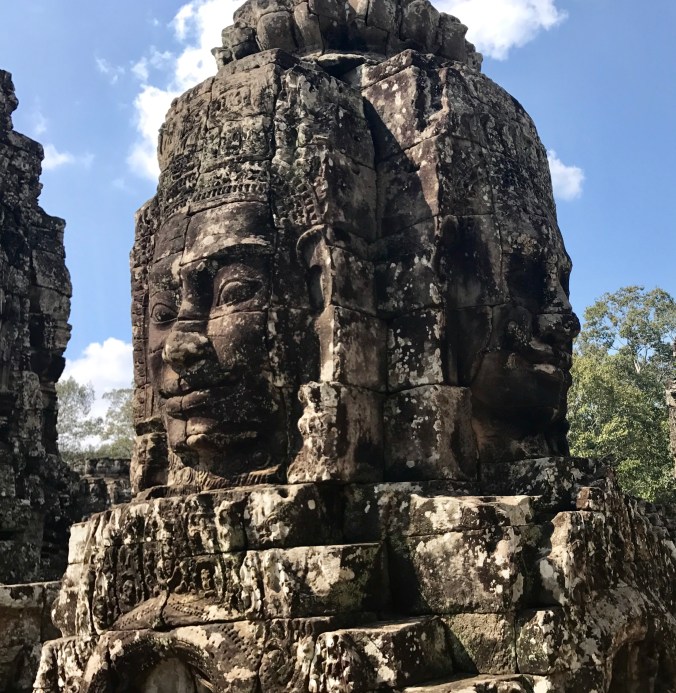
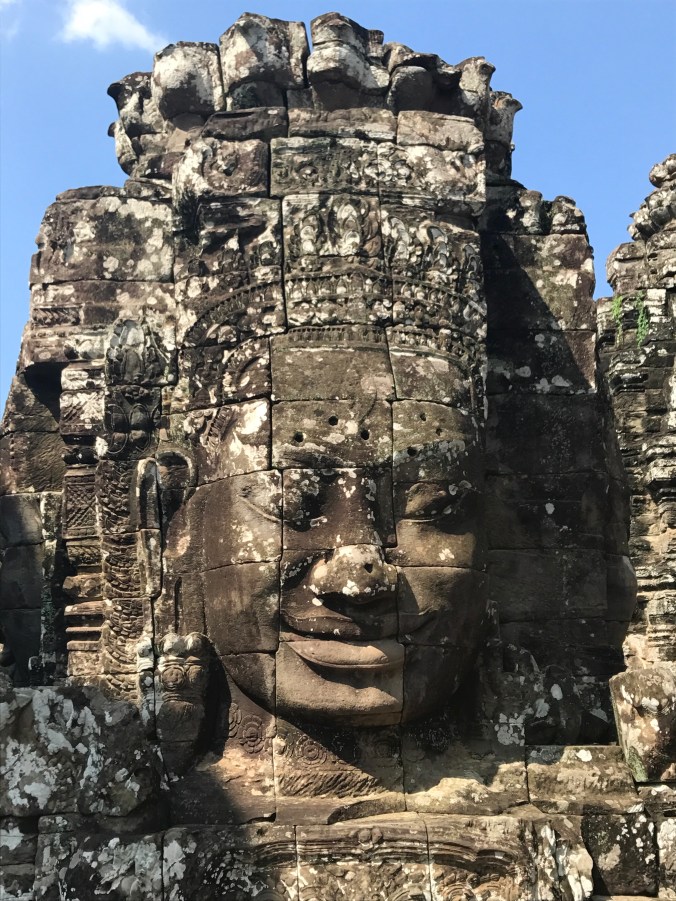
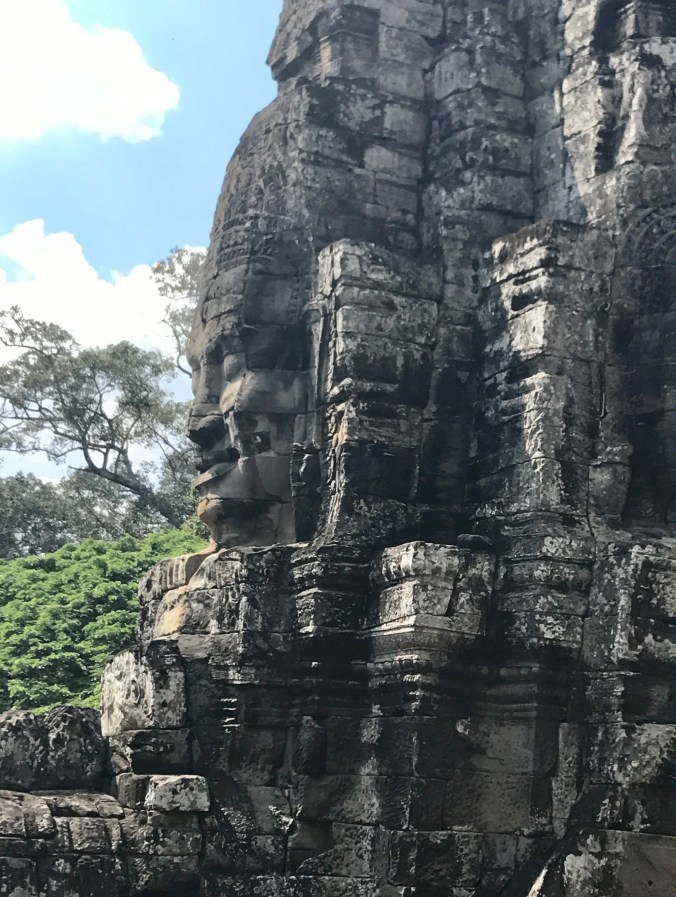
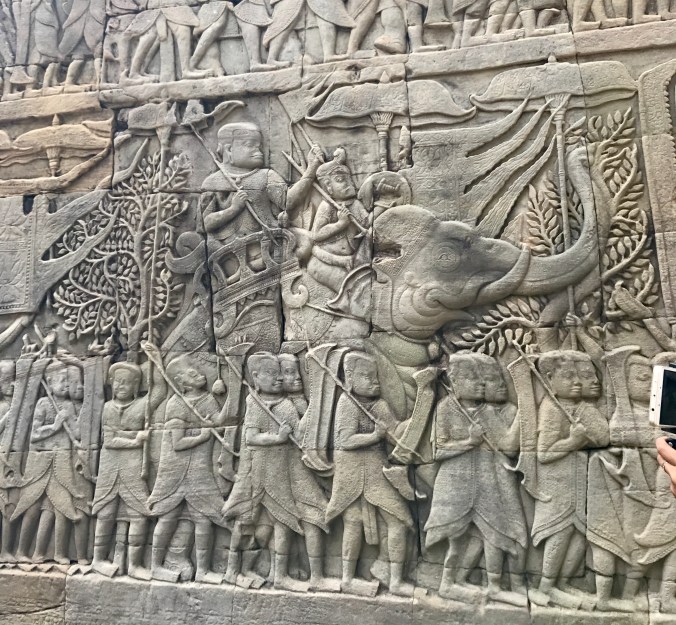
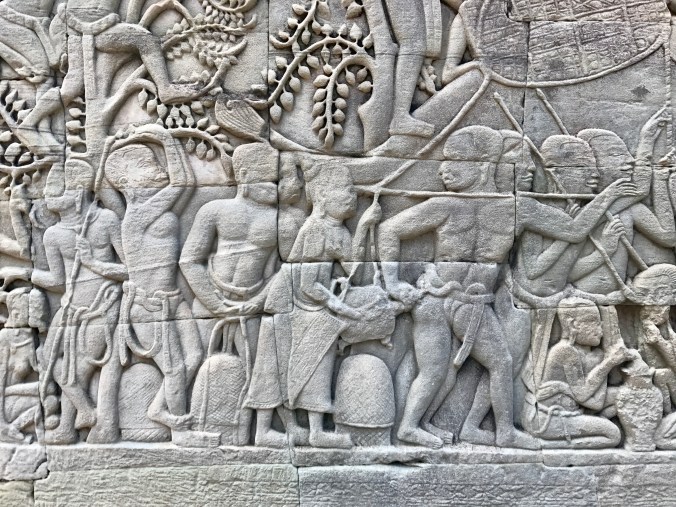
Bayon Temple also has many well preserved relief carvings. Along with narratives of battles and other significant events, these carvings are a fascinating record of day to day life in the late 12th to early 13th centuries.
Here, riding armored elephants into battle.

A woman about to give birth.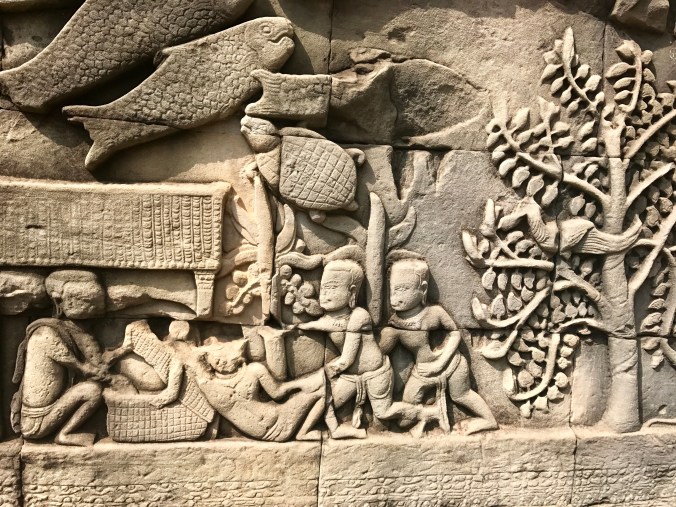
Delousing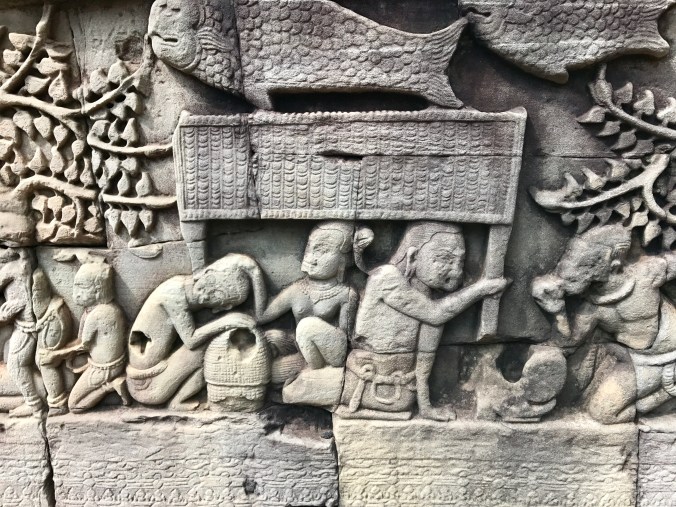
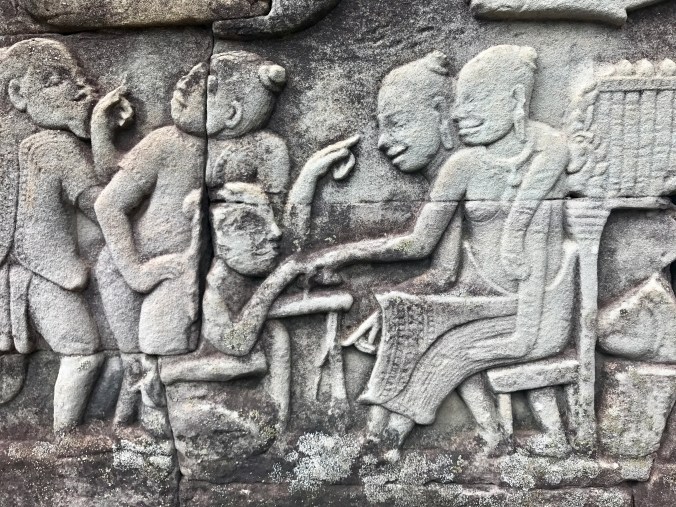 I thought these were women getting manicures, but our guide said they were getting something weighed.
How about this one: a woman is angry at her husband, so she has a tortoise bite him on the butt (so I was told. I cannot vouch for the historical accuracy of this interpretation).
 ~~~~~~~~~~~~~~~~~~~~~~~~~~~~~~~~~~~~
 Journey with Phyllis and Jay