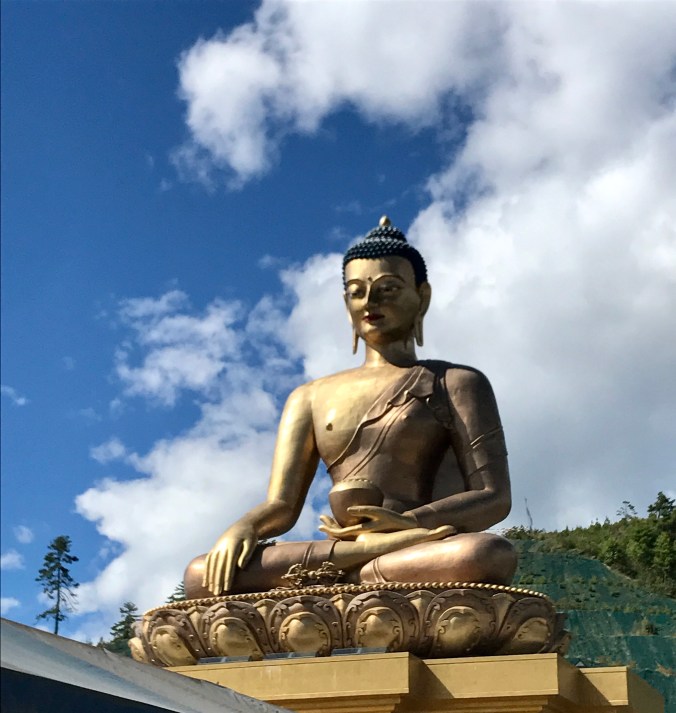
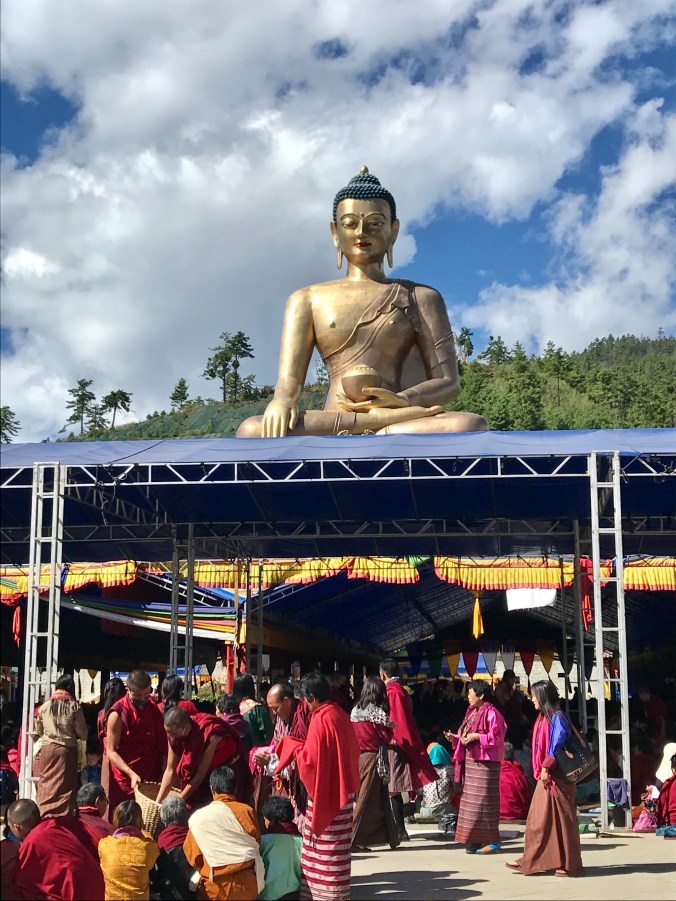
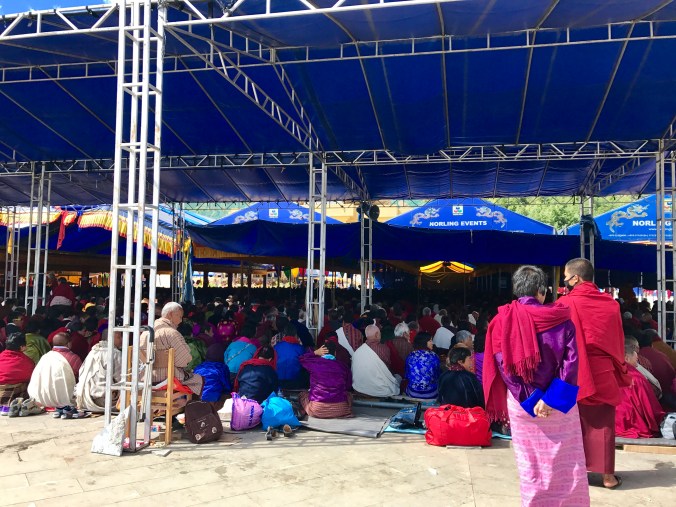
Our day began with a visit to the Buddha Dordrnma, a 160 ft statue that sits atop a three story base within which there is a large chapel. On the day we visited there was a very special event going on, an oral teaching by a Buddhist master.
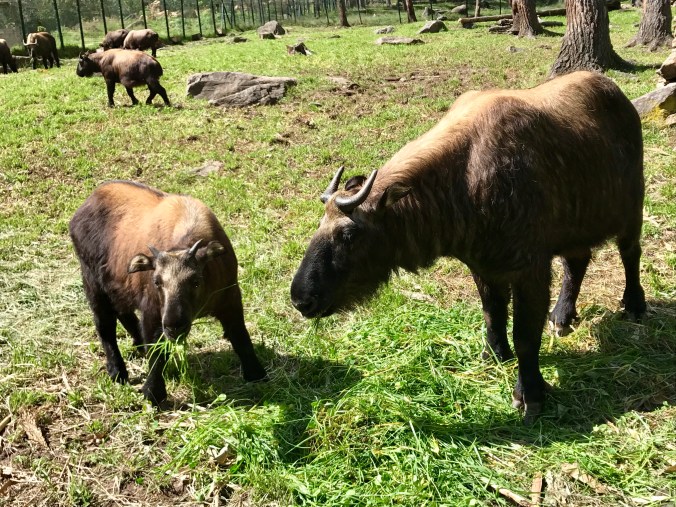
Our next stop was a visit to the Takin sanctuary. The unusual looking takin, Bhutan’s national animal, is described as a “goat antelope” with a “prominent Roman nose”.
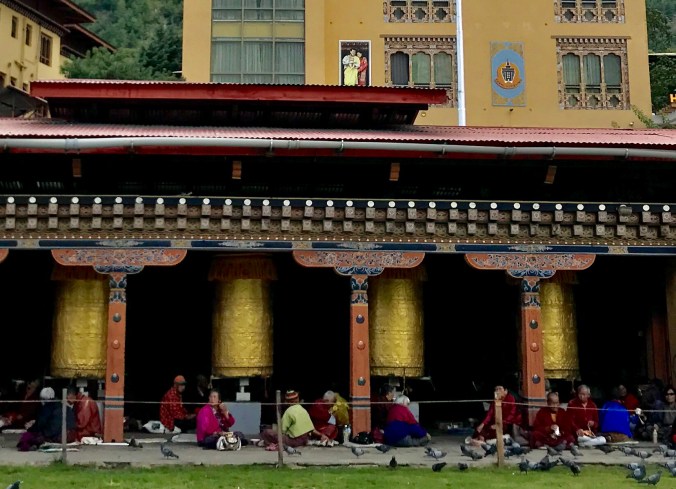
Next we visited a chorten, also called a stupa, this one a monument built by the mother of the third king after his death. With its elaborate design and gorgeous interior paintings, it is considered one of the finest such monuments in the country.

Our guide explained that this is a popular gathering place for older residents of Thimphu.
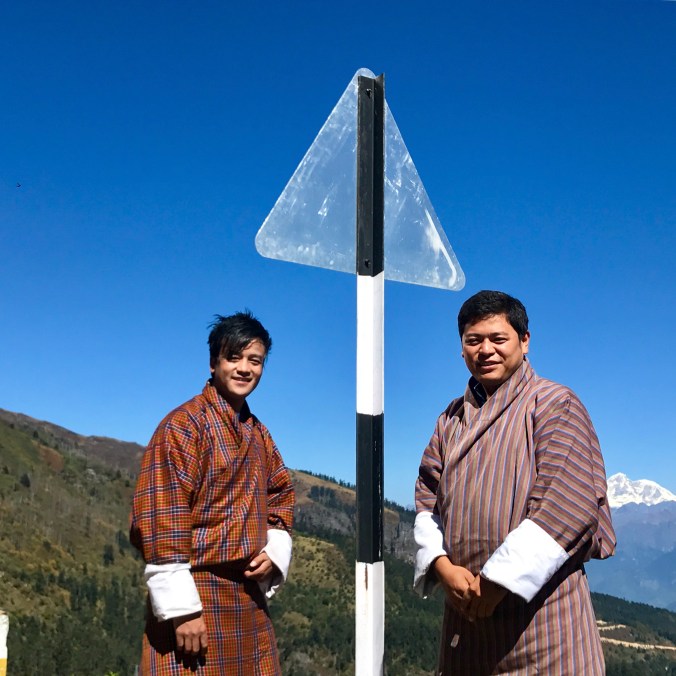
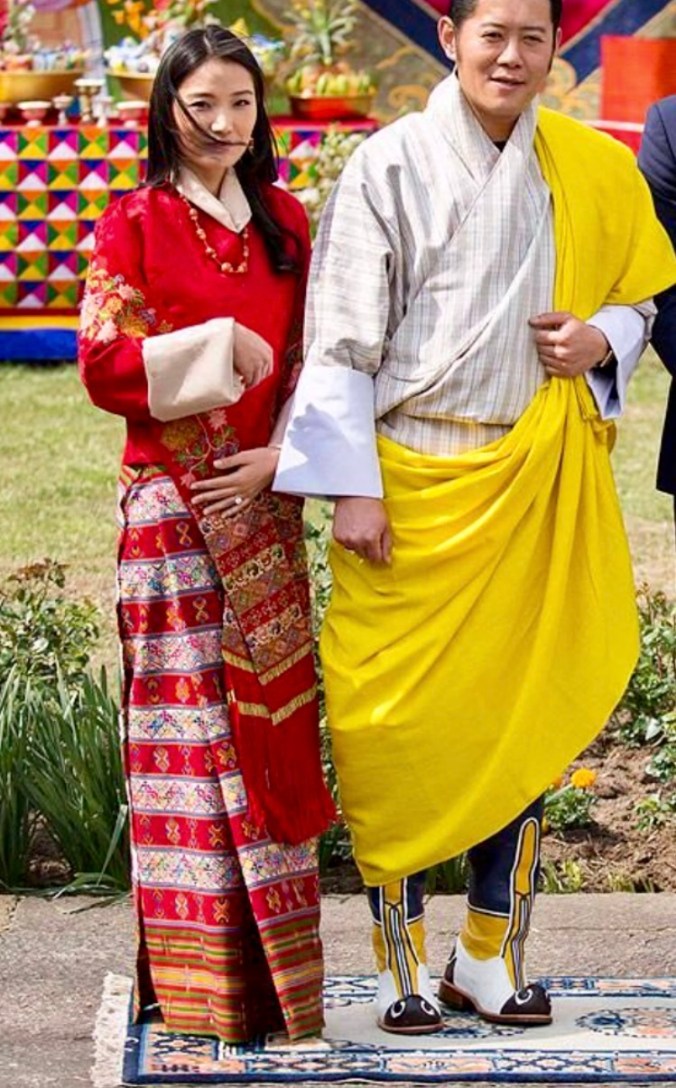
A word here about the national style of dress. For men, it’s a gho, a flat piece of fabric that has to be skillfully folded into a garment.
From the front, our guide Sonam on the right and driver Colin on the left.
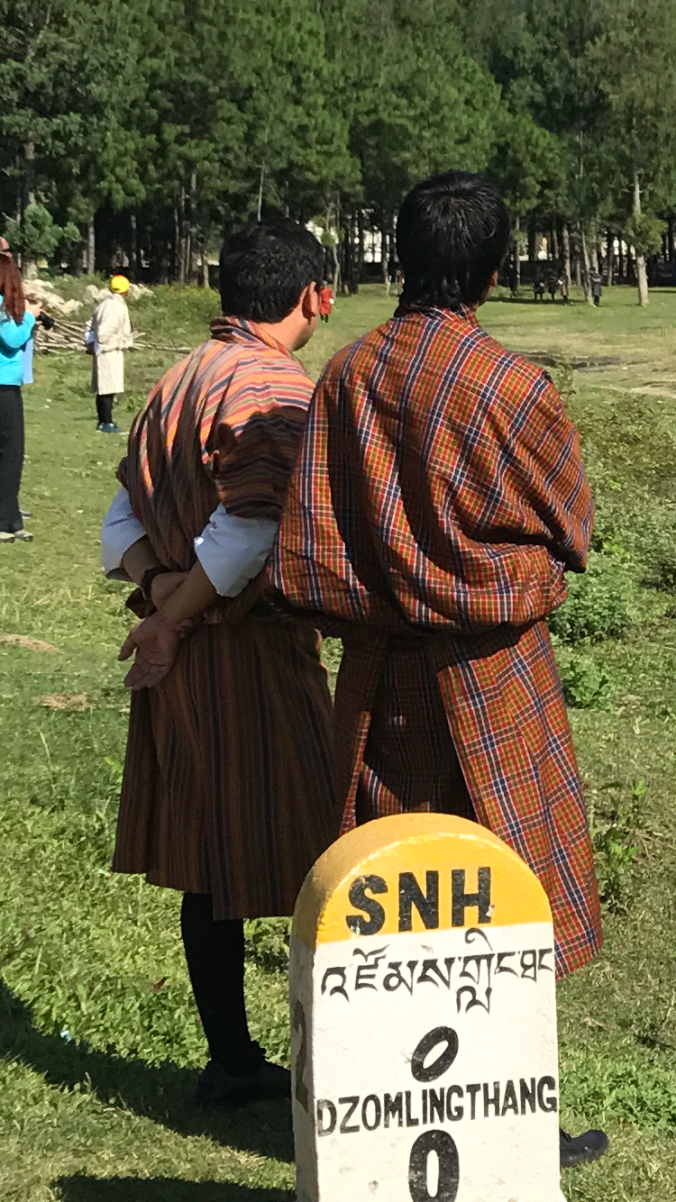
And from the back. Note the double pleat.
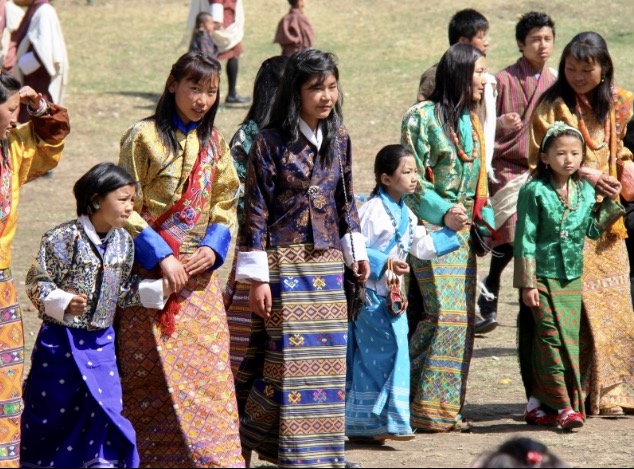
Boys begin to wear the gho as soon as they begin school, and it is compulsory for all Bhutanese to wear national dress in schools, government offices and on formal occasions.
The women’s dress, called a kira, also begins with a large flat piece of fabric. It is wrapped around the body over a Tibetan style silk blouse. Last comes a short jacket made of silk or cotton.
I must include a picture of the royal couple, a highly photogenic and much beloved couple whose pictures , including many with their young son, are everywhere.
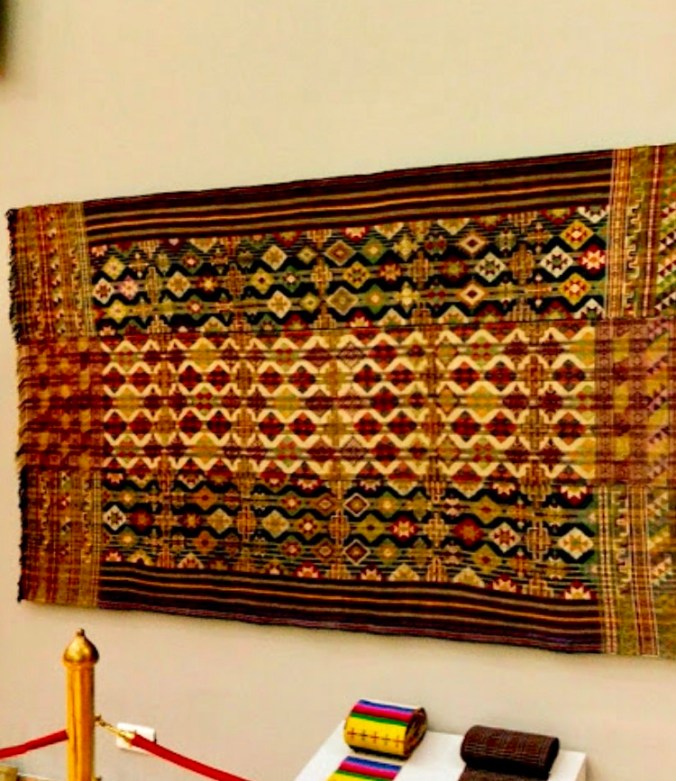
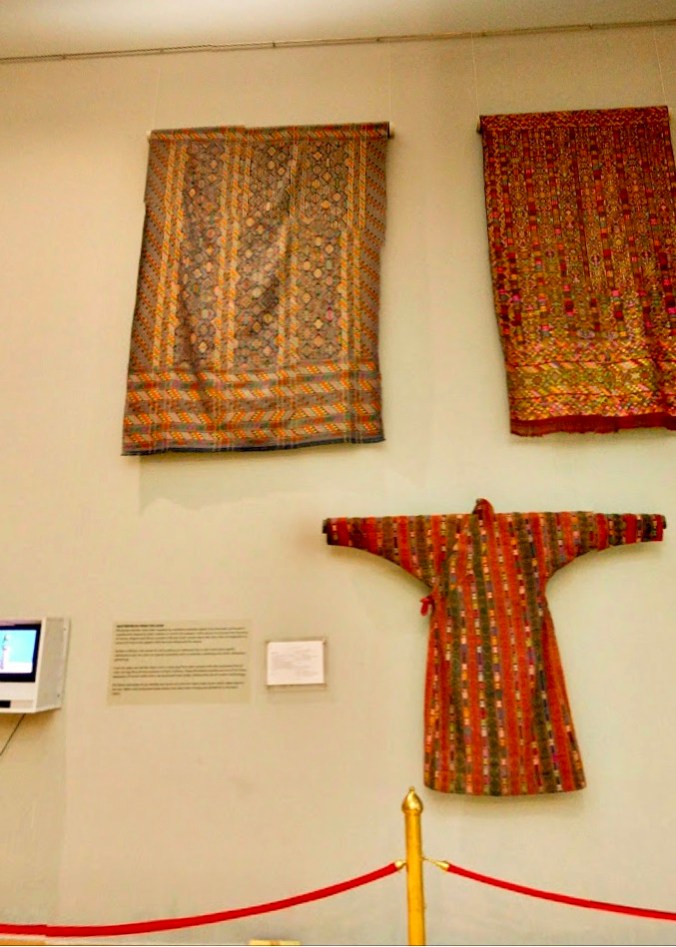
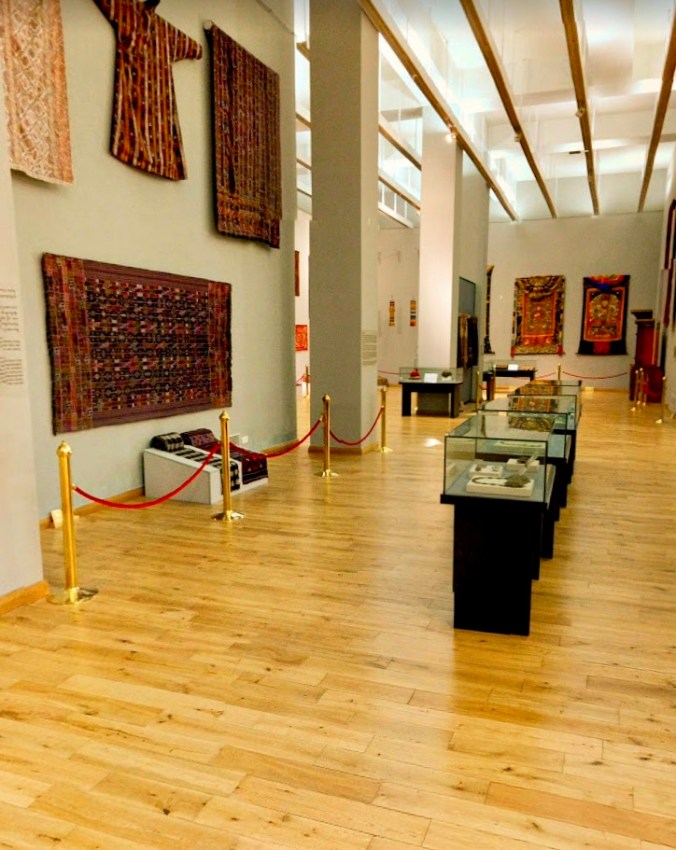
Bhutan is known for the beautiful fabrics created by artisans using intricate weaving techniques, some of which are unique to Bhutan. These are displayed in the National Textile Museum, built in 2013.
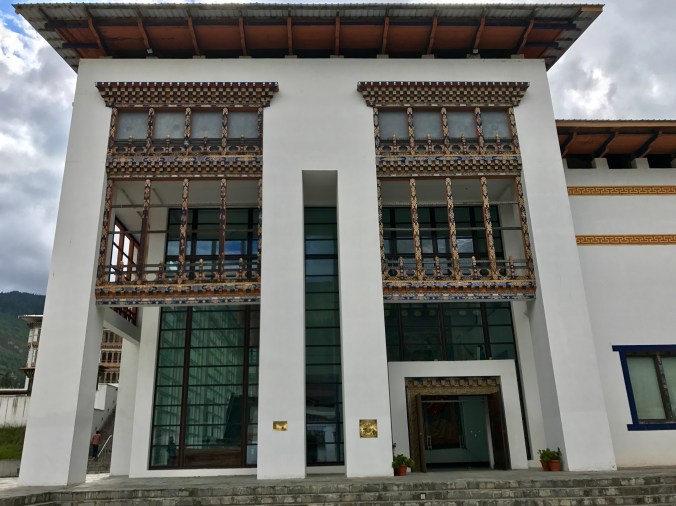 So much gorgeousness.
As elsewhere, no photos allowed inside, so here are some photos from the web.
On our way back to town we passed Bhutan’s new shopping mall, which our guide informed us has the country’s only escalator.
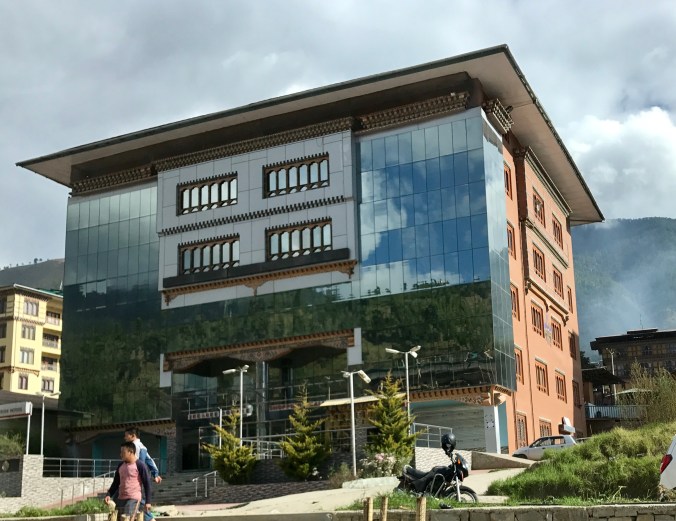
The mall is a popular gathering spot for young people, but most people continue to buy traditional clothing from local sellers. According to our guide, “no one shops there – quality is not good”.
~~~~~~~~~~~~~~~~~~~~~~~~~~~~~~~~~~~~
 Journey with Phyllis and Jay
Love the fabrics. Would have loved to see how they are made. Beautiful people and beautiful country. Sooooo happy for you both!!!!! What a trip!!!
LikeLike