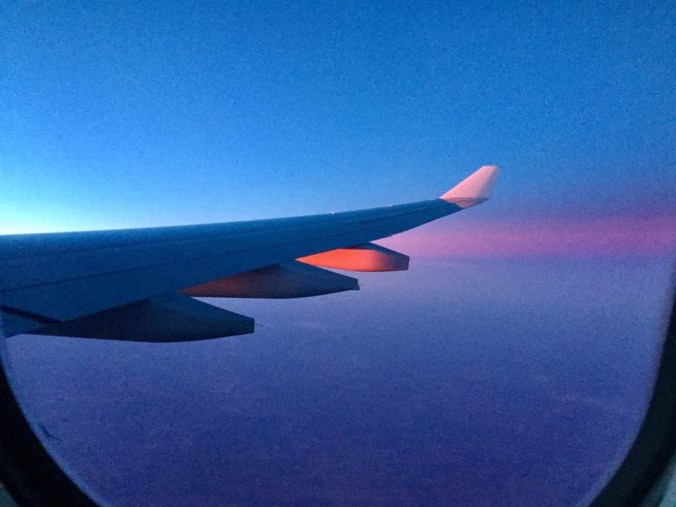
 Sunrise over New Zesland
Sunrise over New Zesland
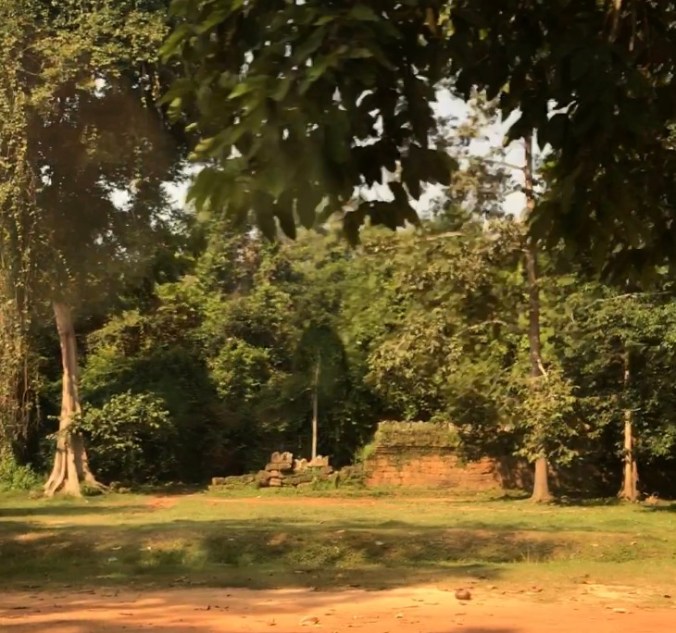
Today we traveled out of the city and into the lush countryside. We saw half a dozen of the more remote temples, all of them built by the same ruler who built the temple with 200 faces of the Buddha (see yesterday’s post).
The temple visits were very interesting, but what we enjoyed most today was traveling through the incredibly beautiful, green, water filled landscape, seeing a bit of daily life in Siem Reap, and learning more about the region, including the ongoing efforts to recover from decades of conflict.
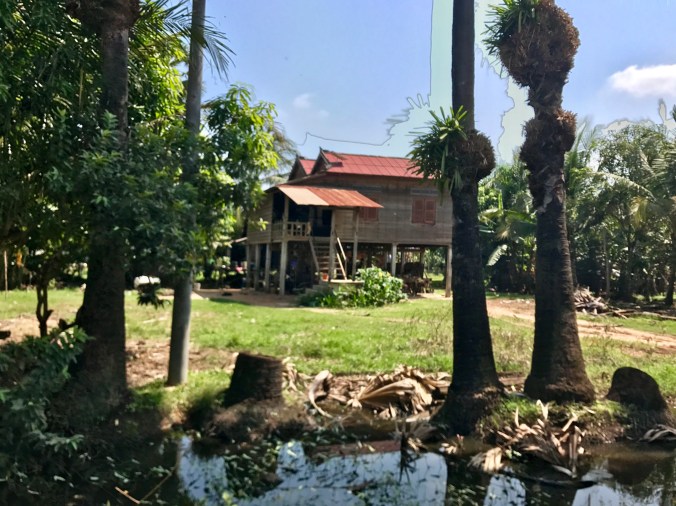
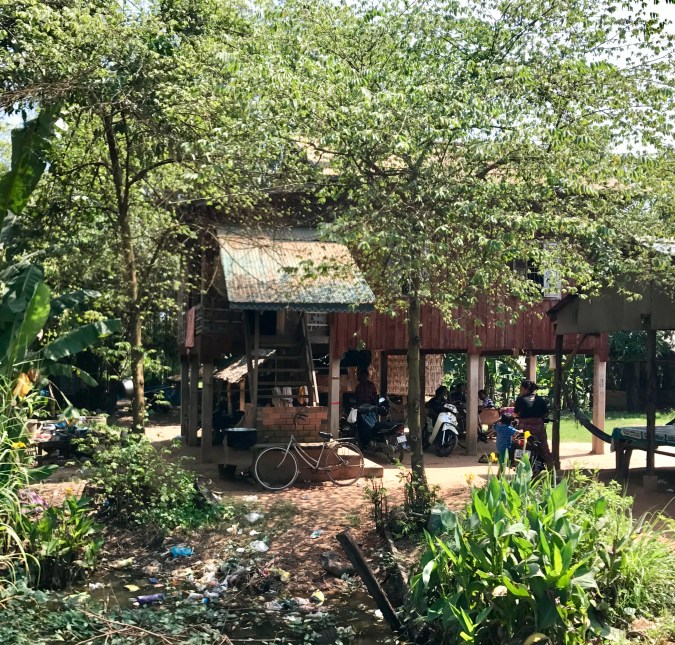
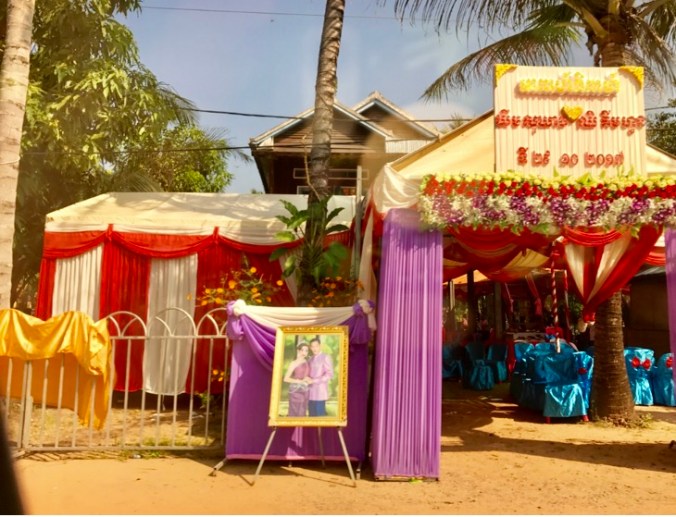
We passed through villages, rice fields, local markets, a wedding venue, and on the way back, a wedding.
Single trees, as below, are used to mark property boundaries.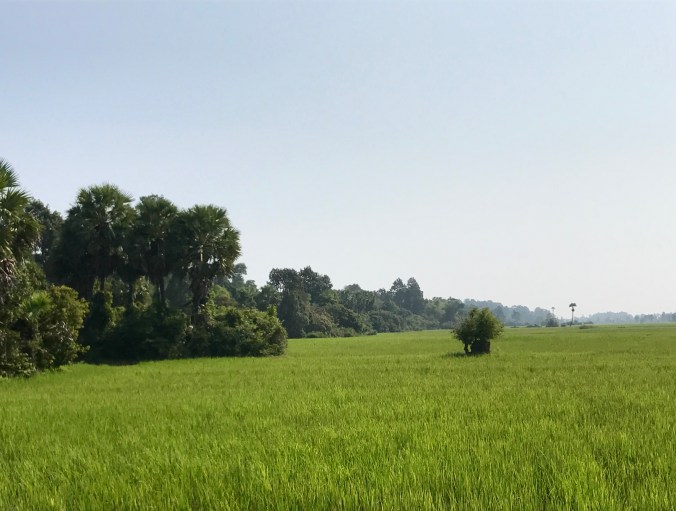

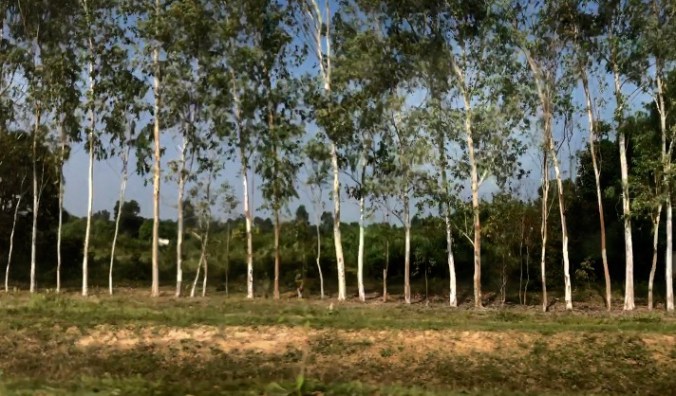
Water buffalo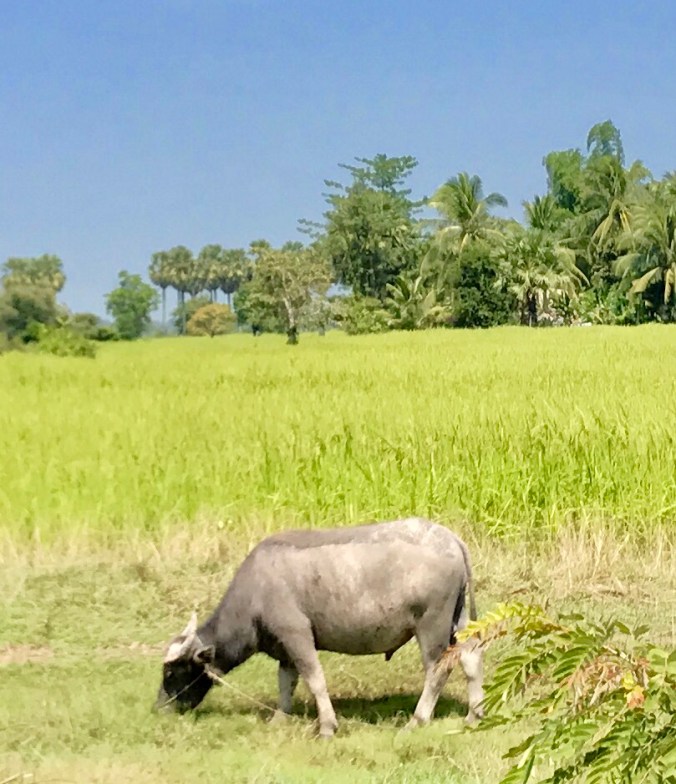
Below, getting ready for the big day. Actually, the second big day: yesterday was the wedding, ceremony, attended by family. Today is the party.
Temple views
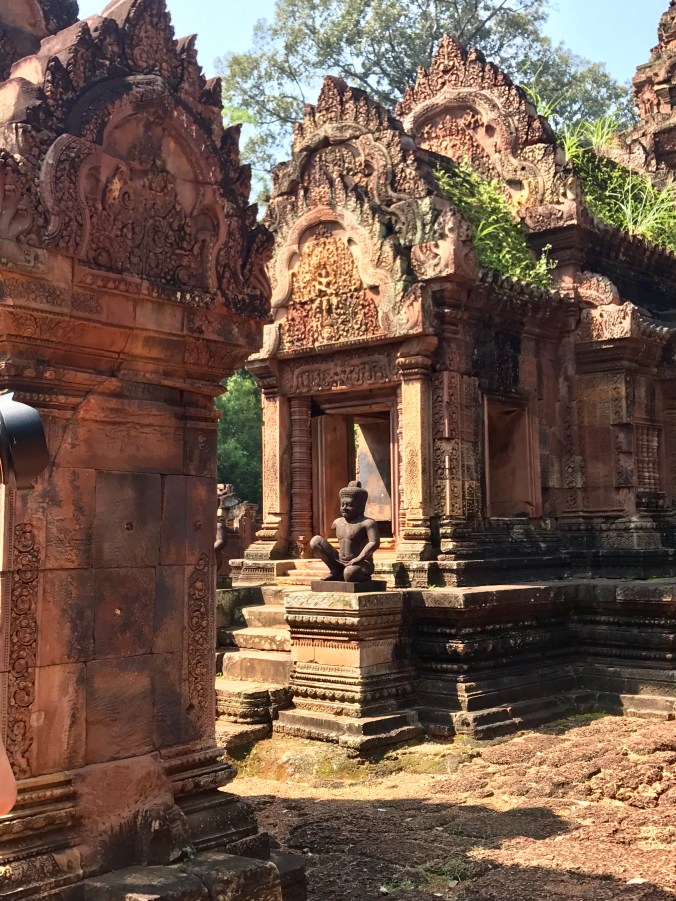

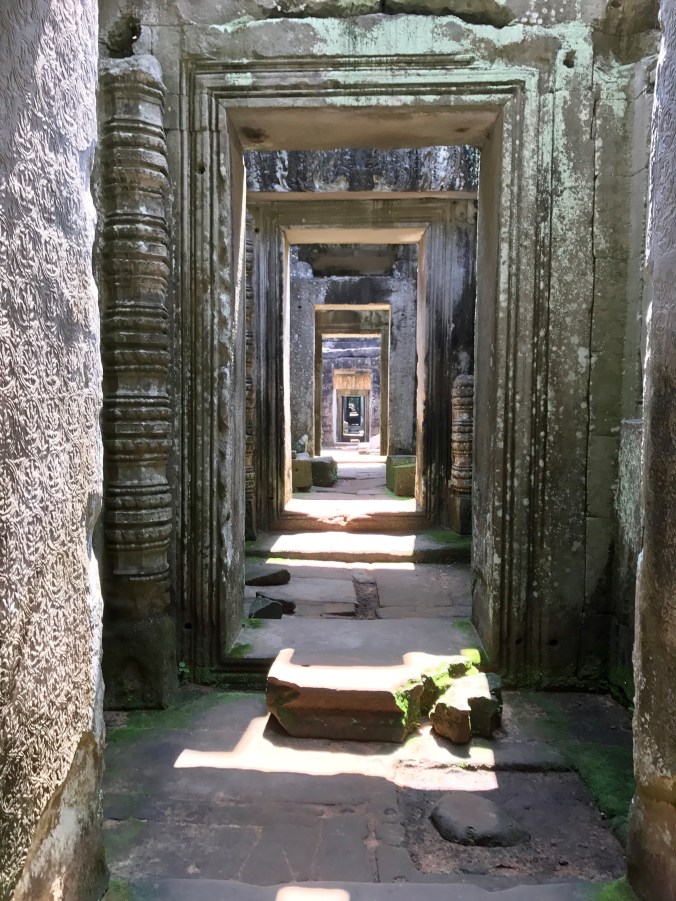

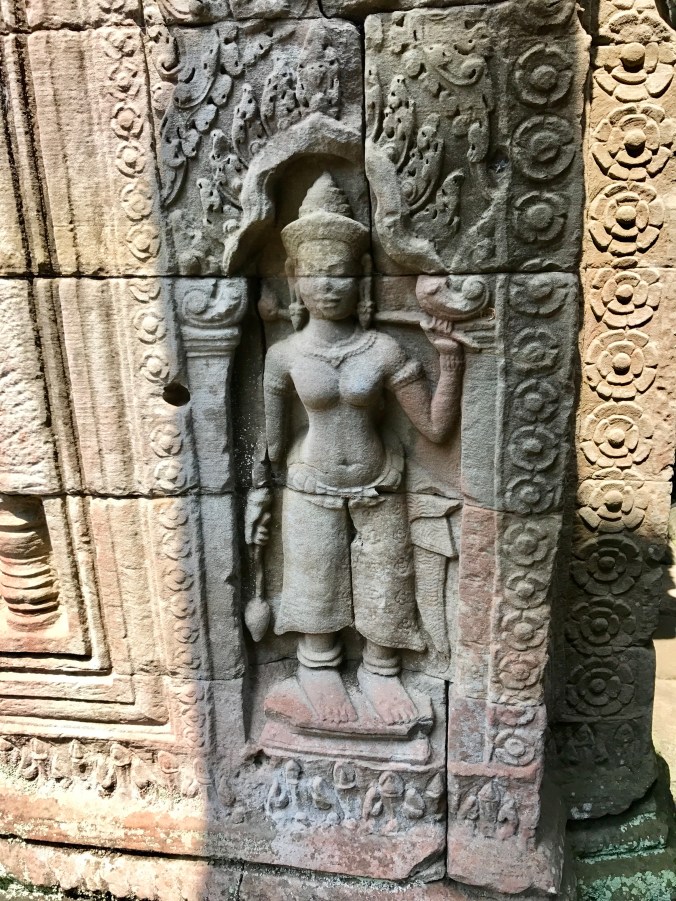
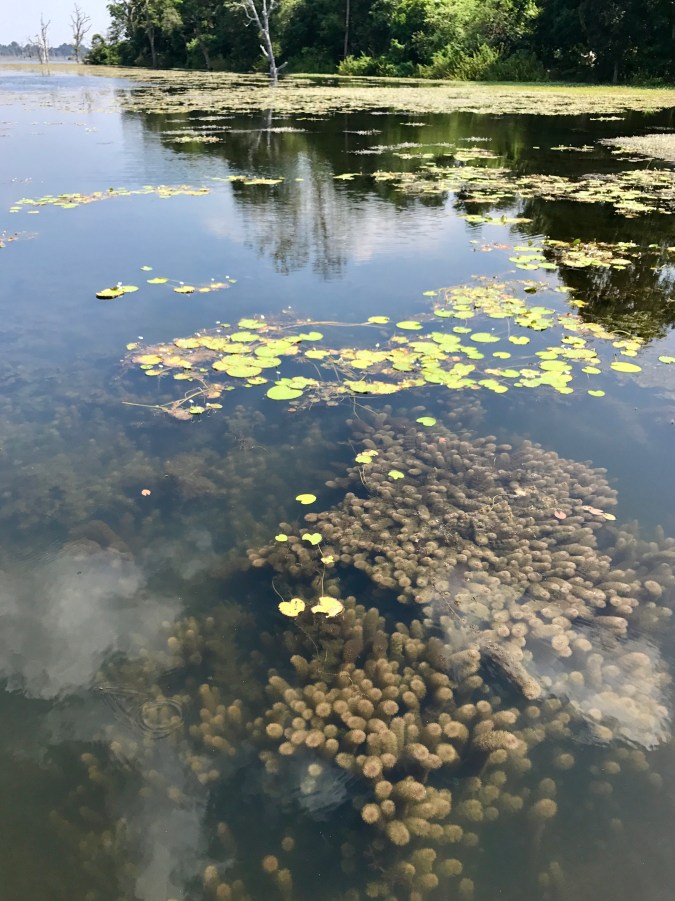
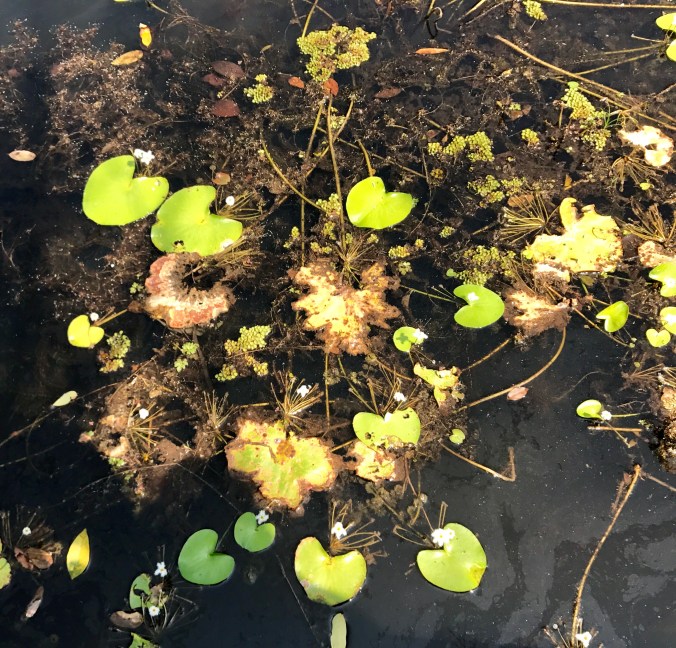
Crossing a bridge through a watery world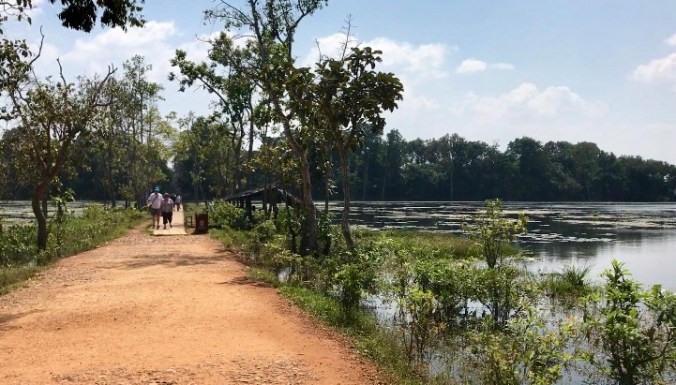
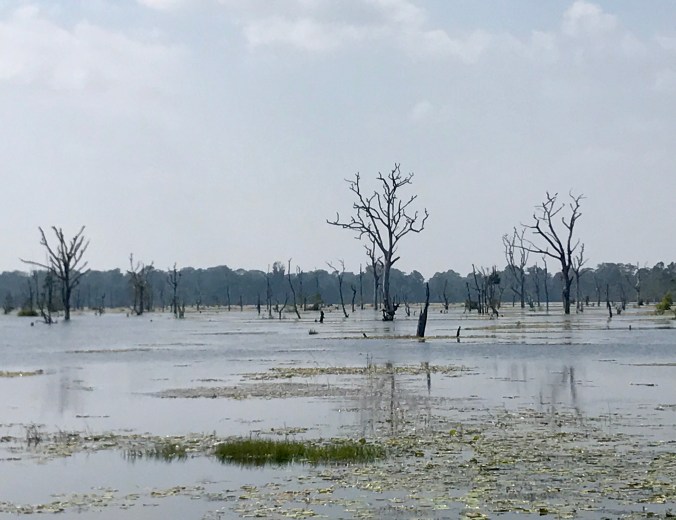
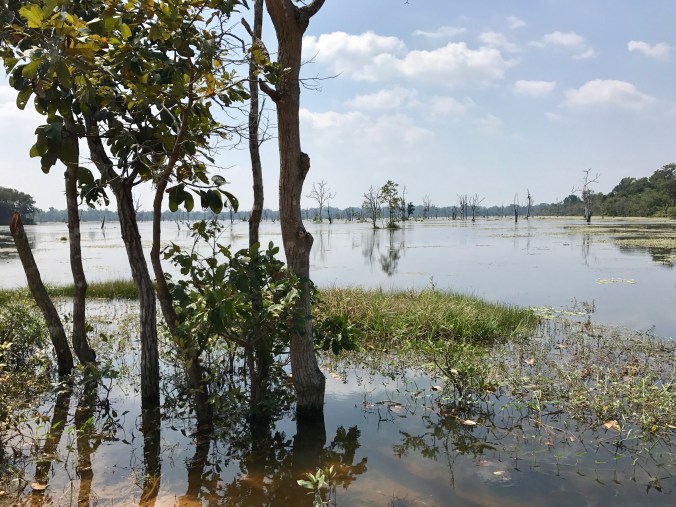
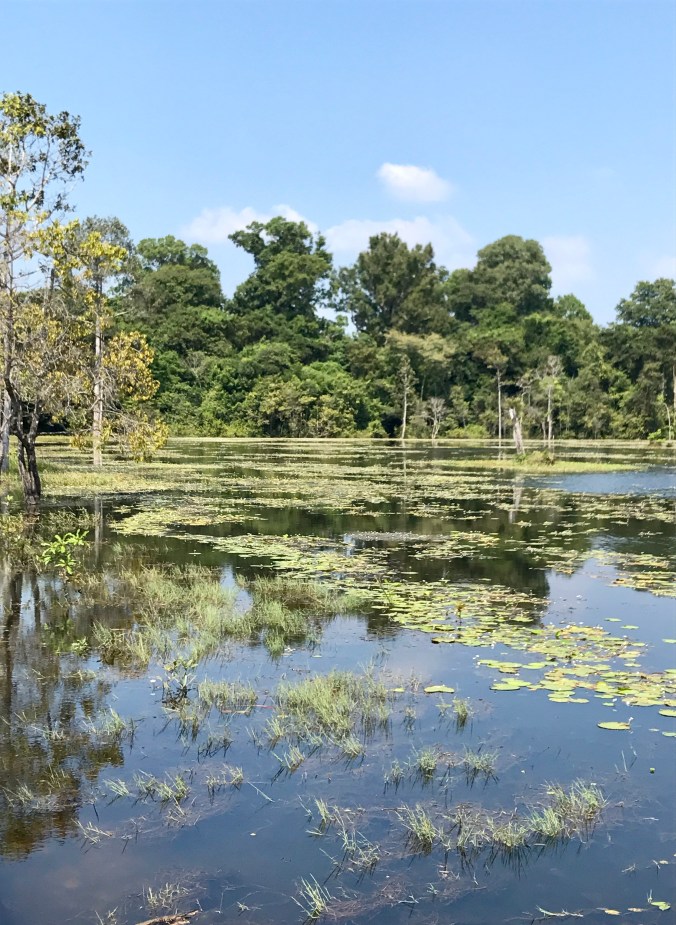
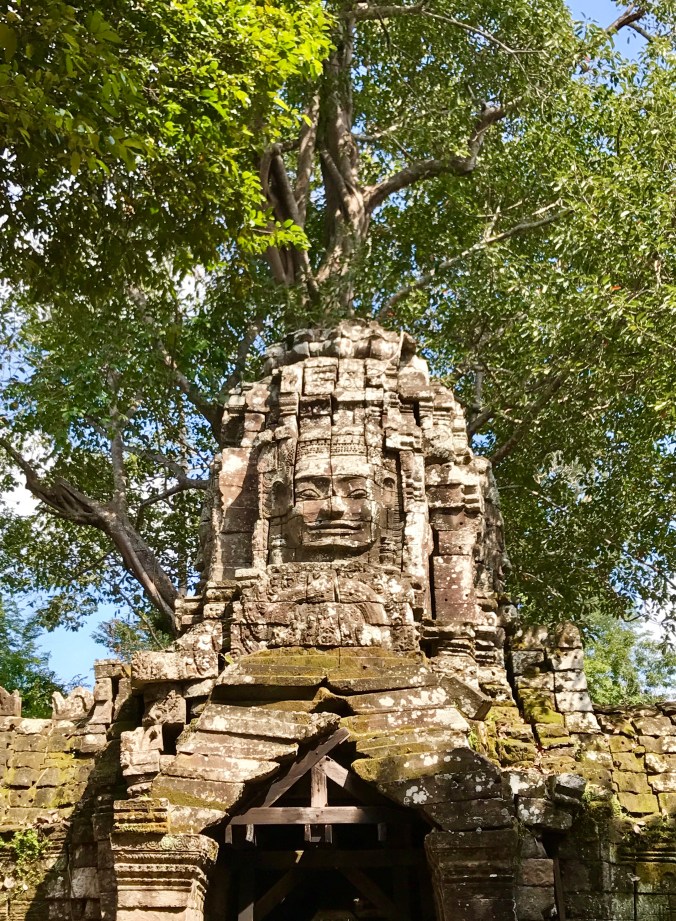
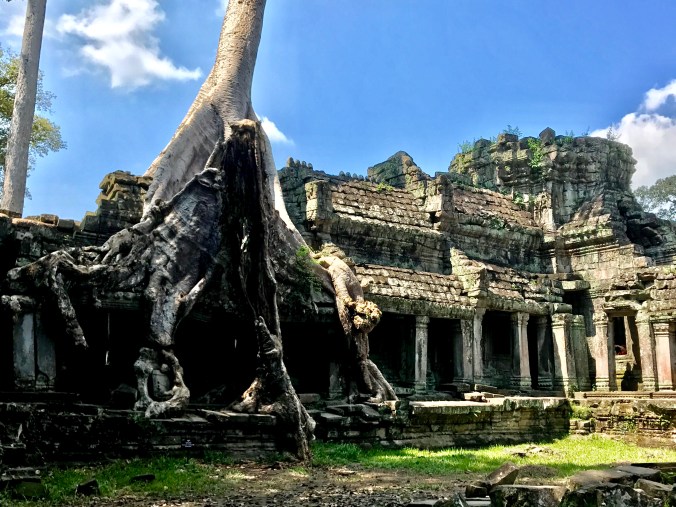
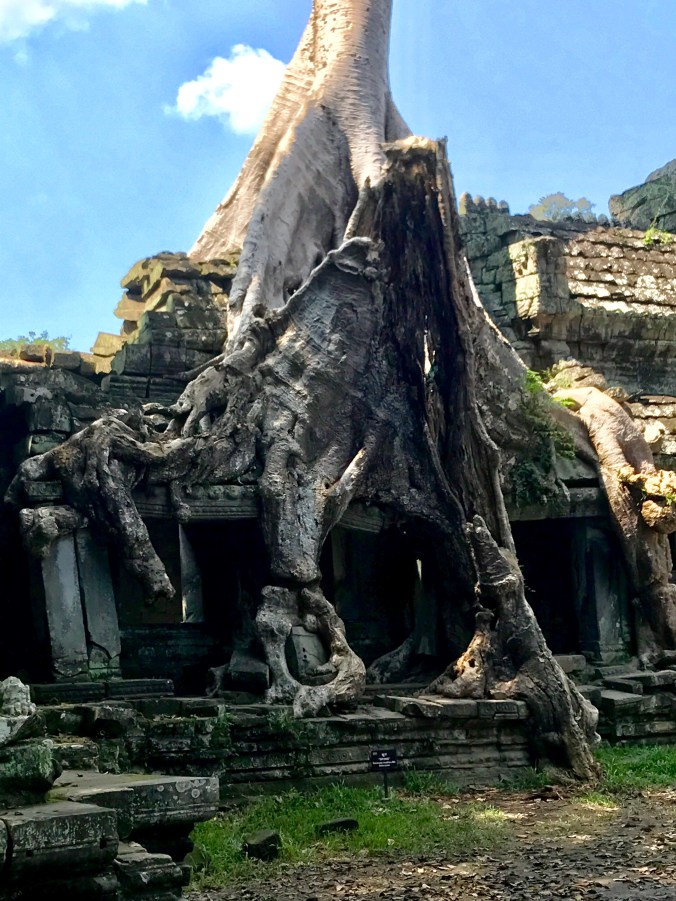
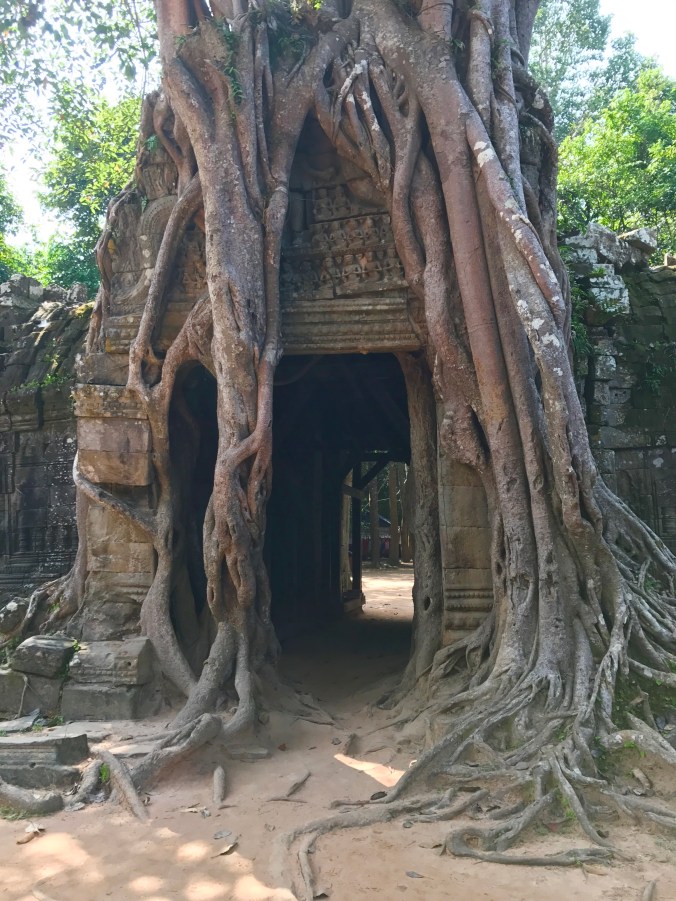
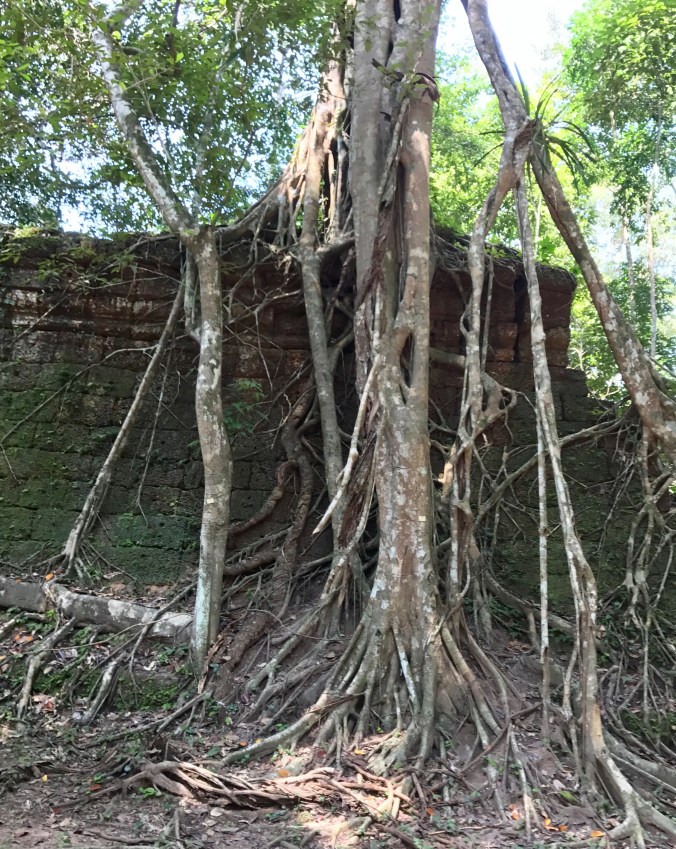
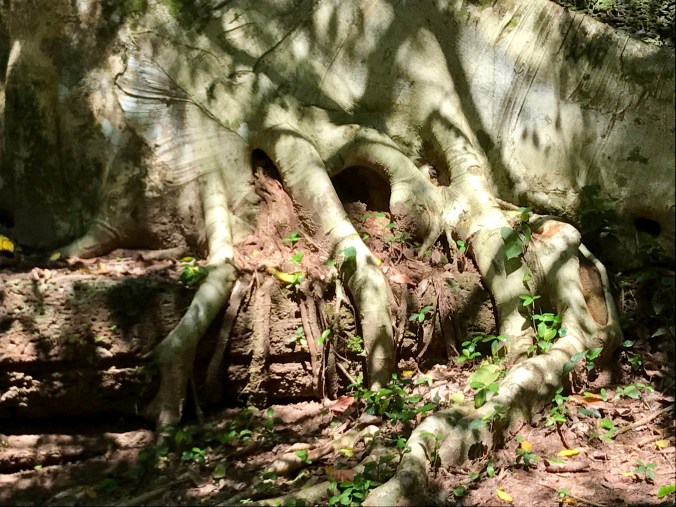
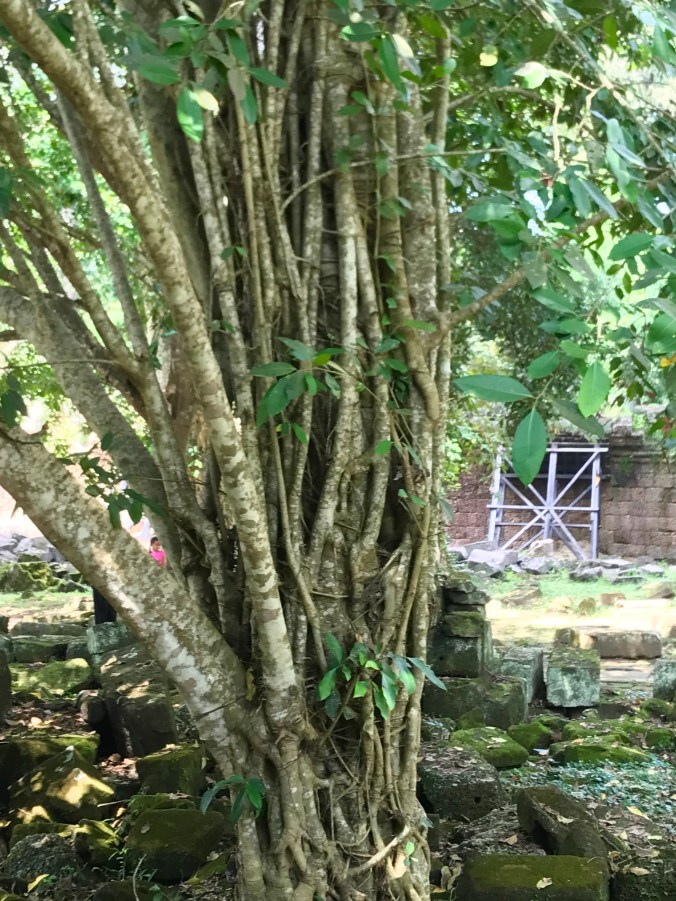
A few images of the trees around – quite literally- the temples.
Unlike anything I have ever seen.
 ~~~~~~~~~~~~~~~~~~~~~~~~~~~~~~~~~~~~~~
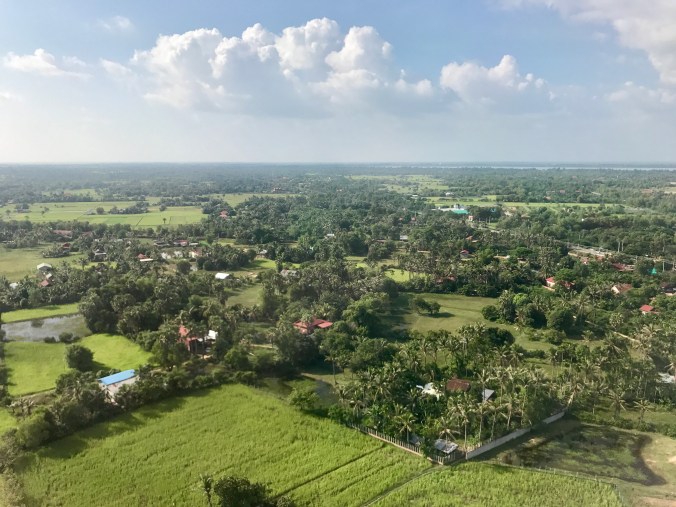
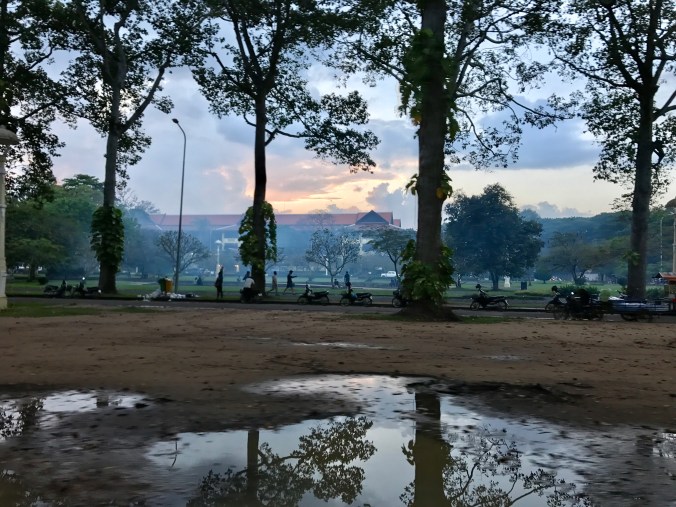
Arrival, above, and on the road to our hotel, below.
Siem Reap, in northwestern Cambodia, was the seat of the Khmer kingdom from the 9th to the 15th centuries. Today, it is the most widely visited city in the country. People come, as we did, to see the vast stone complex of Angkor Wat and other centuries’ old temples.
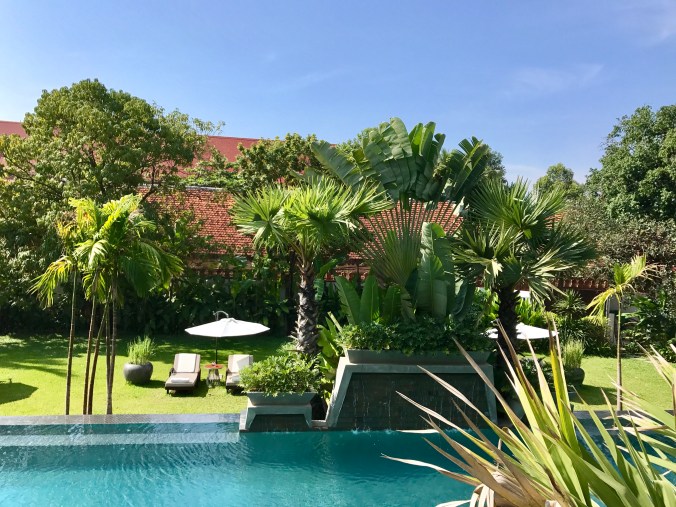
Our small hotel here is staffed by local people, many of whom grew up in Siem Reap. They are proud of their country’s rebirth, and proud of the contributions that the hotel makes to NGO’s that fund basic services for the most vulnerable residents of Siem Reap. Upon checking in, we were given an introduction to these projects, along with a tour of the grounds.
The following morning we headed to Angkor Wat with our guide and driver, stopping along the way to purchase the passes required for all the sites.
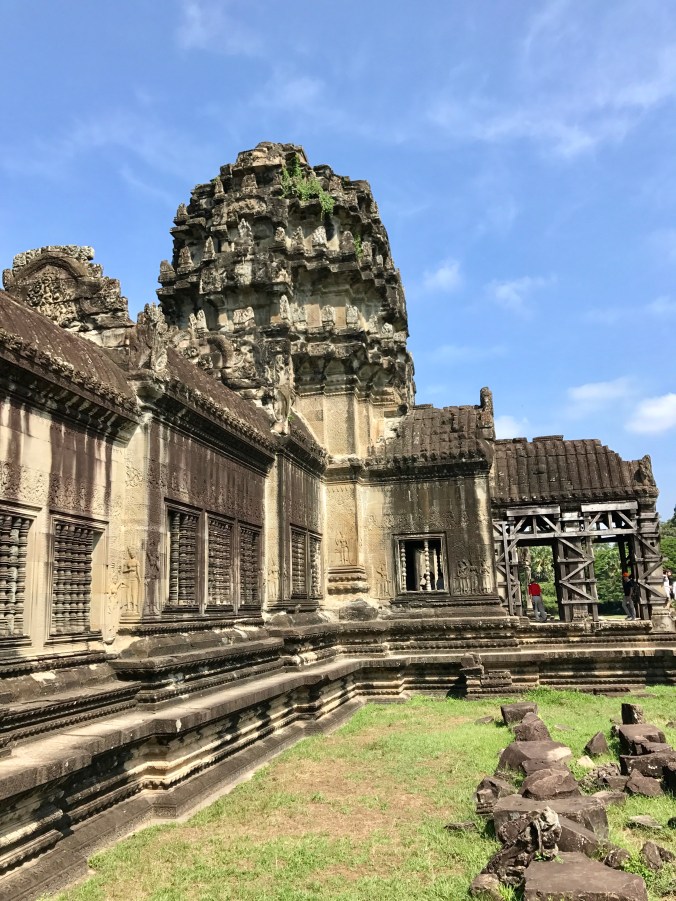
Angkor Wat is remarkable for many reasons. The scale, the architecture, the carvings that tell stories of gods and humans, love and war, heaven and hell.
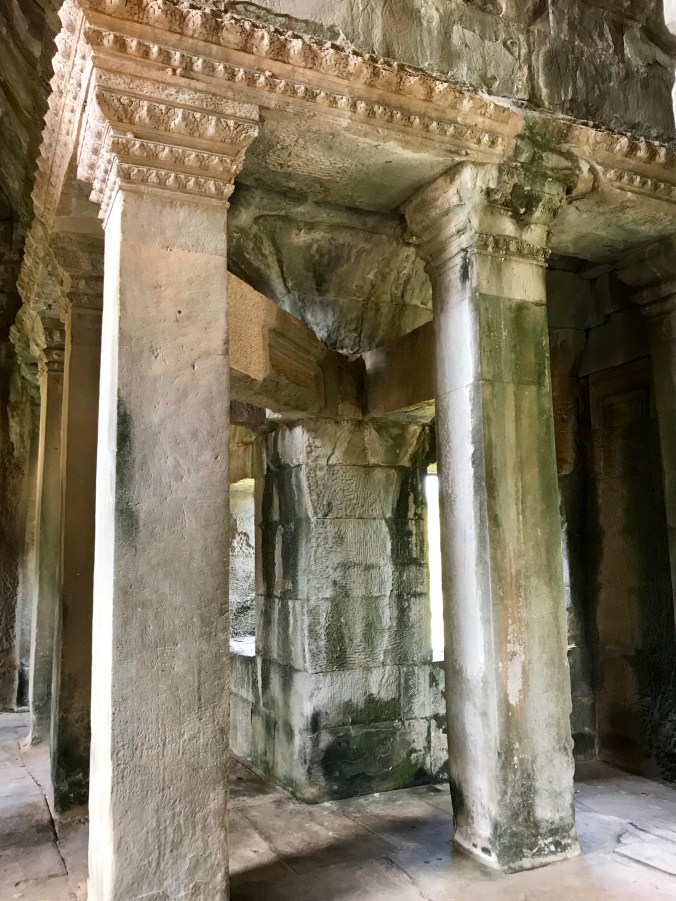
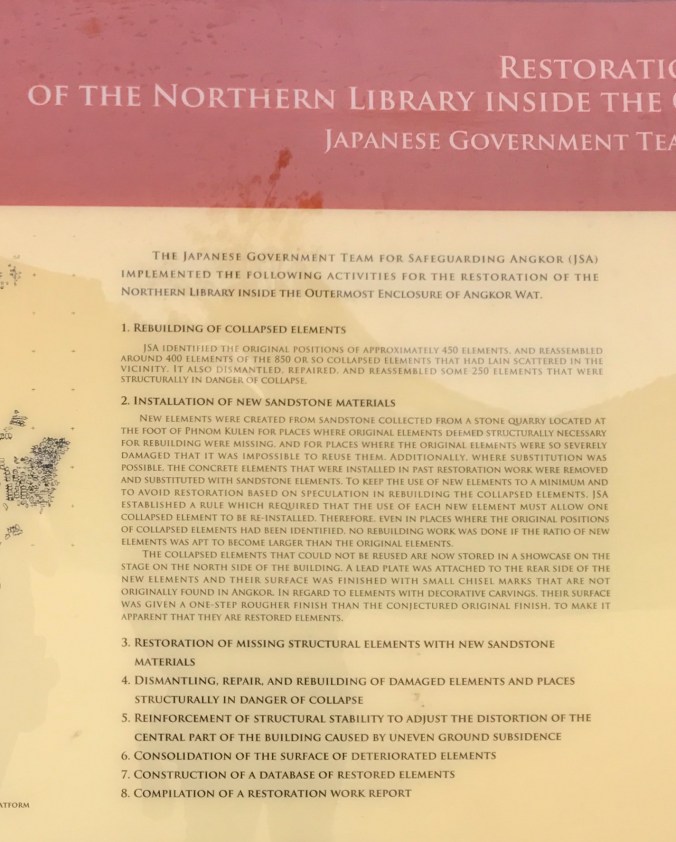
Below, restorations made to the interior of one of two libraries. Everything in the Temple complex is based on Hindu texts, 10,000 pages of which were housed in these buildings.
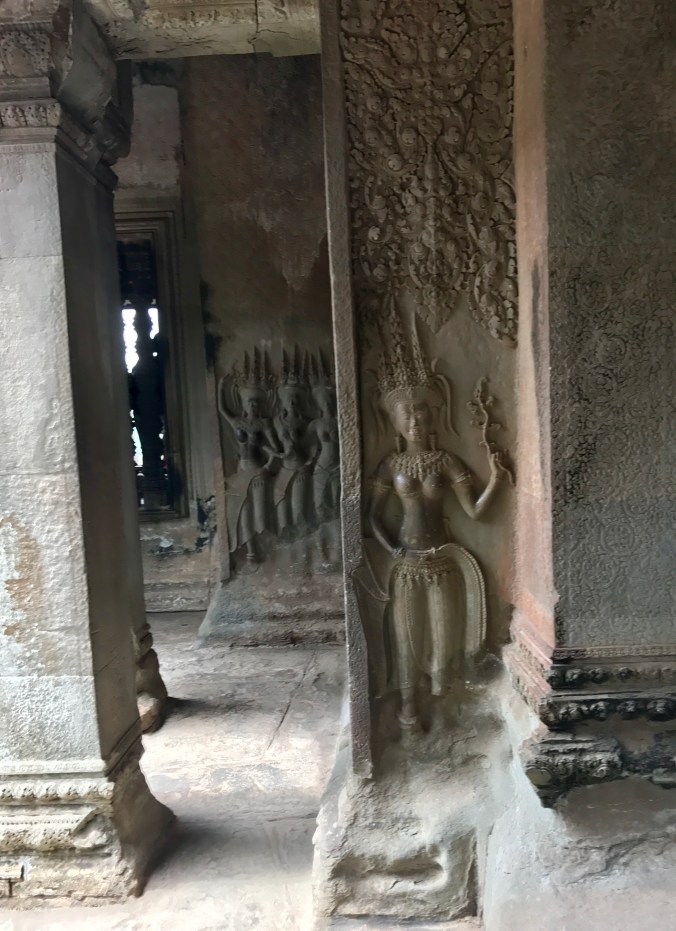
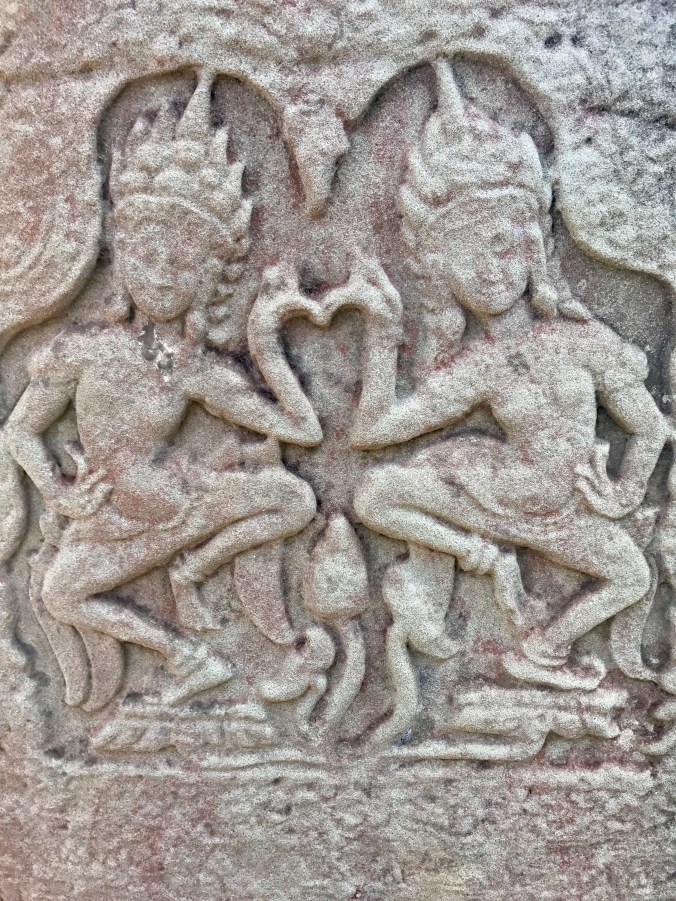
A dancer, one of many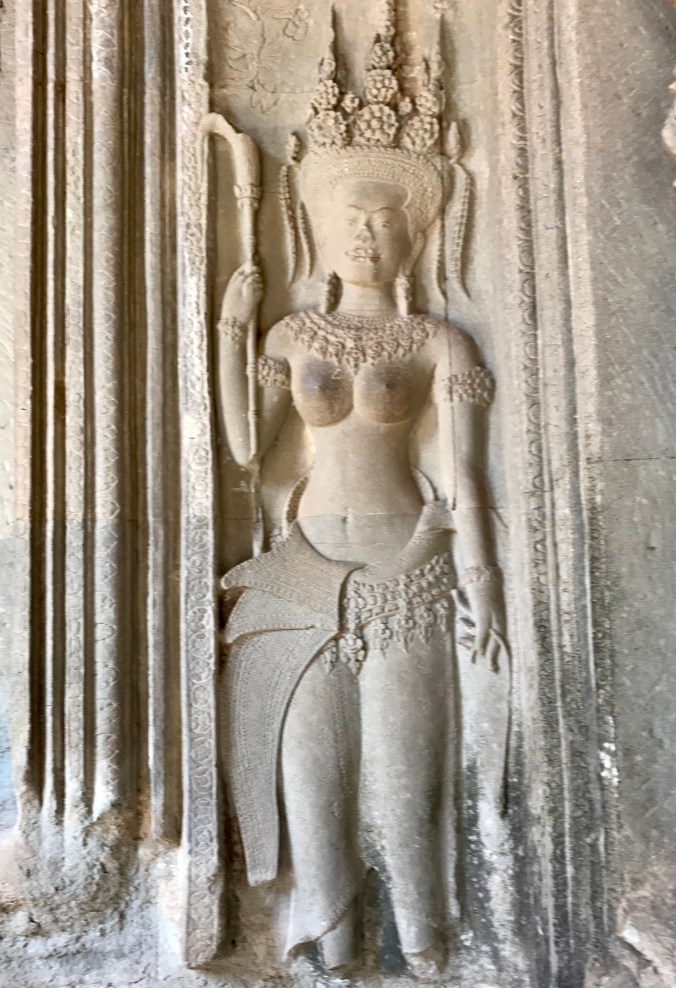
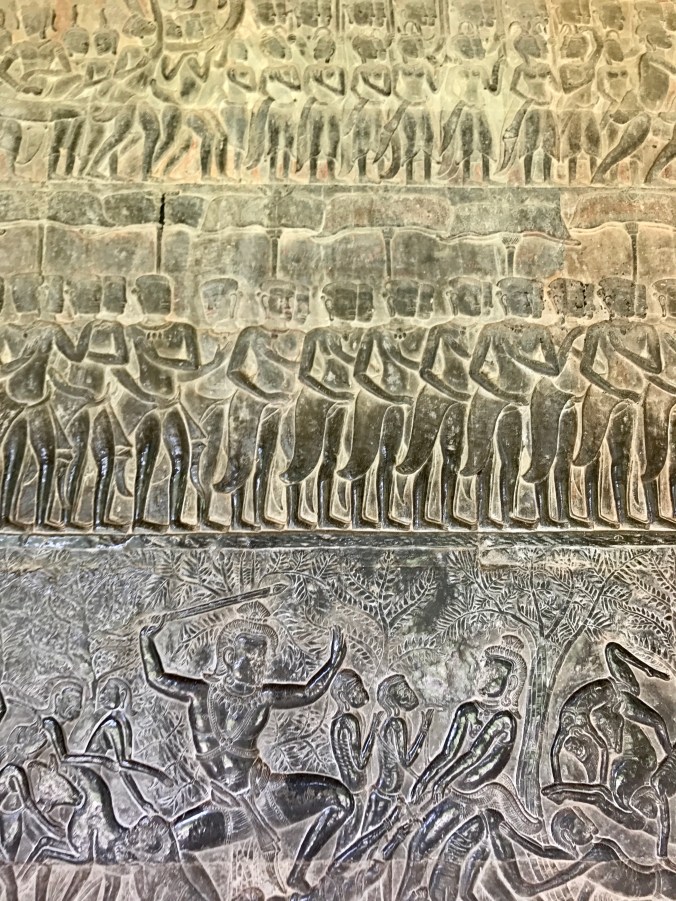 In this relief, purgatory, and beneath it, an illustration of one of the 37 different punishments suffered by wrongdoers in Hell.
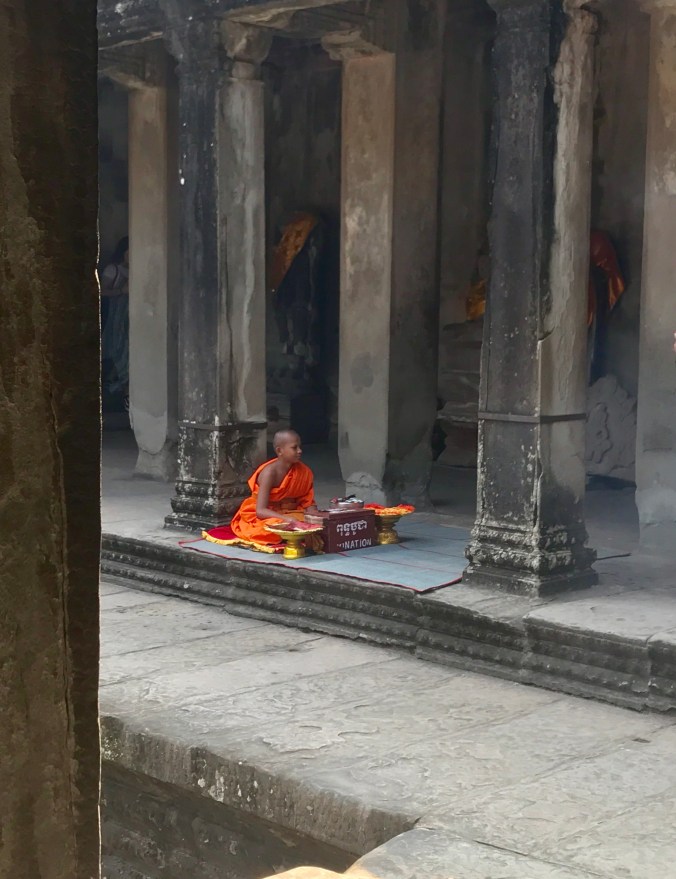
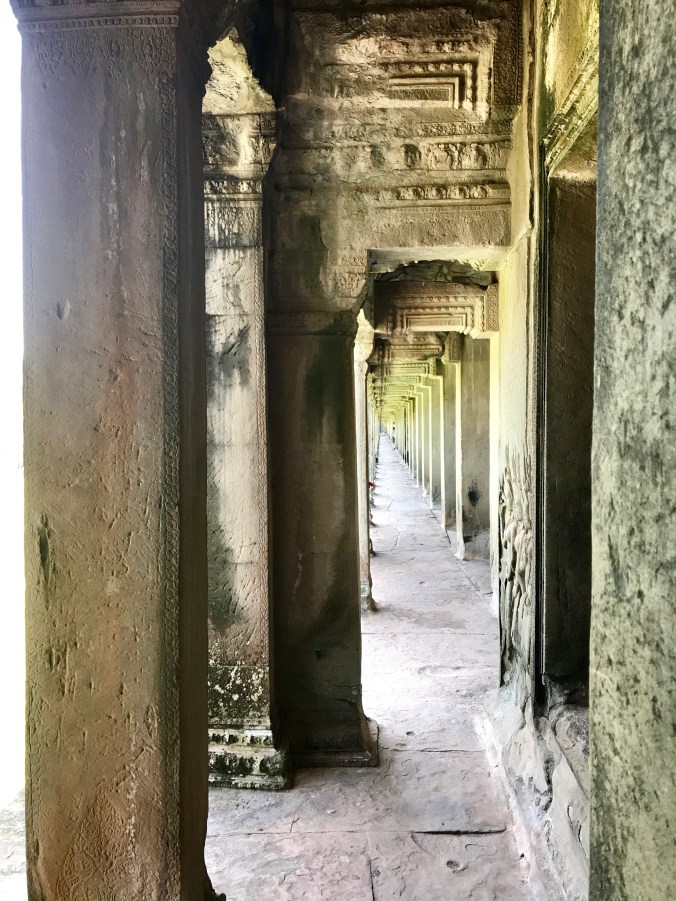
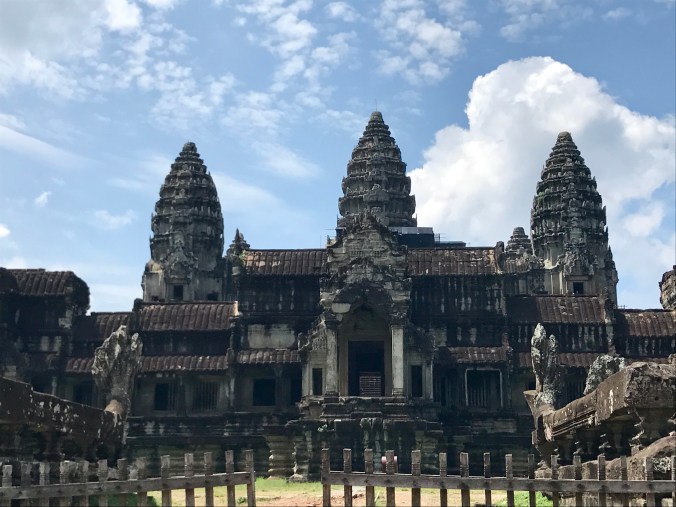 Three of the five towers.
Below, views from the main Temple tower
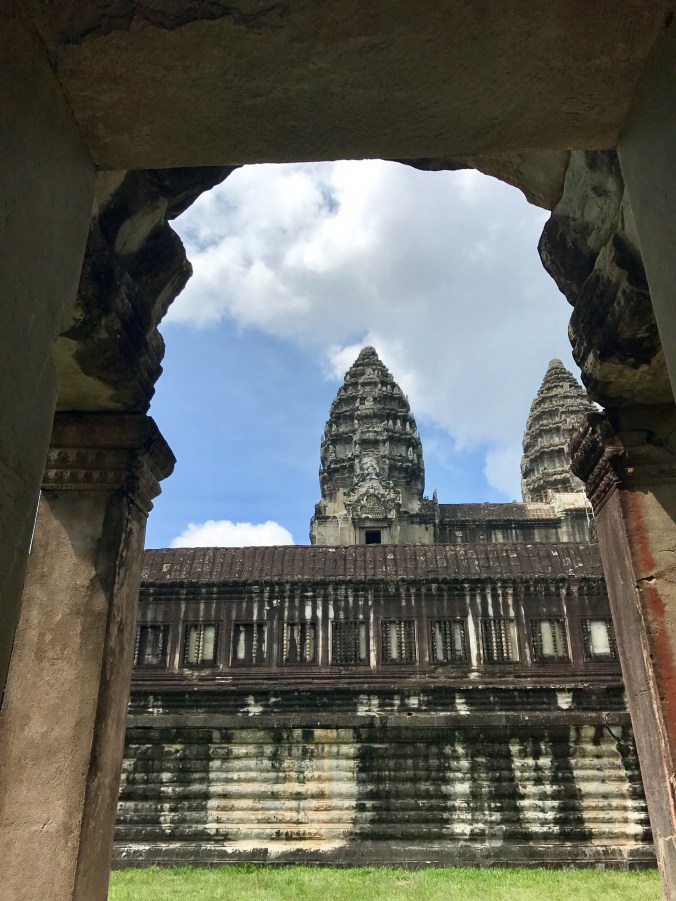
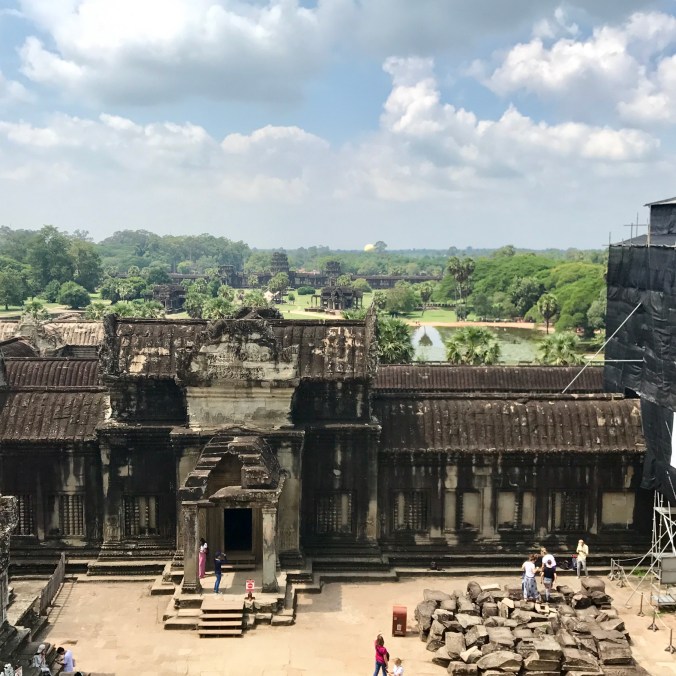
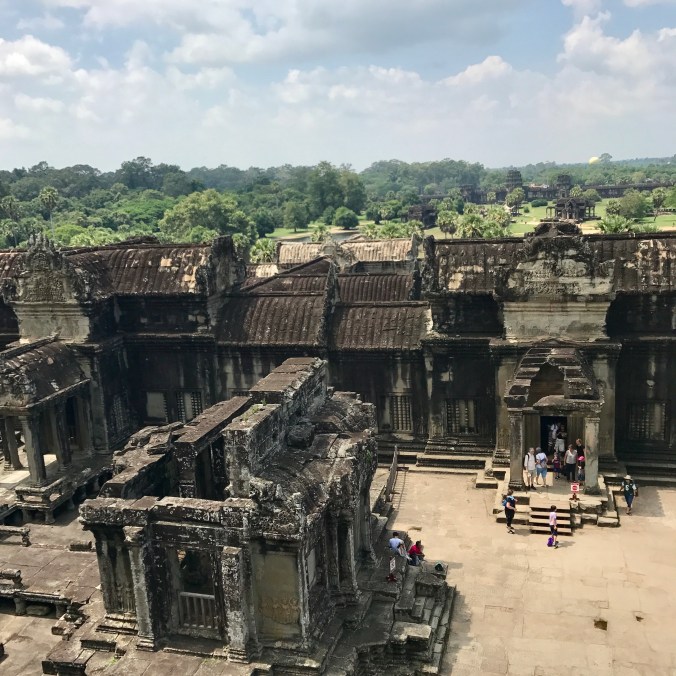
After two and a half hours here we headed for Ta Phrom, now popularly referred to as the Tomb Raider Temple. Yes, Angelina Jolie was here and made a movie. We told our guide we could skip this one, but he encouraged us to make a stop here and we were glad we did.

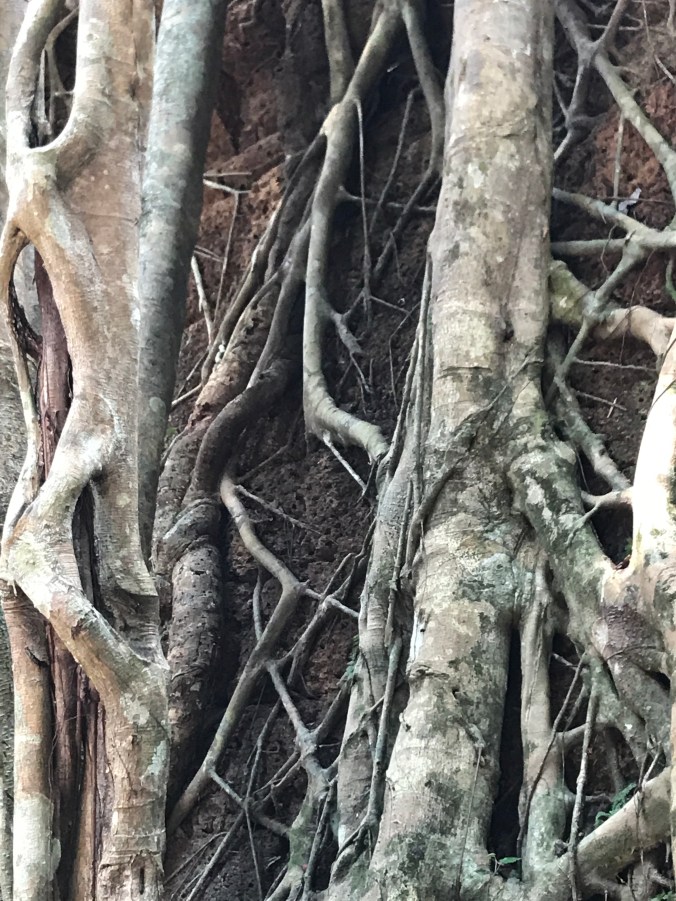
Long abandoned and left to the elements, Ta Phrom is an arresting visual of the natural world taking back what man has tried to claim.
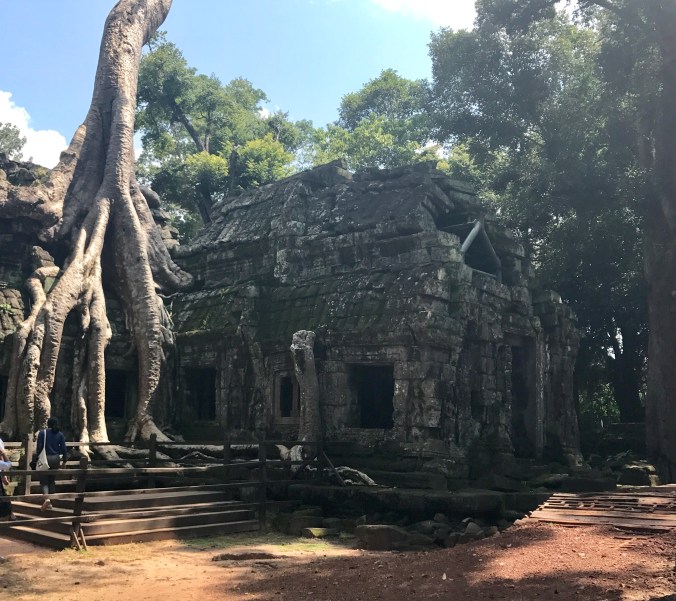
Check out the roots of these trees.
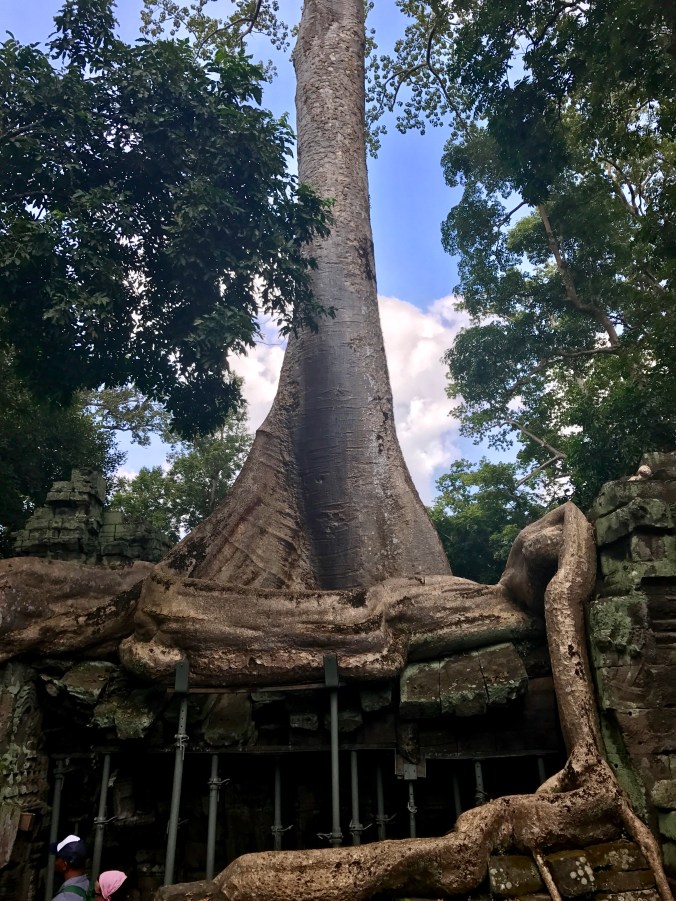

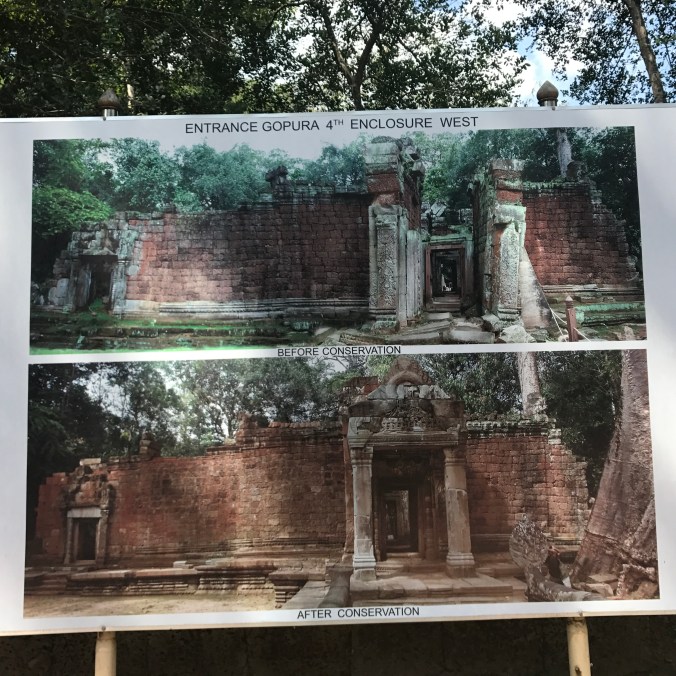
The temple is now being restored piece by piece. Before and after shots, below.
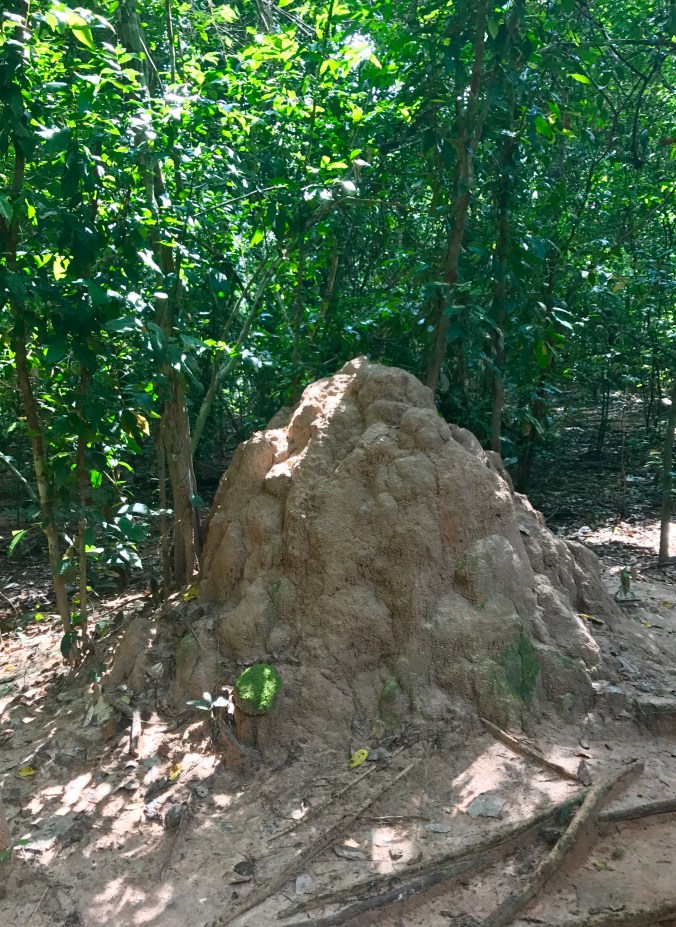
On the way out we observed the work of some tiny builders: a termite nest.
Our last stop was Bayon, built 50 years after Angkor Wat and Angkor’s first state-level Buddhist Temple. It is distinguished by many towers featuring the face of Buddha (over 200 faces!). An astonishing sight.
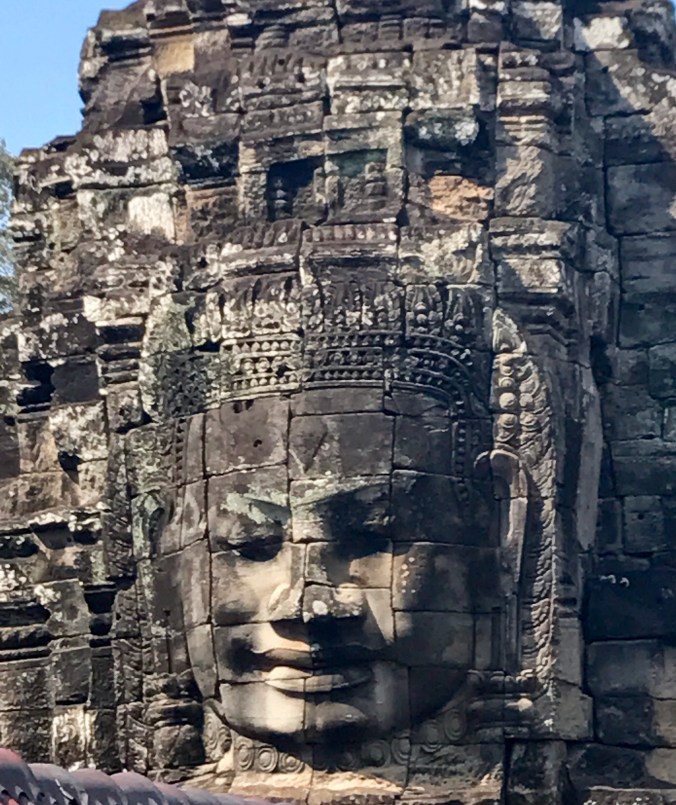
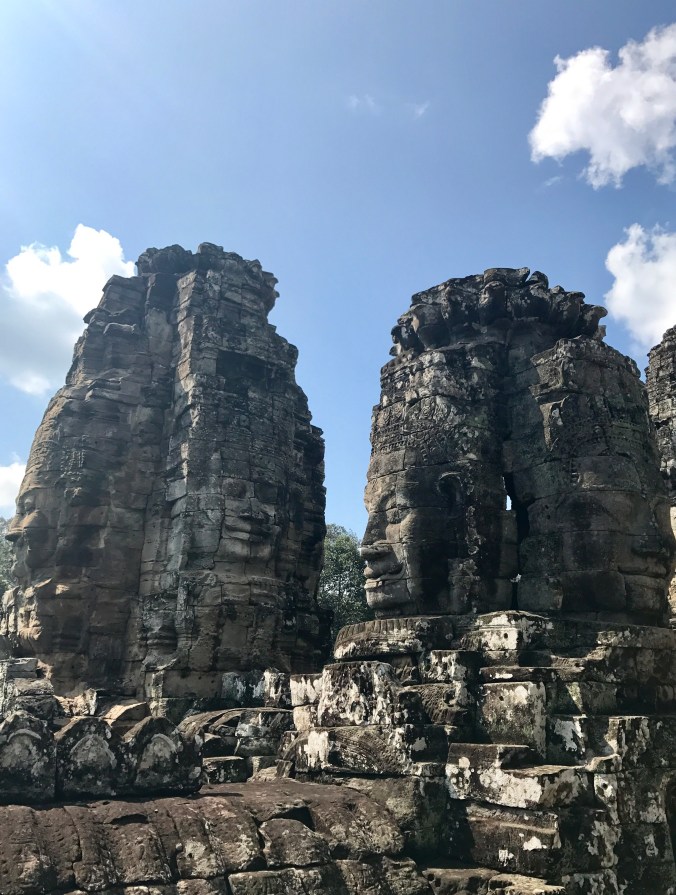
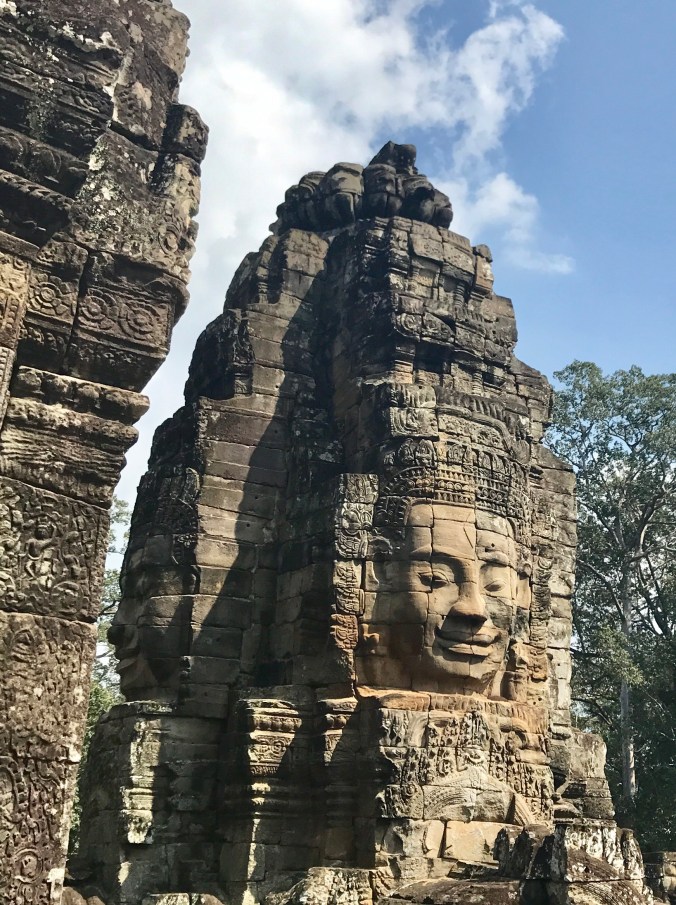
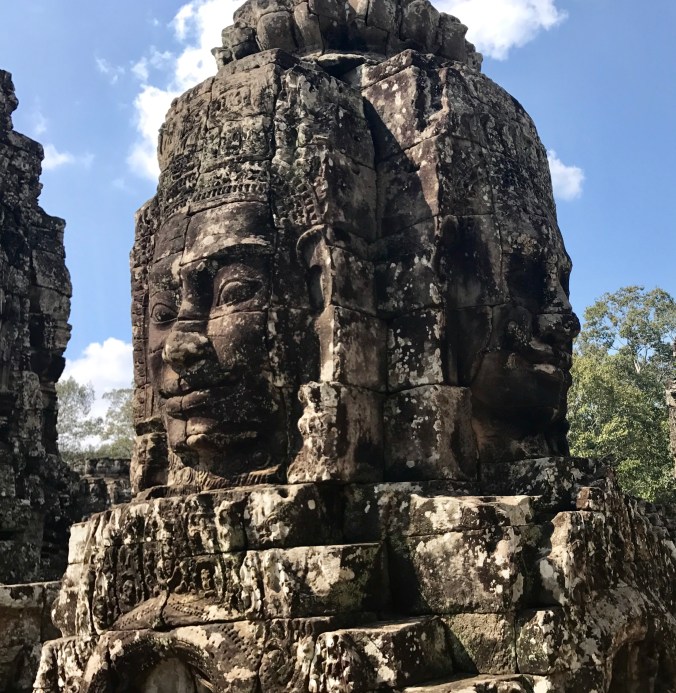
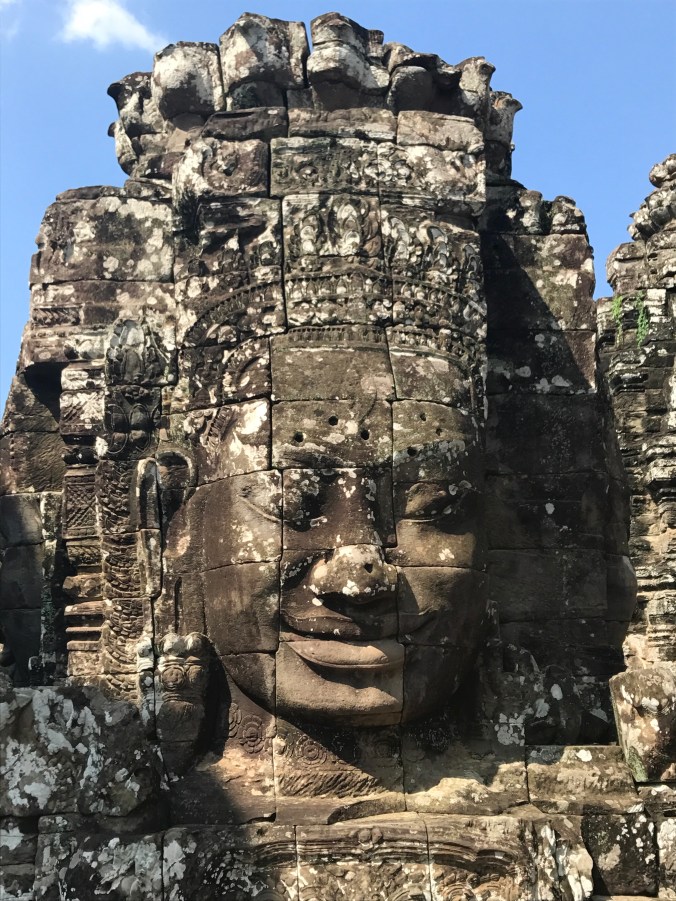
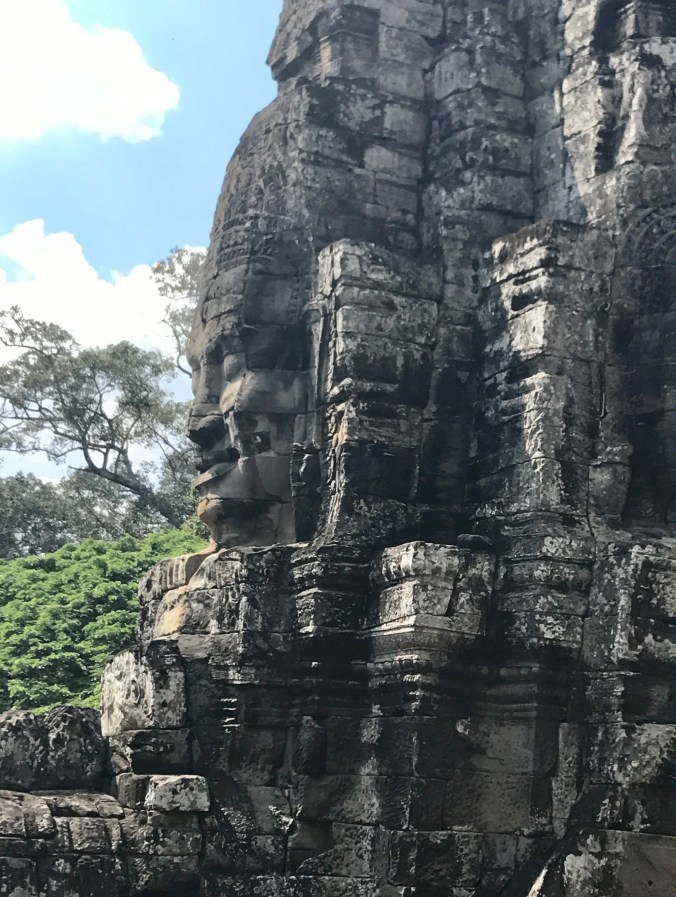
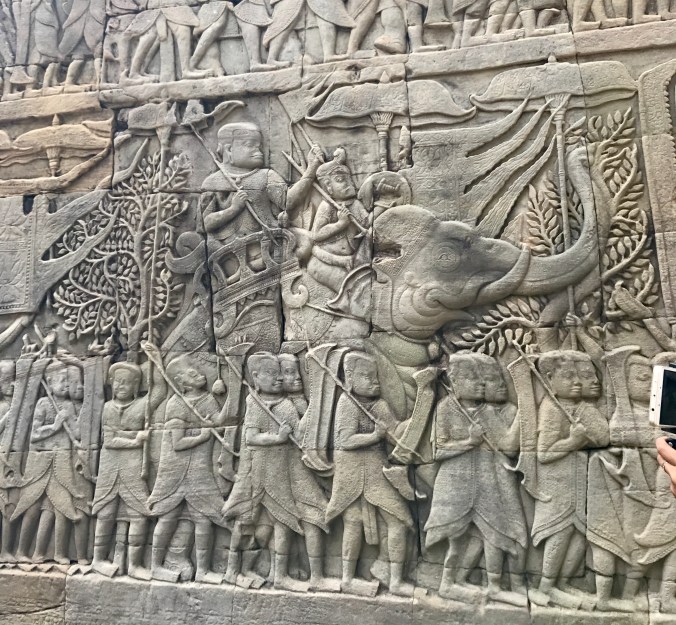
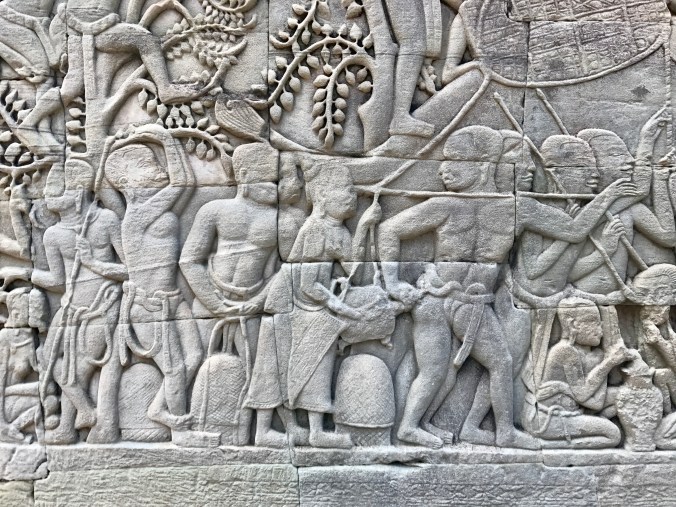
Bayon Temple also has many well preserved relief carvings. Along with narratives of battles and other significant events, these carvings are a fascinating record of day to day life in the late 12th to early 13th centuries.
Here, riding armored elephants into battle.

A woman about to give birth.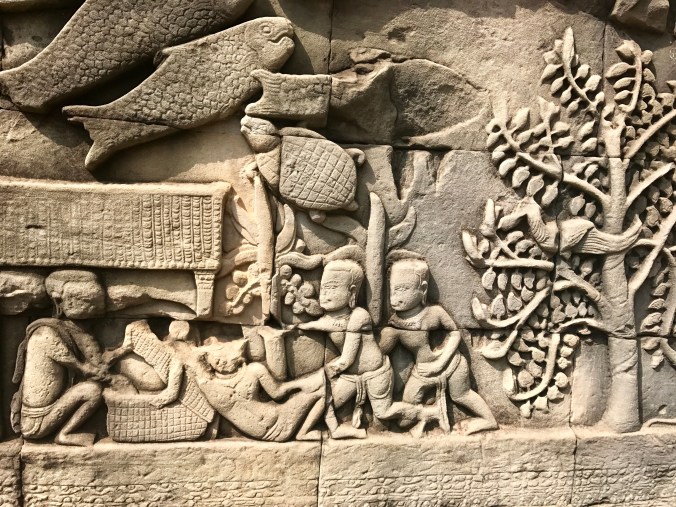
Delousing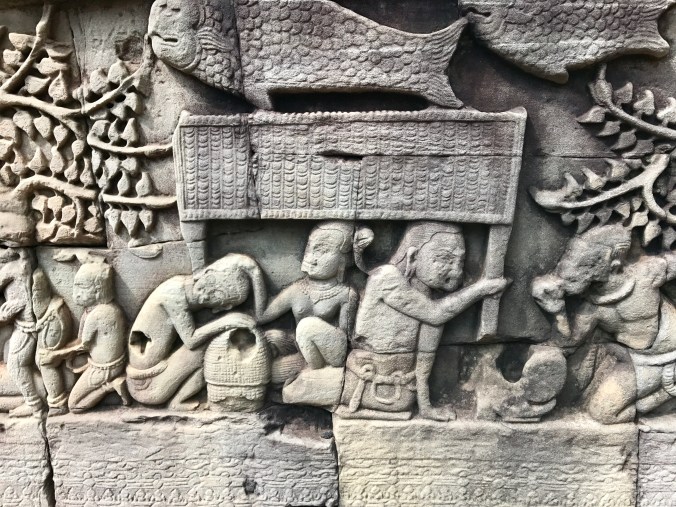
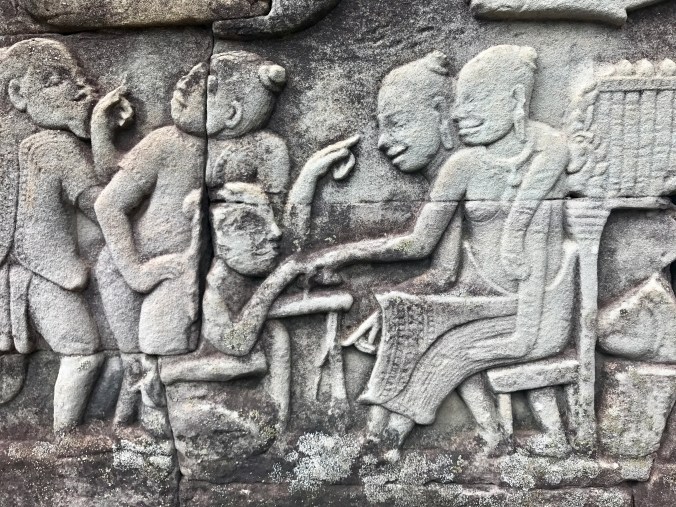 I thought these were women getting manicures, but our guide said they were getting something weighed.
How about this one: a woman is angry at her husband, so she has a tortoise bite him on the butt (so I was told. I cannot vouch for the historical accuracy of this interpretation).
 ~~~~~~~~~~~~~~~~~~~~~~~~~~~~~~~~~~~~

Above, on the road to Chiang Rai in the early morning.
Chiang Rai, like Chiang Mai, is a city of about a million people that combines old and new, secular and religious life. Although it is three hours by car from Chiang Mai, I wanted to make the trip to see Wat Rong Khun (The White Temple) a ghostly looking complex with many unique (and some pretty bizarre) features.
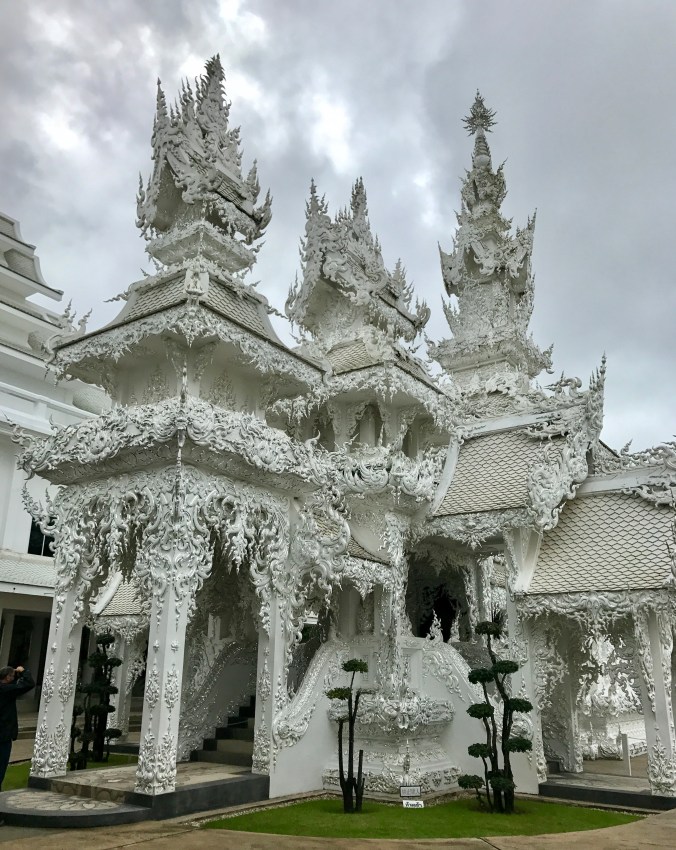
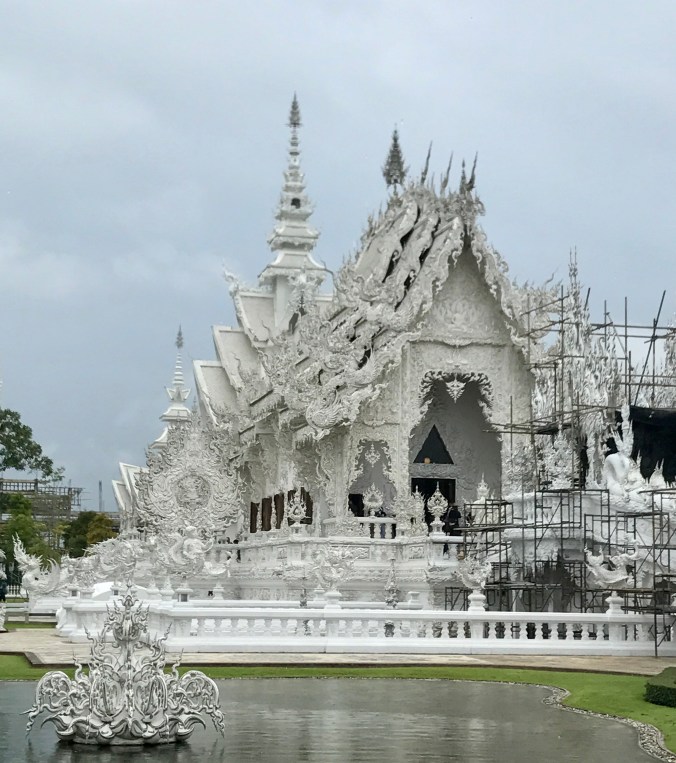
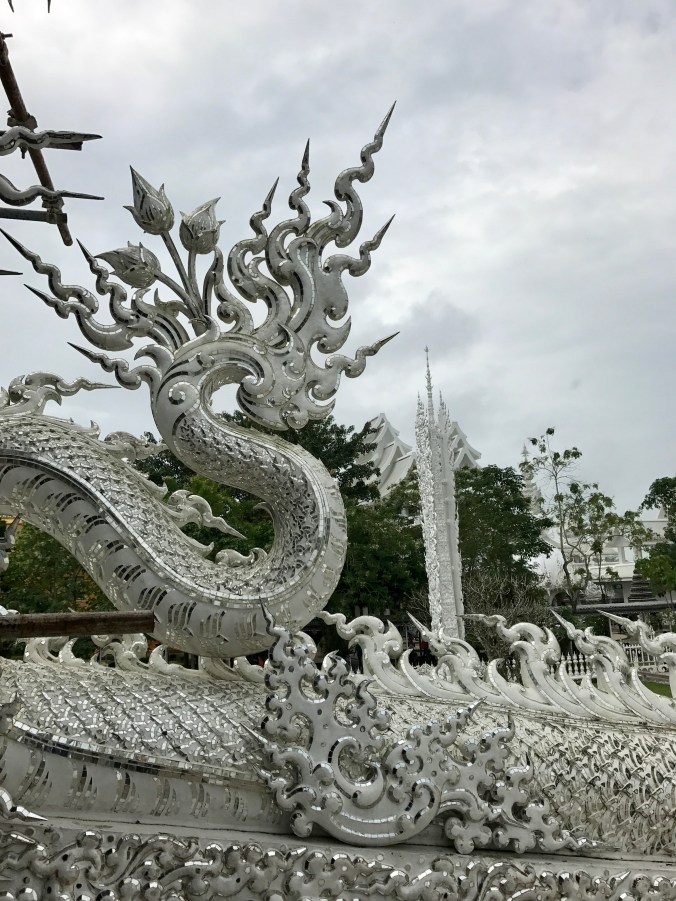
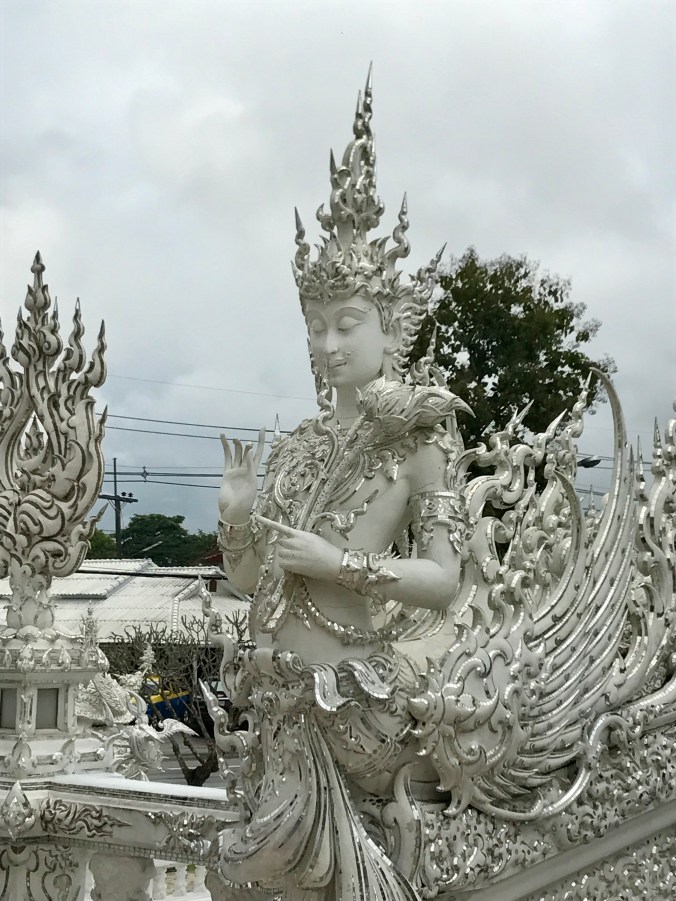
Construction of the temple began in 1997. The whitewashed exteriors are covered with pieces of mirrored glass, so the whole thing seems to shimmer.
The first suggestion of weirdness is the heads hanging from the trees.
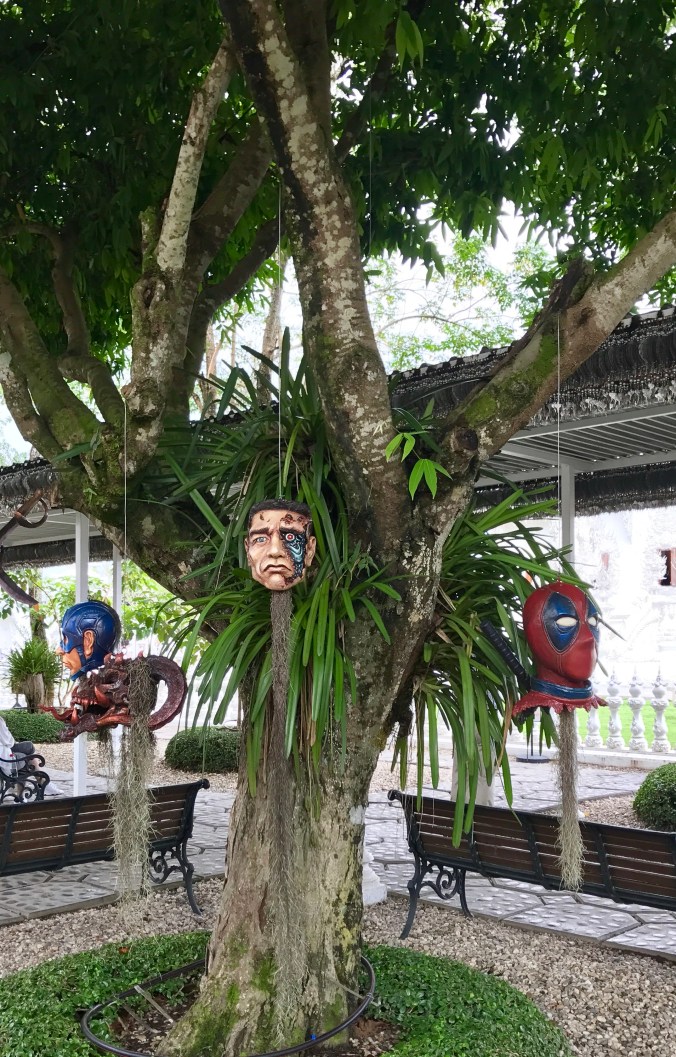
That one on the right looked to me like Spider Man. And the super hero theme was to recur inside the main temple.
The path to that structure is framed on both sides by a sea of outstretched hands, and a pile of skeletons and bones, all white. This, we were told, was the artist’s vision of Hell.
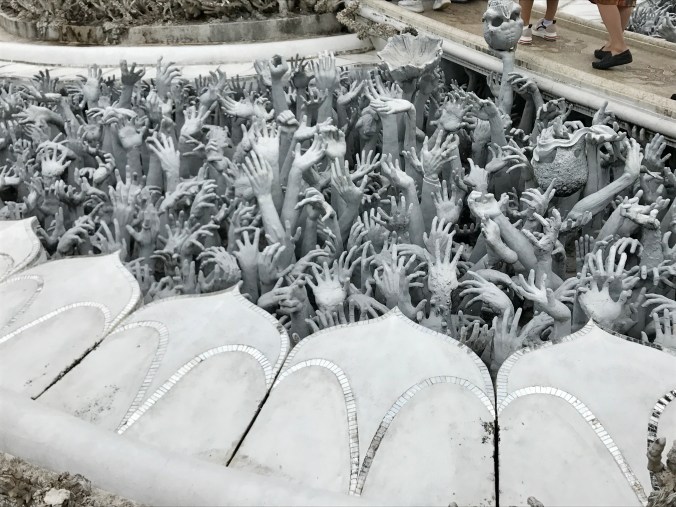
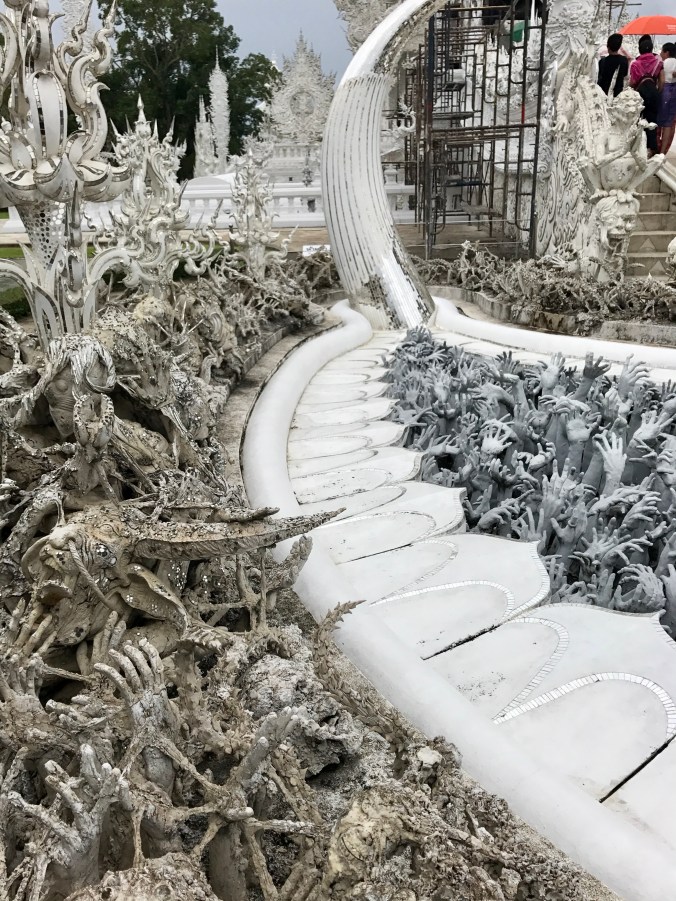
To escape this Hell, and to finally break free of the cycle of death and rebirth, one must attain an enlightened state. This is represented by the bridge that leads into the temple.
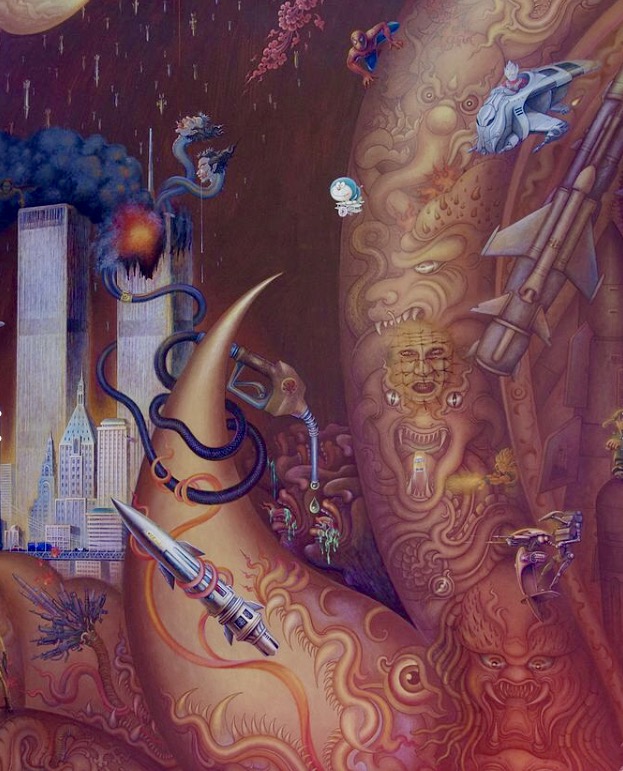
The interior of the main building is covered with a hodgepodge of Buddhist imagery and totally unrelated figures, celebrities to super heroes. One interpretation: superheroes will not defeat evil: we have to do that ourselves.
No photos allowed inside. Here’s one from the web. Note the Twin Towers on the left hand side of the picture.
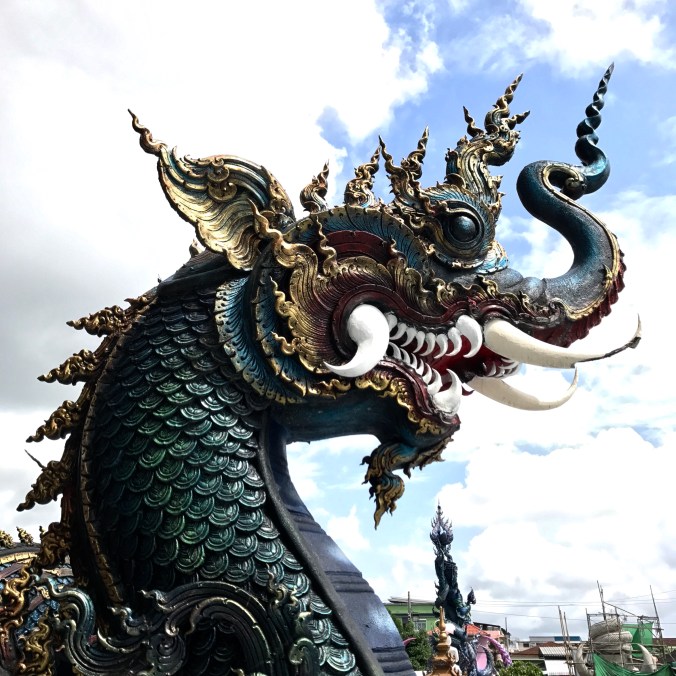
Later we visited another modern temple, this one done in a blue palette.
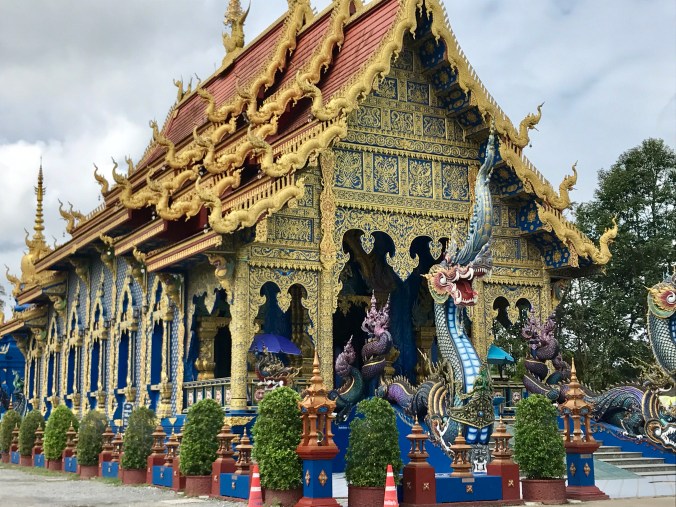
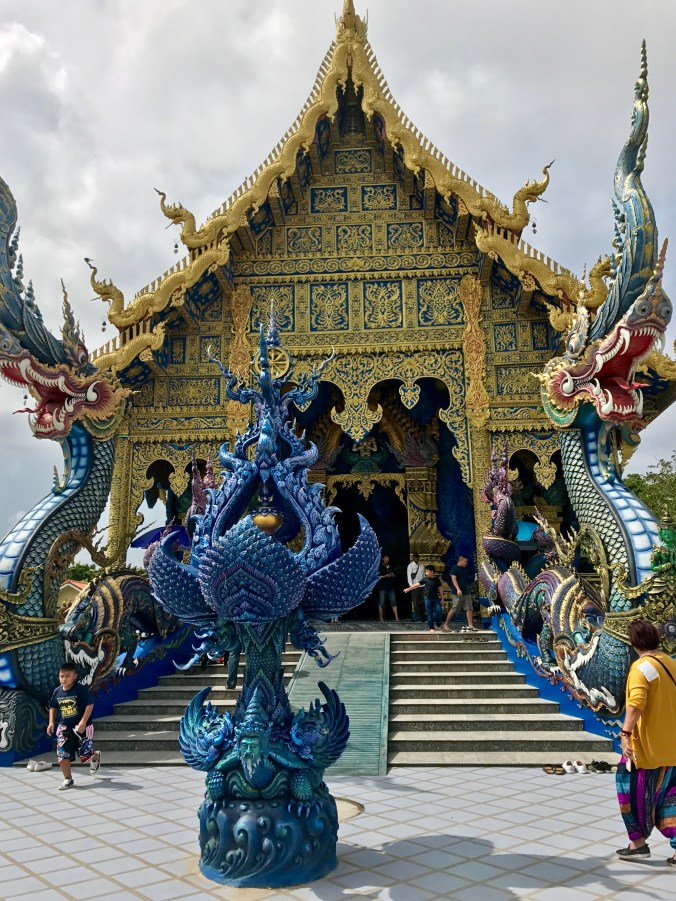
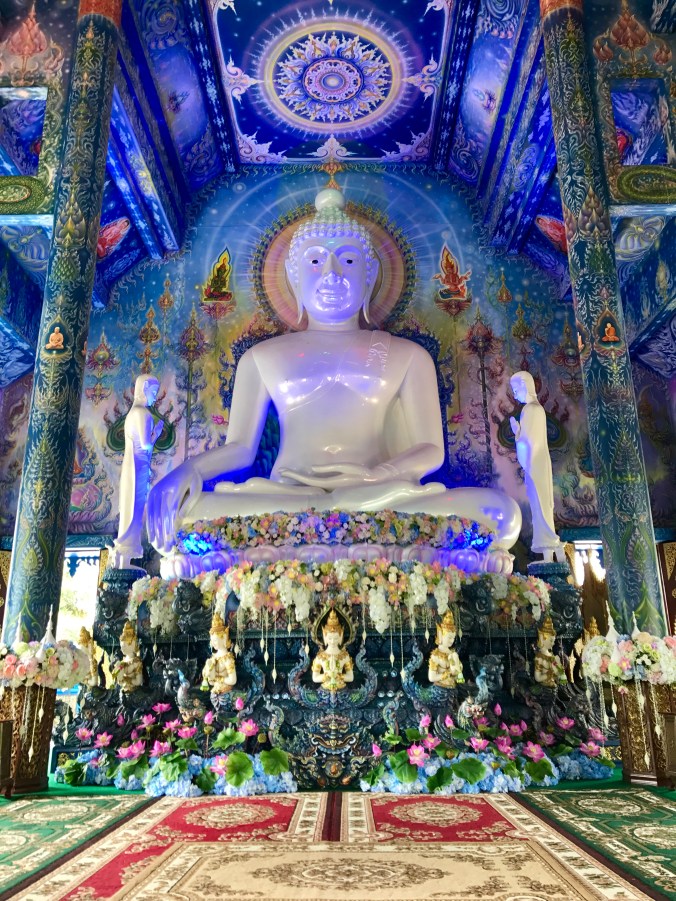
Paintings depicting the Buddha’s life fill the interior.
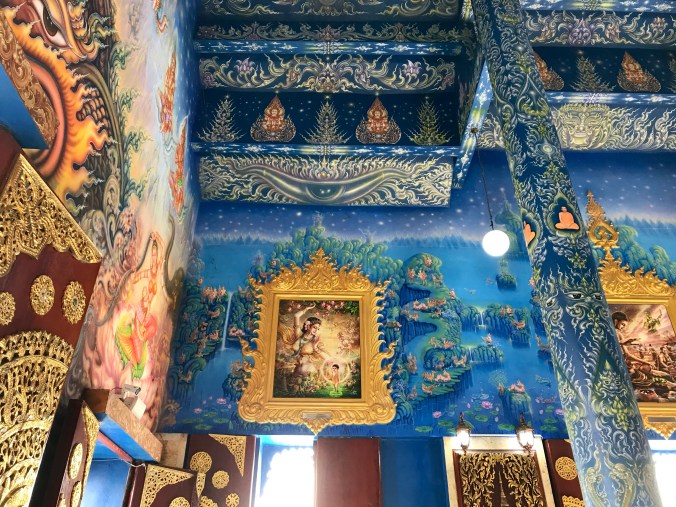
Here, he is born and immediately takes his first steps.

We finished the day back in Chai Mai, at Wat Suan Dok, to see the temple and also what is basically a royal cemetery dating back to the 14th century.
Many of these monuments (stupa) hold the remains of members of the royal family of Thailand.
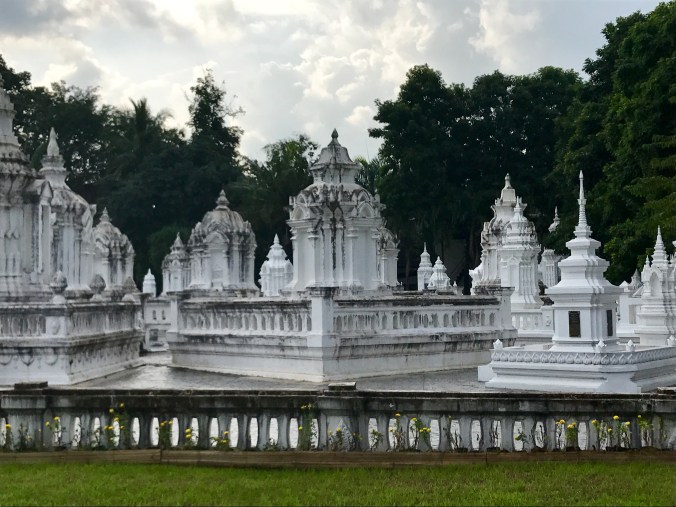

Also here, the golden pagoda erected in 1373 to house another treasured relic of the Buddha.
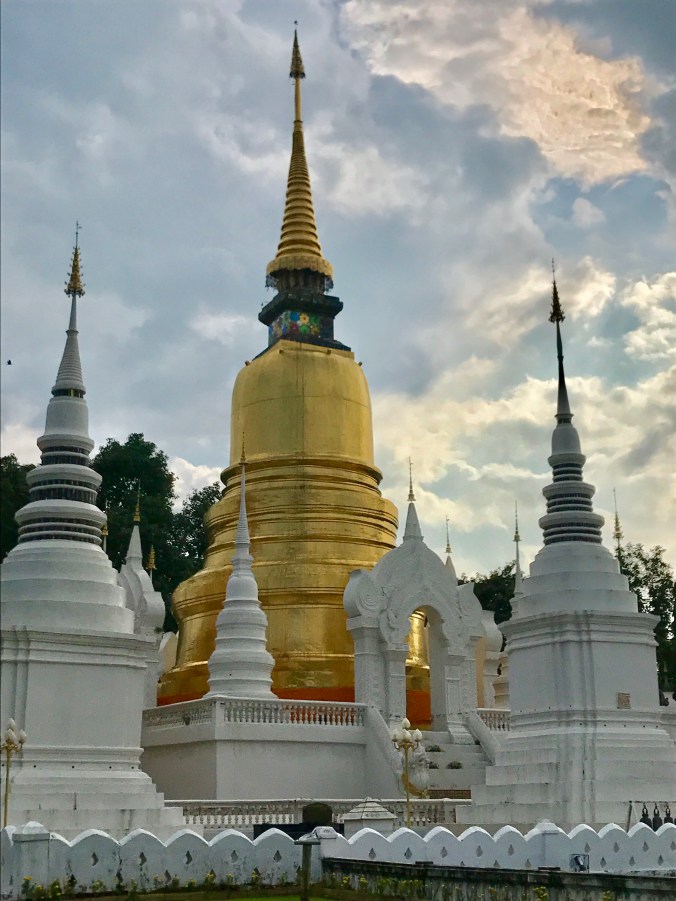
This felt like a fitting end to what was a day of mourning across the country, as people everywhere in Thailand prepared for ceremonies related to the King’s funeral.

~~~~~~~~~~~~~~~~~~~~~~~~~~~~~~~~~~~~
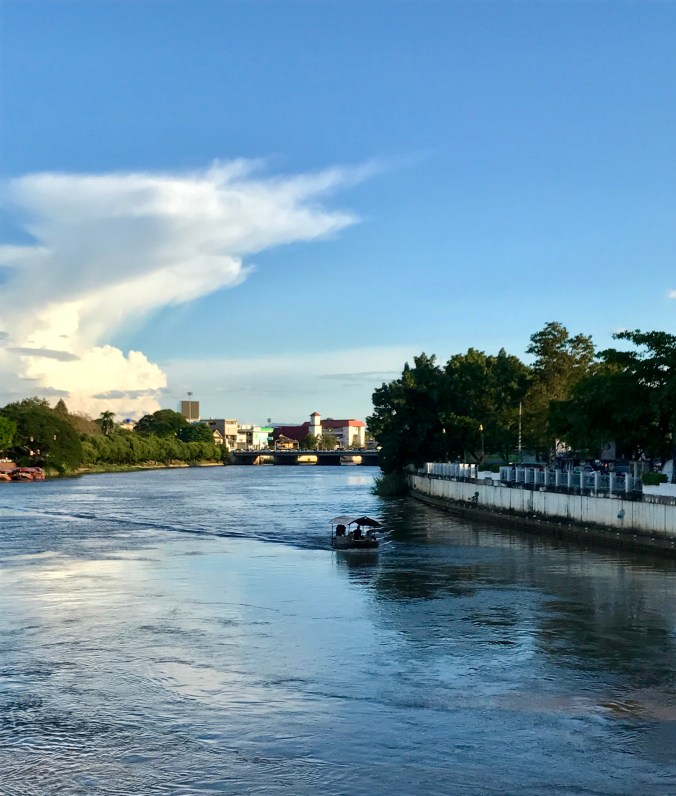
Above, view of the Ping River. We arrived in Chiang Mai on Monday afternoon, checked into our hotel and took a walk to through the neighborhood.
We are staying in a small and special place here, 137 Pillars House. The original building on the site was built 125 years ago and was the Northern headquarters of the Borneo Trading Company. The whole place feels like something out of another time. Here’s a web photo of the teak paneled bar.
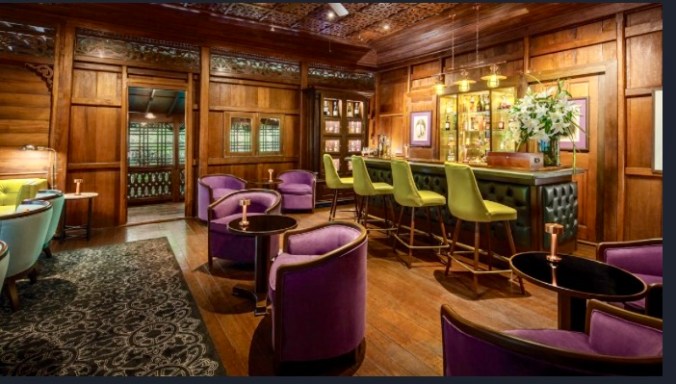
At the entrance, a memorial for the King, whose funeral is this week.

On Tuesday we visited the main temple outside the city, one of Northern Thailand’s most sacred sites. Wat Phra Doi Suthep was established in 1383 to enshrine a piece of bone said to be from the shoulder of the historical Buddha.
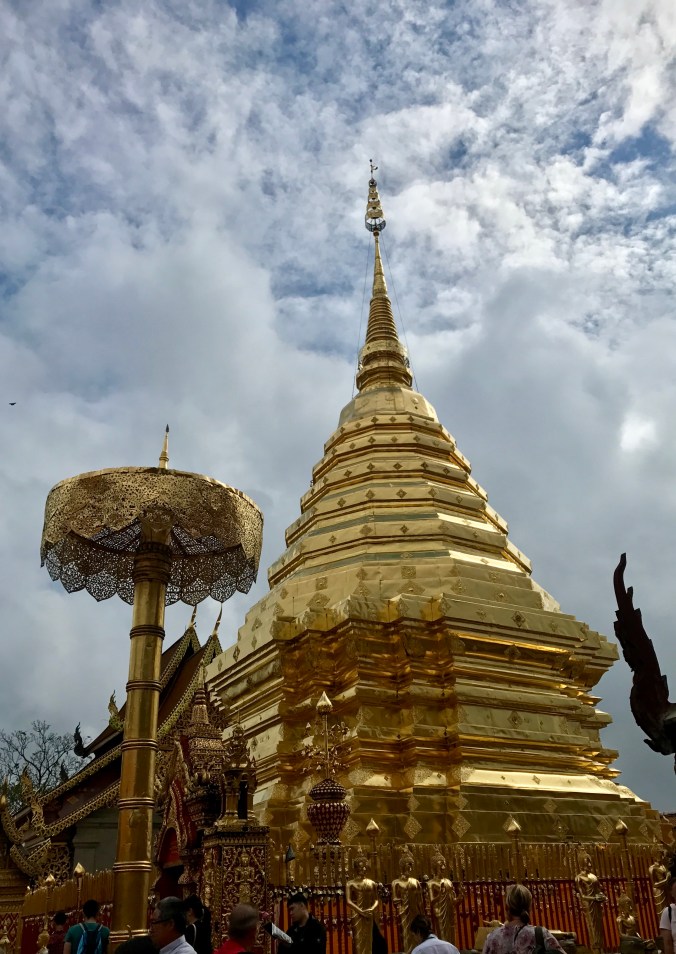


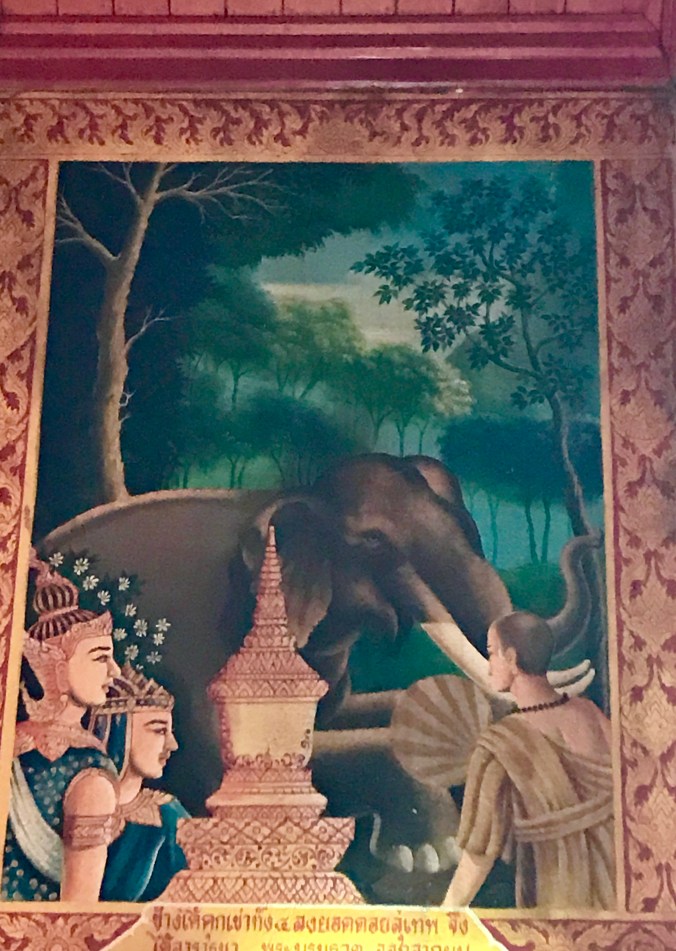
The walls of the temple depict the story of how the relic arrived in Chiang Mai and how the temple came to be built. When the monks and the King could not agree on a site for the temple, the task was assigned to an elephant, who walked for some time before he found a suitable spot and set the relic down.
Afterwards we visited a site where members of half a dozen different hill tribes have settled and produce regional crafts. Like a number of similar setups in northern Thailand, this one is somewhere in between an authentic village and a tourist attraction.
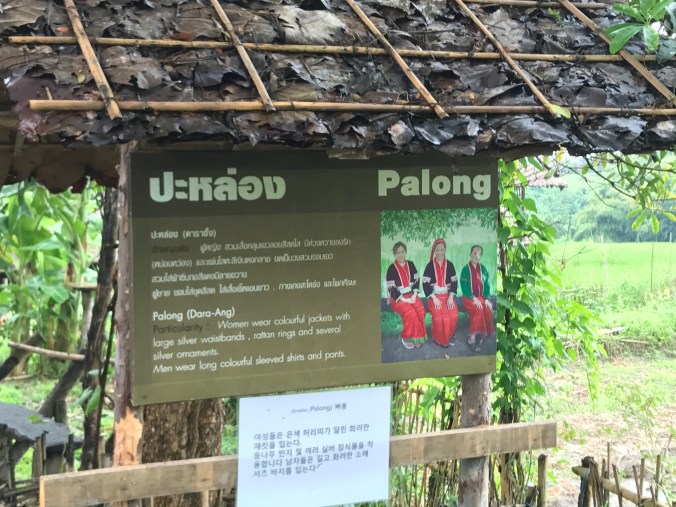
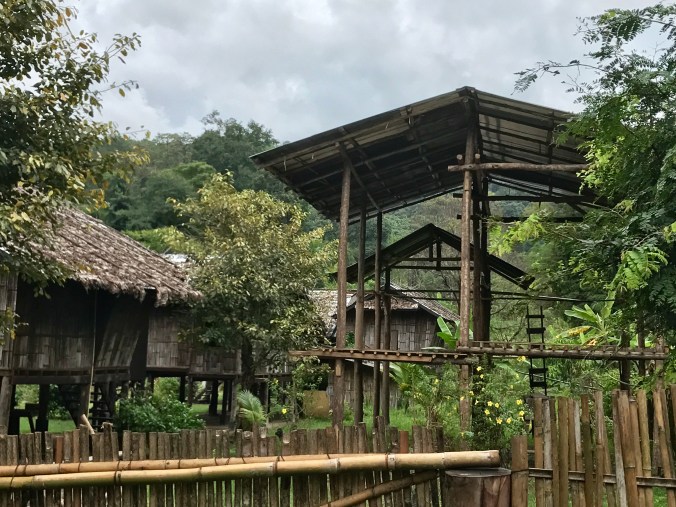
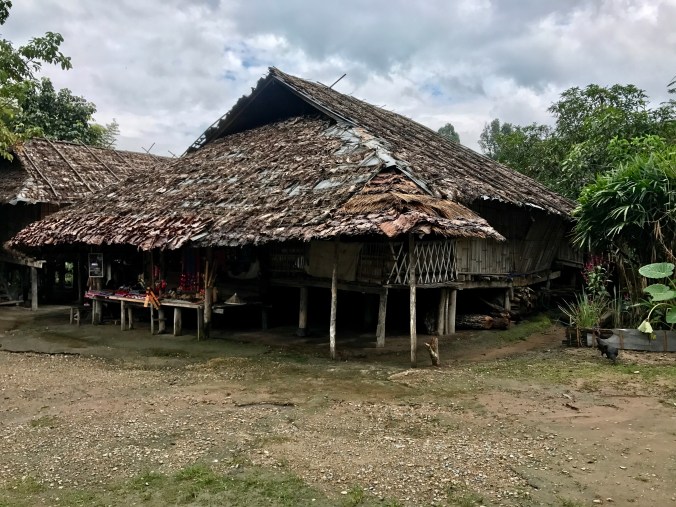
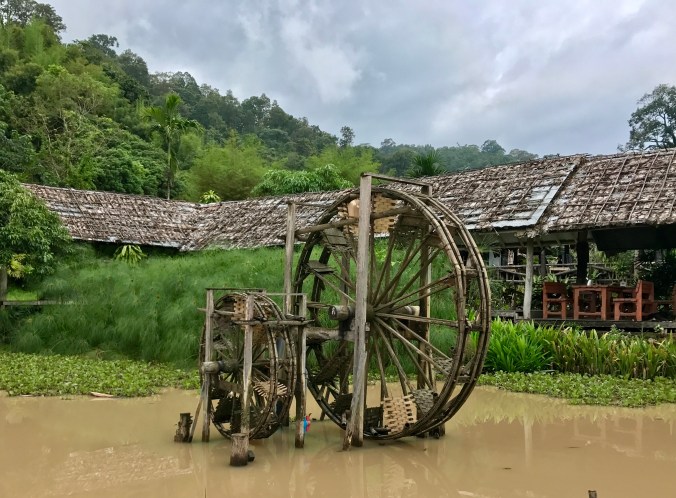
(I did not want to take pictures of the people).
We had lunch along the way at an orchid farm.


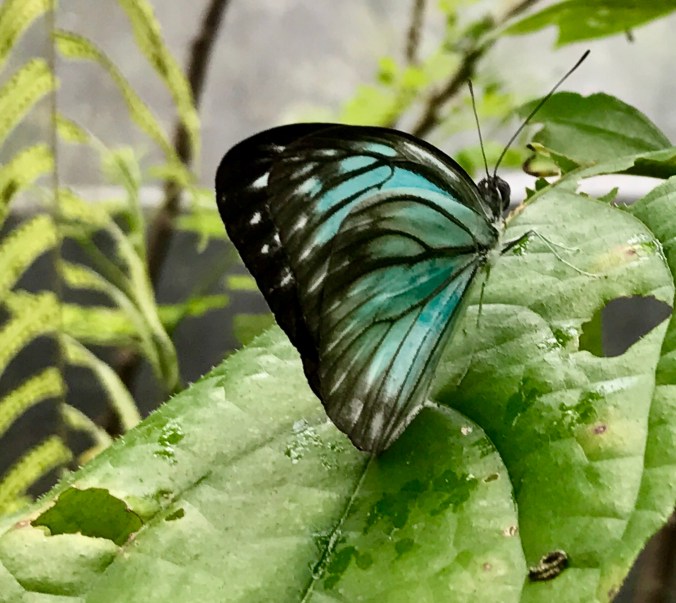
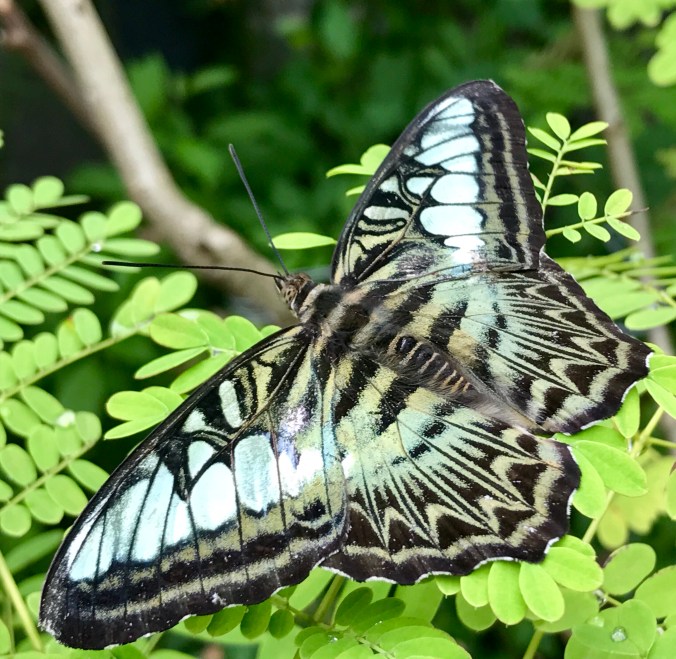
There were also some beautiful butterflies.
On Wednesday Jay and I hopped in a “tuk tuk” and went to visit the Old (walled) city of Chiang Mai.

We visited several notable temples. As was the case in Bangkok, we again found that dress codes were less strictly enforced than in Bhutan, and that there were more worshippers than monks in attendance. Everywhere, there are memorials for the King.
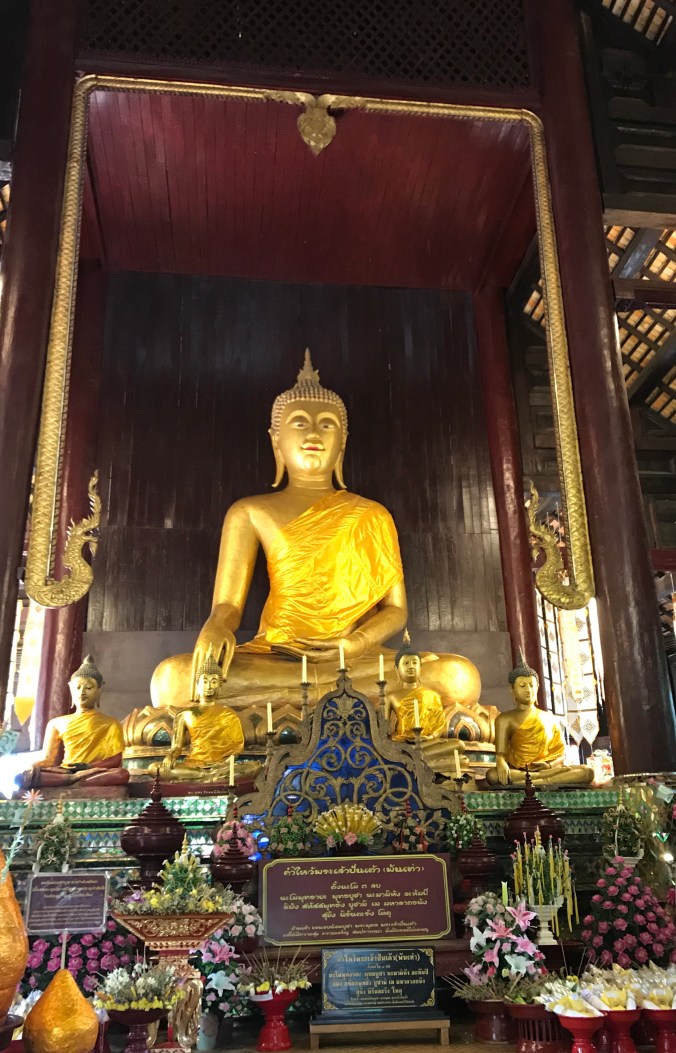 Above, Wat Phan Tao, the city’s largest Wat.
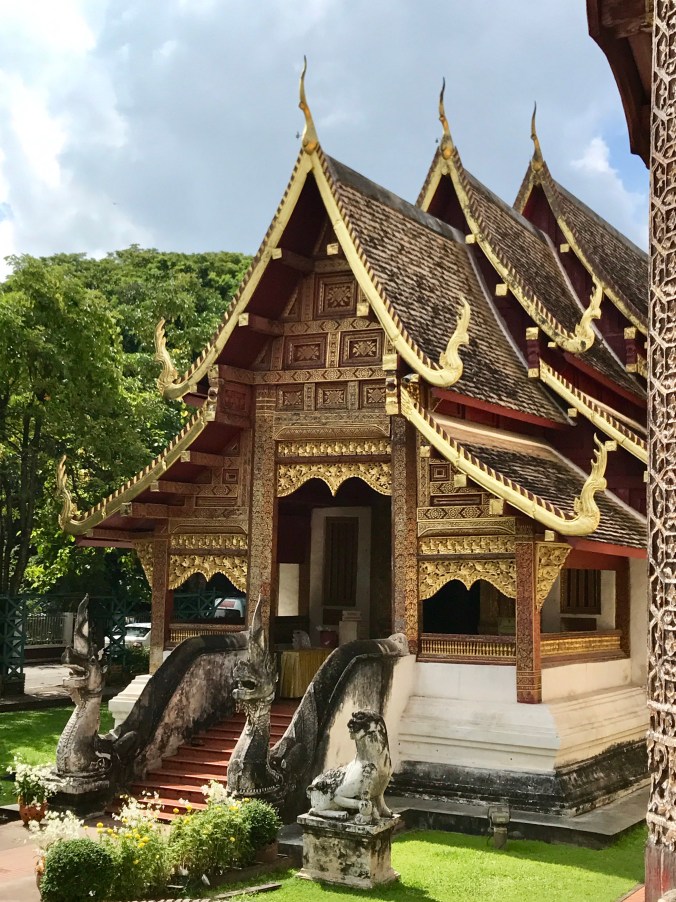 Old teak temple
Below, Wat Pra Sing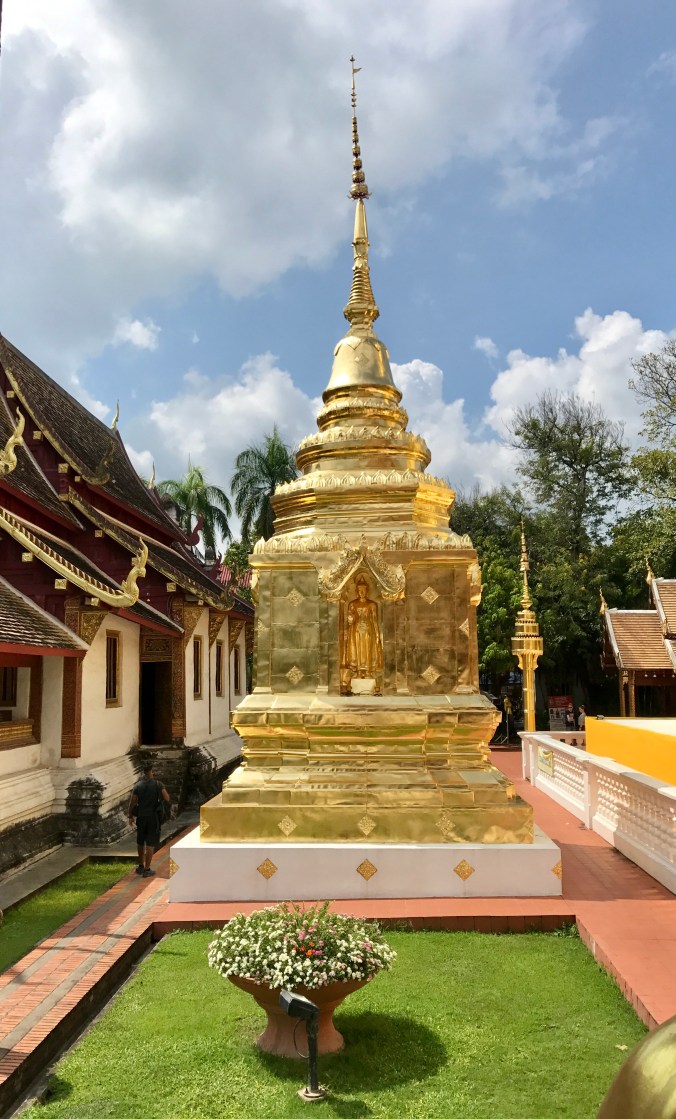
I don’t want to give the impression that the old city is just temples. There are a lot of them, and some that are very old. But there are also restaurants, shops, and all the usual elements of an urban landscape.
~~~~~~~~~~~~~~~~~~~~~~~~~~~~~~~~~~~~
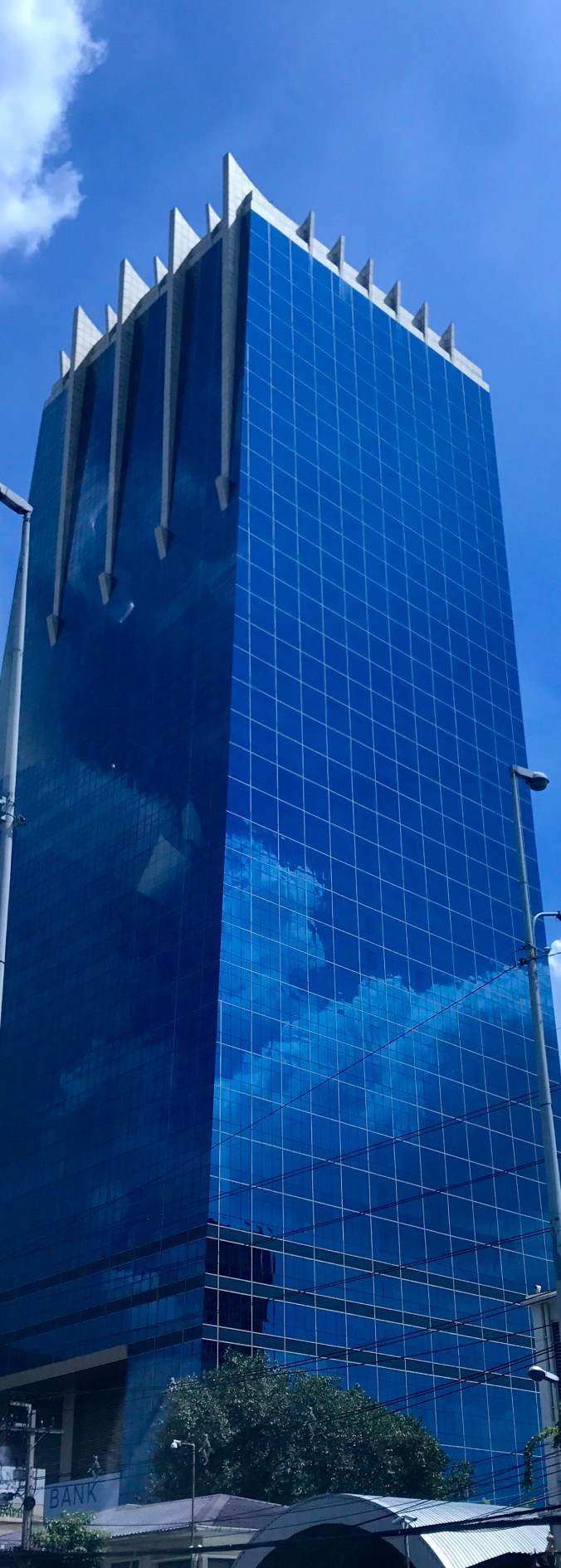
 Above, the view from our hotel bar. Sparkly rooftop bars are a big draw in this very glittery city.
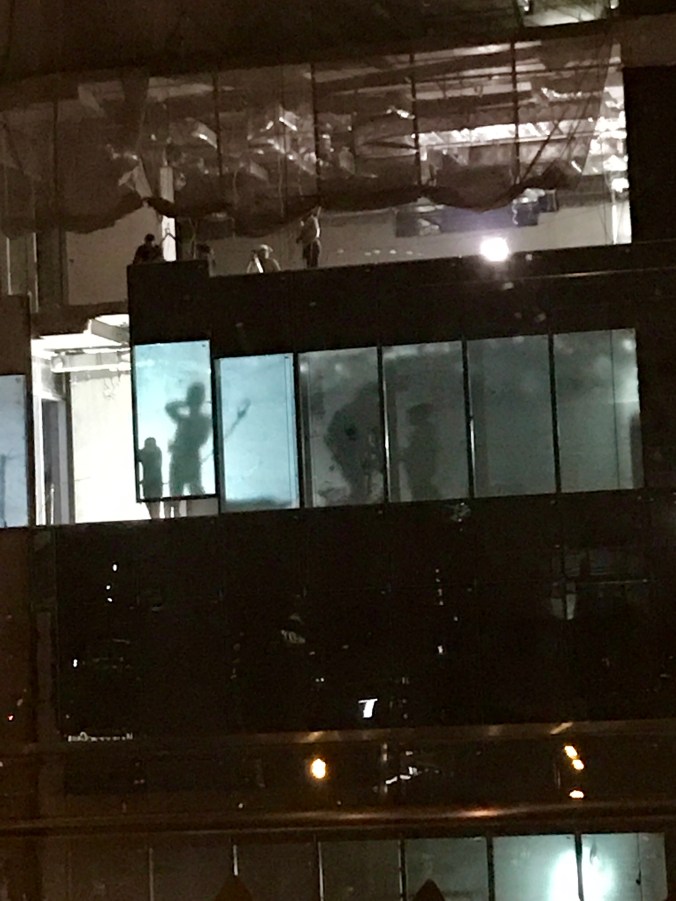
Across from the bar on our first night in Bangkok it looked like some windows were being installed. Hard to tell just what was going on, but it felt very Hitchcock-esque.

Soon after we arrived we learned that the King had died and that he is to be cremated next week (October 26th). There are memorials for him throughout the city, in parks, on buildings, on the trains.
The cremation ceremony comes at the end of a year of mourning. Many of the people we have come in contact with have expressed their sadness at the loss of King Bhumibolho, who at 88 was the world”s longest reigning monarch. security in the city has been stepped up as preparations for the week long funeral get underway.
In all honesty, we have only just realized that he died last year.
We are here for just a few days before we head north, and so we decided to spend some time with a local guide. We visited several of Bangkok’s religious sites, took a boat ride to see life on the river, and learned a bit about Thai Buddhism.
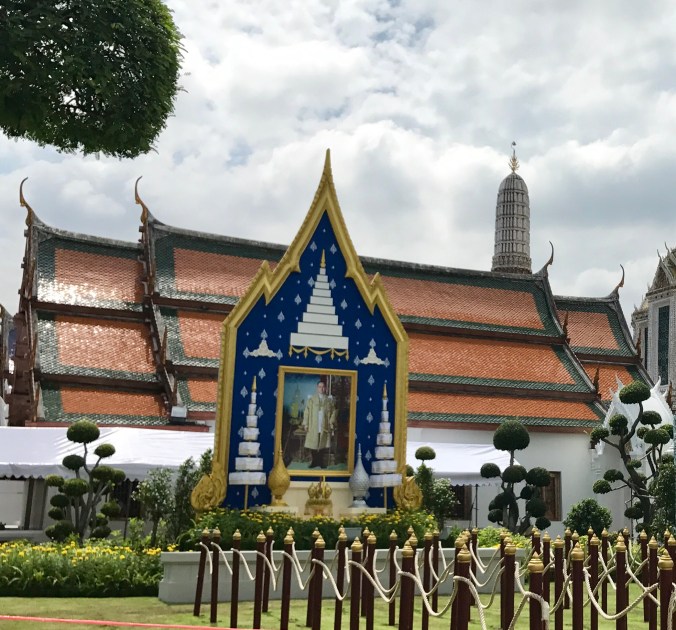
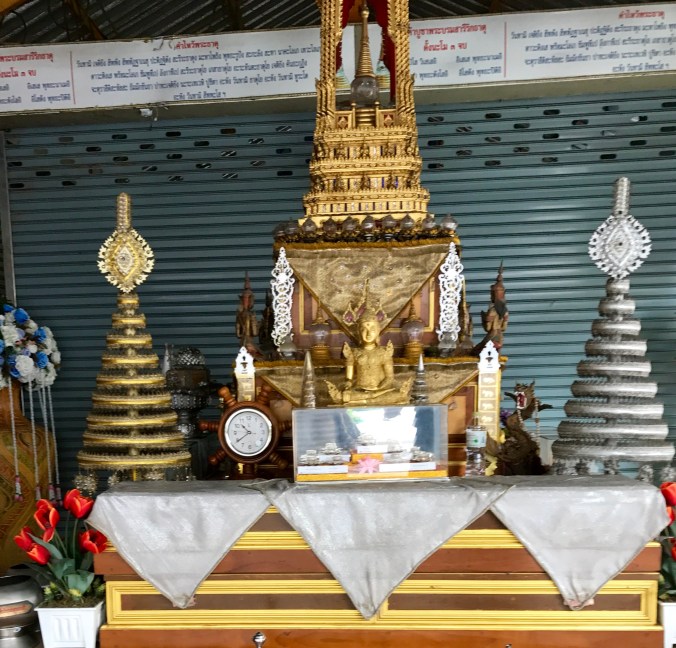
Above and below, memorials for the King.
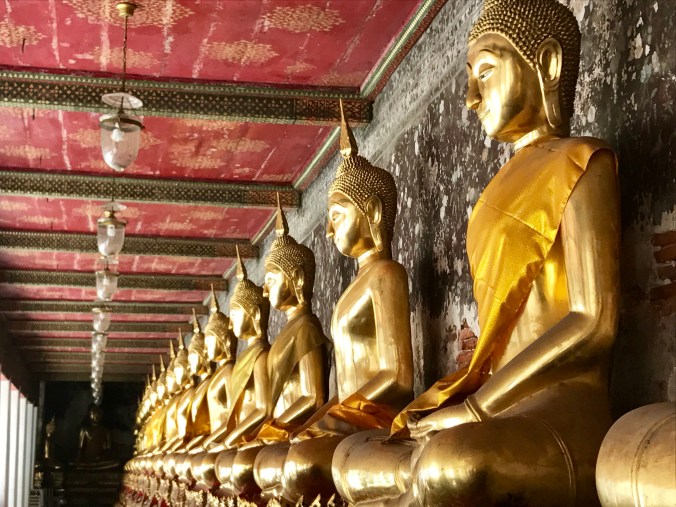
Unlike temples in Bhutan, photographs and video are permitted here. Dress codes are less strictly enforced. Most strikingly, people come to these temples to read prayers aloud together (in contrast to Bhutan, where it is the monks who chant the prayers).
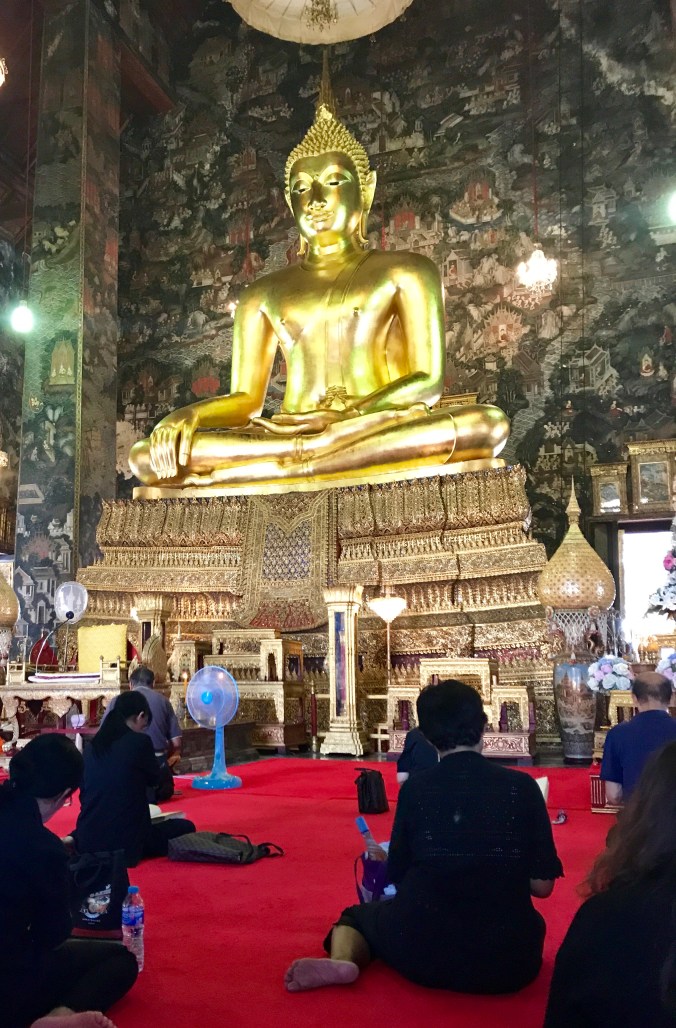
Interior details
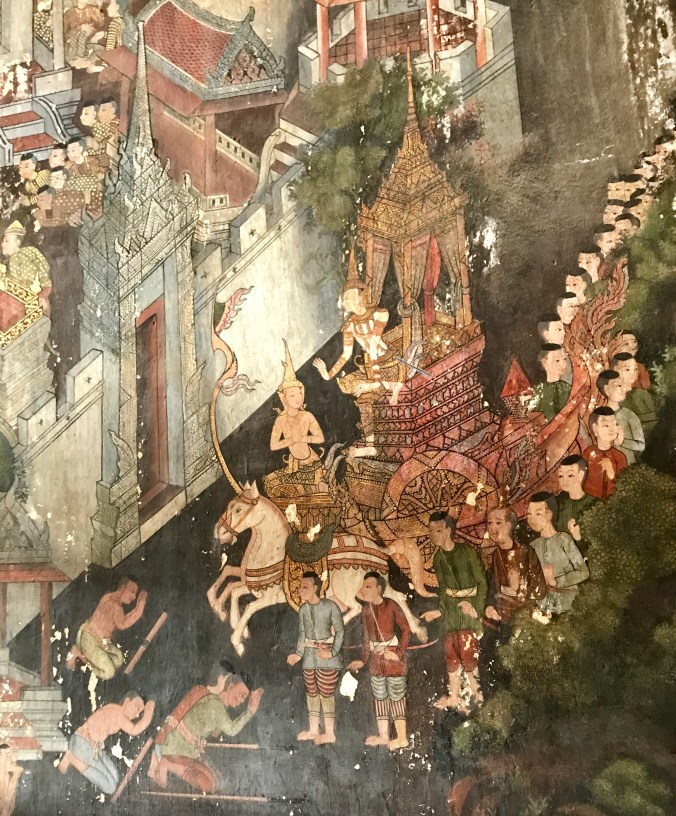
Scenes from the life of the Buddha cover the walls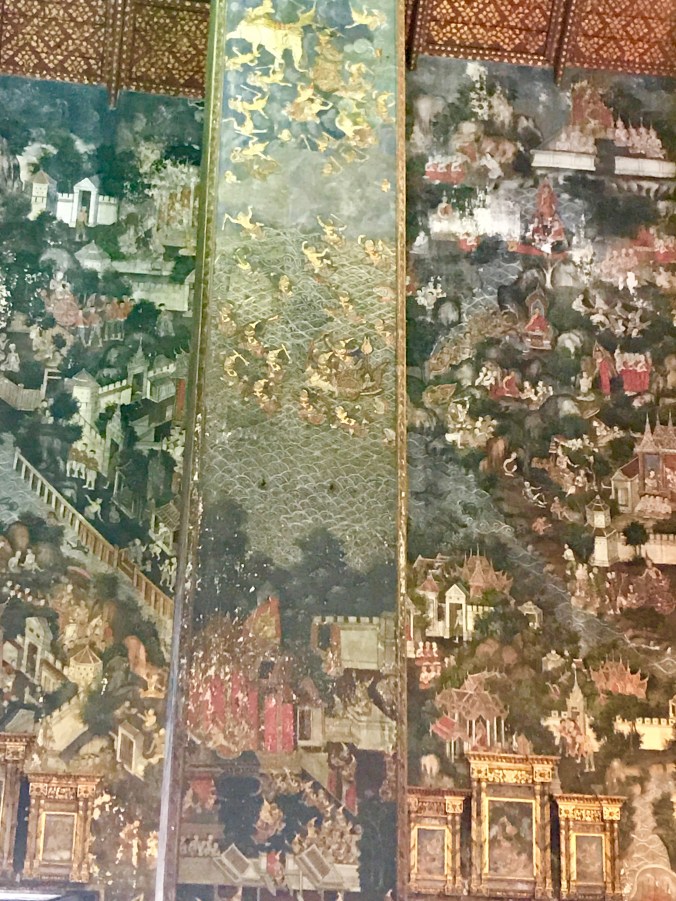
We came upon two induction ceremonies for monks during our temple visits. This was apparently an unusual level of activity, and our guide suggested that it had something to do with the King’s cremation next week.
Friday morning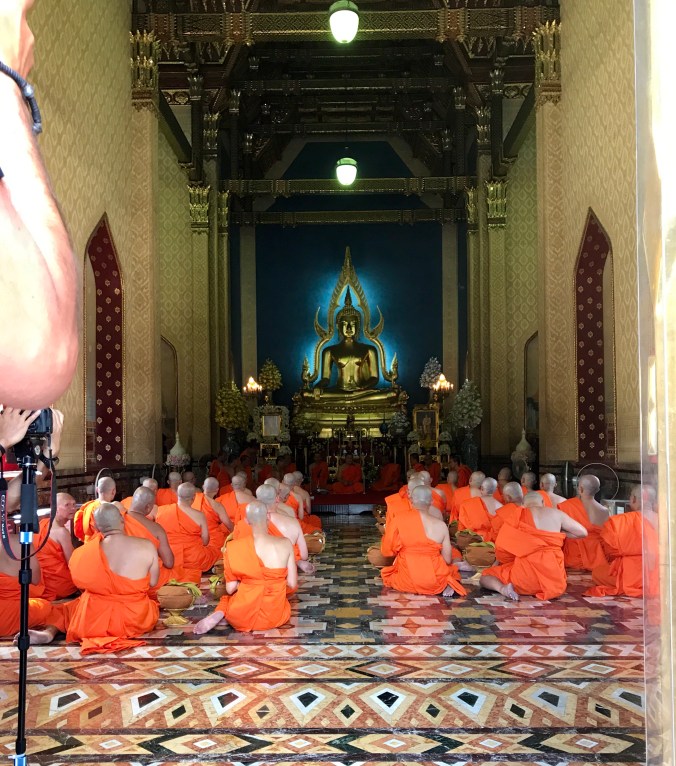
Sunday morning
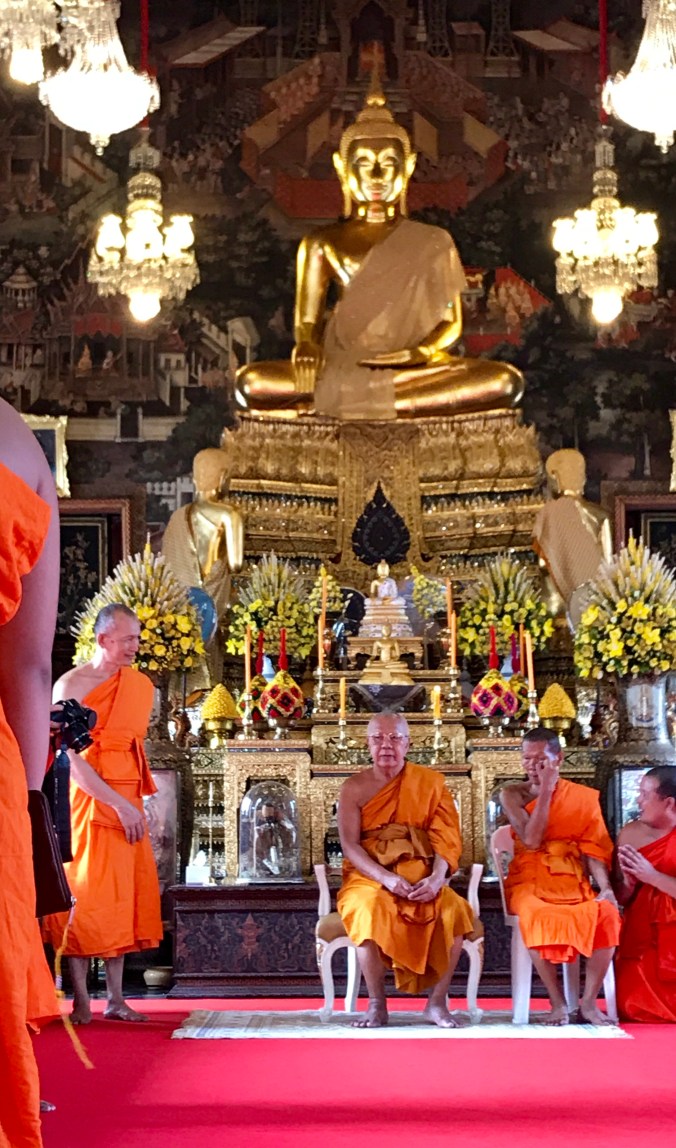
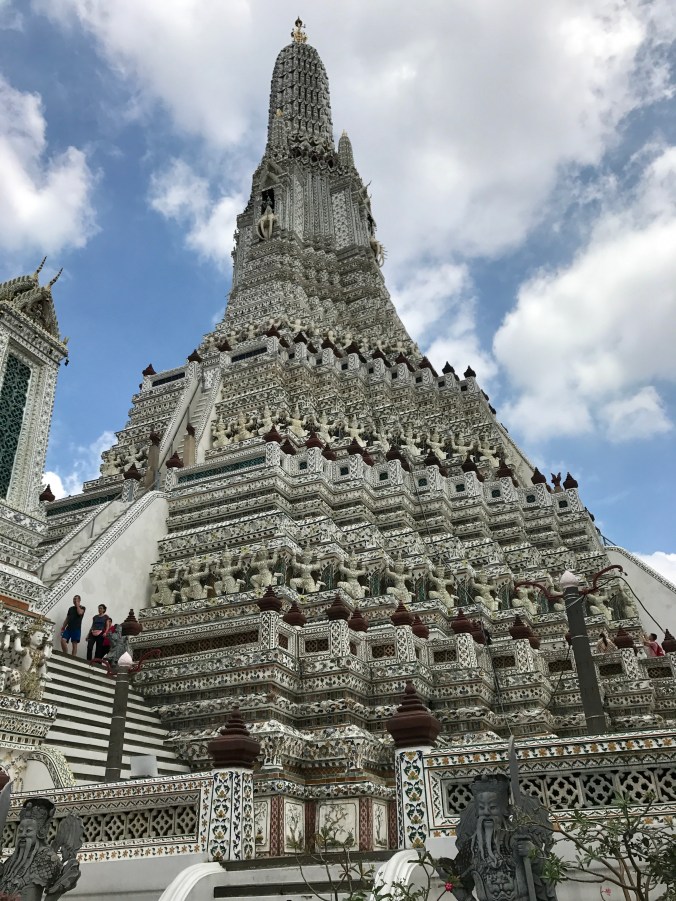
A fantasy of a temple
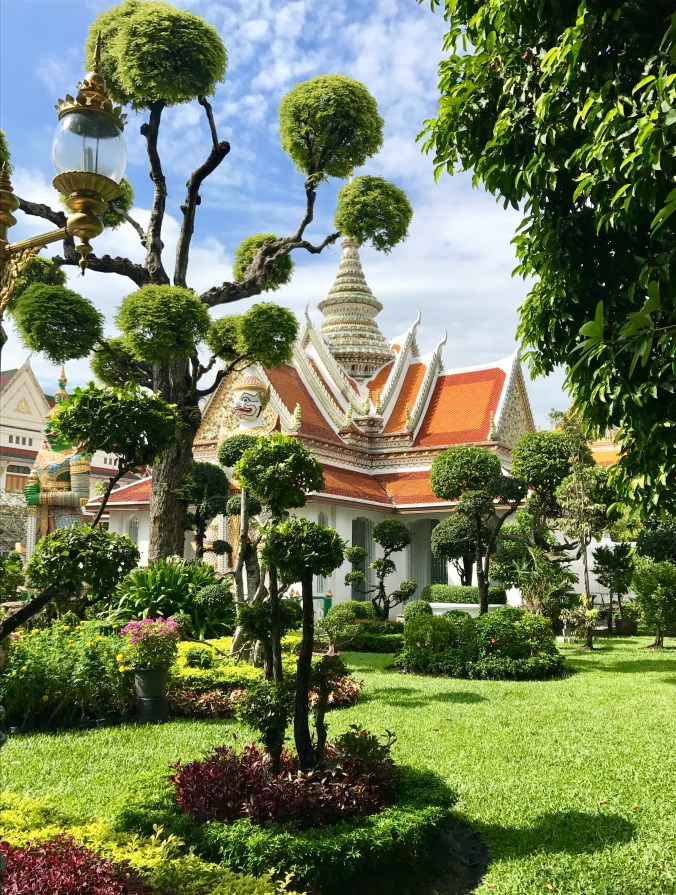

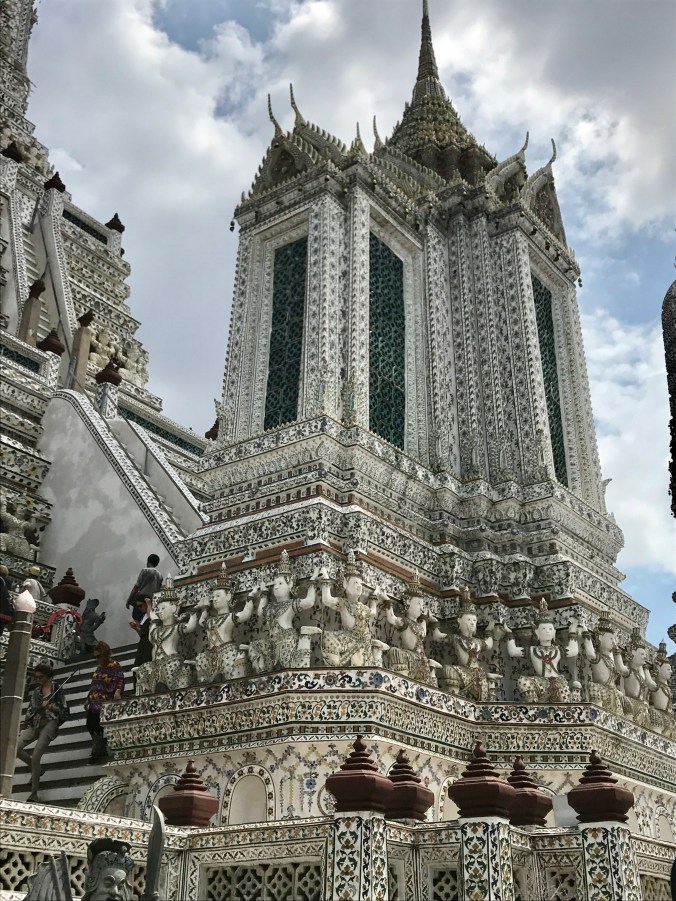
And another
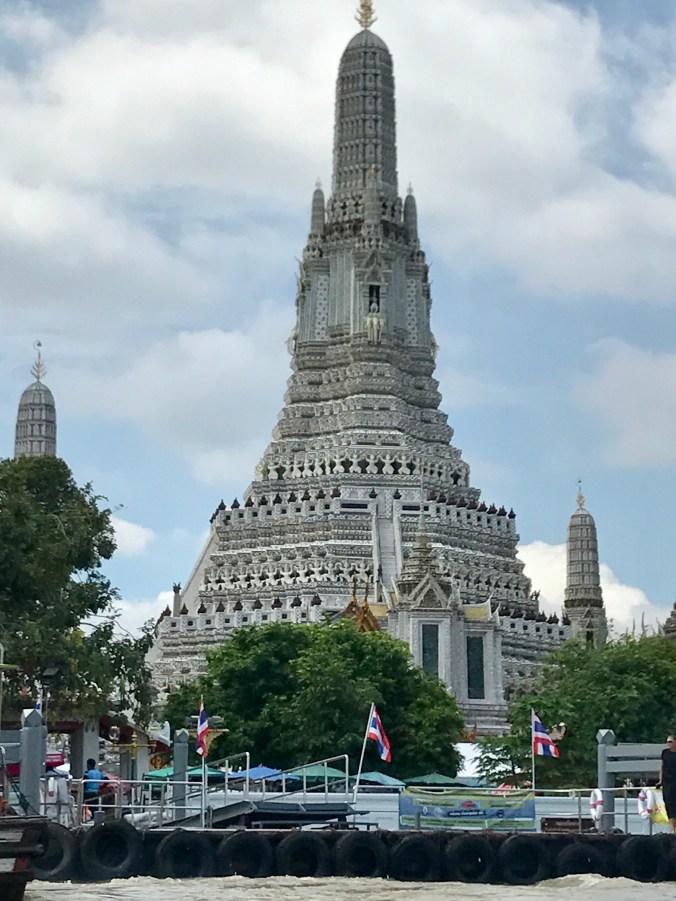
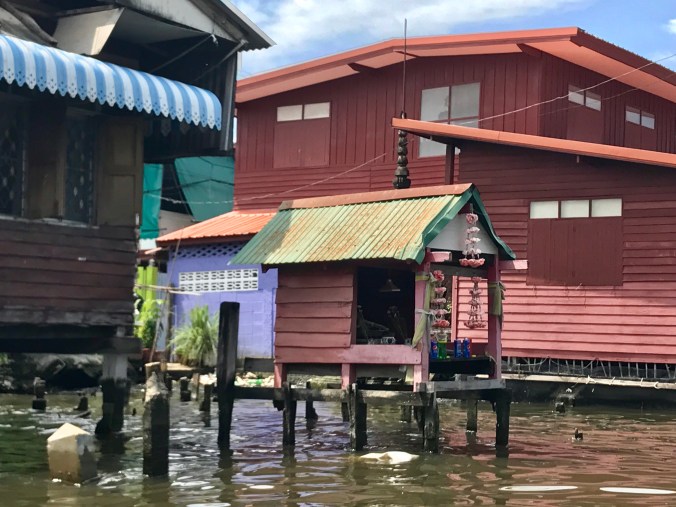
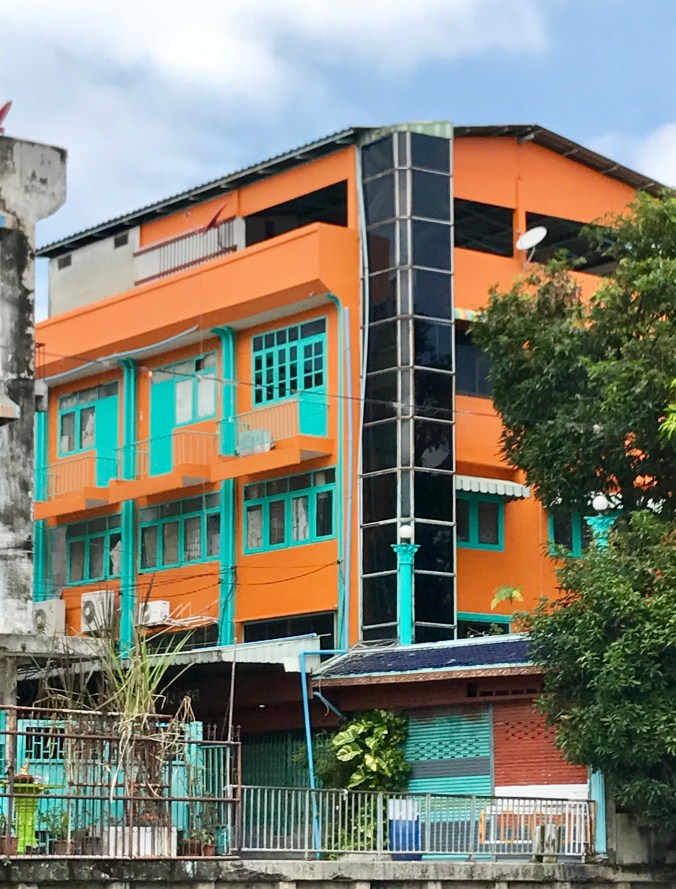
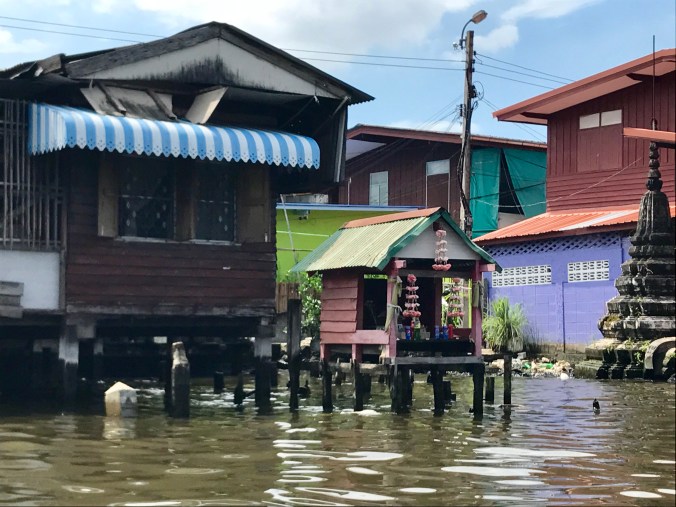
On the water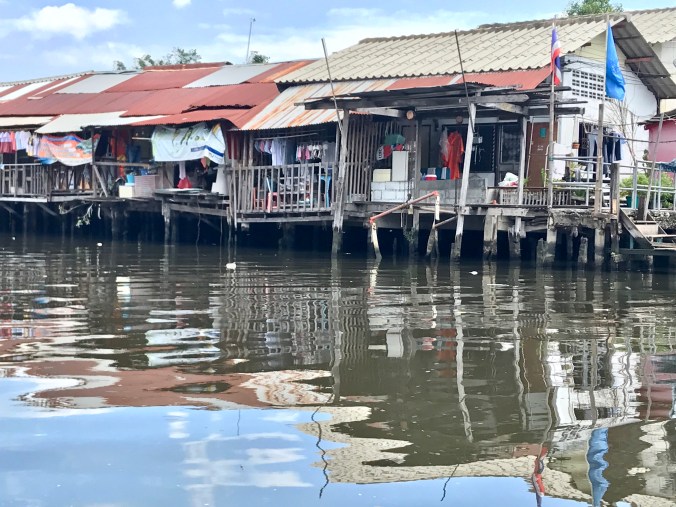
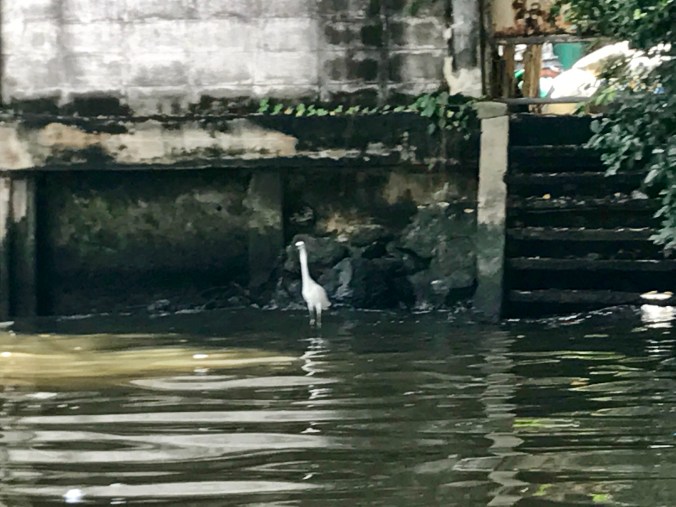
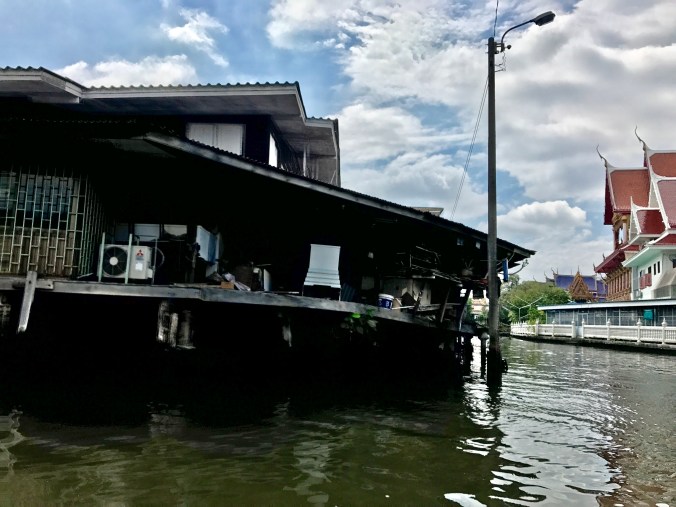
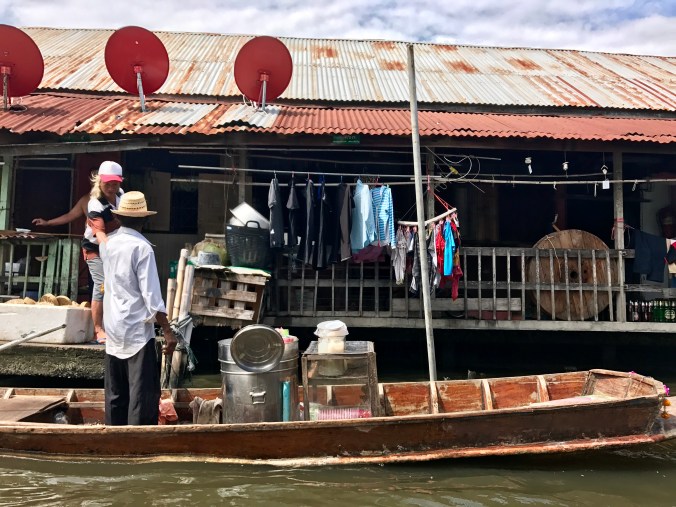 The ice cream boat. We were told that there is also a KFC boat.
 ~~~~~~~~~~~~~~~~~~~~~~~~~~~~~~~~~~~~~
Day’s end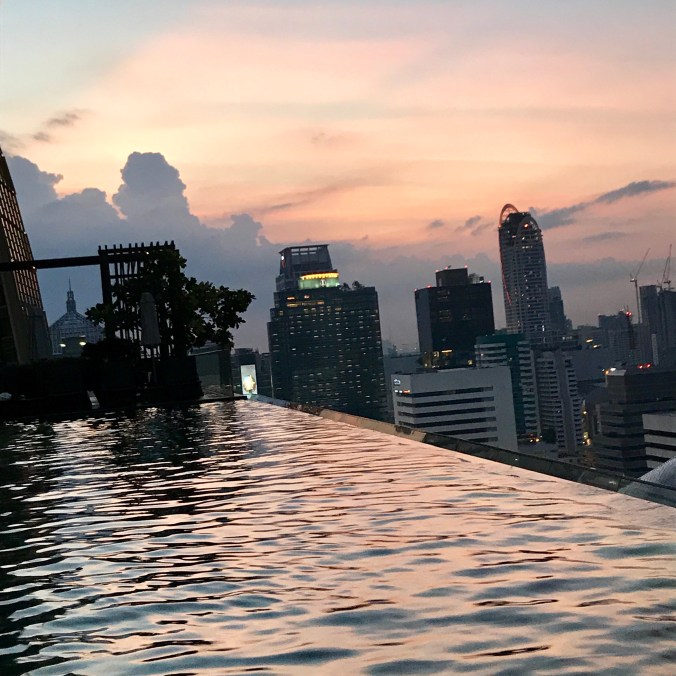
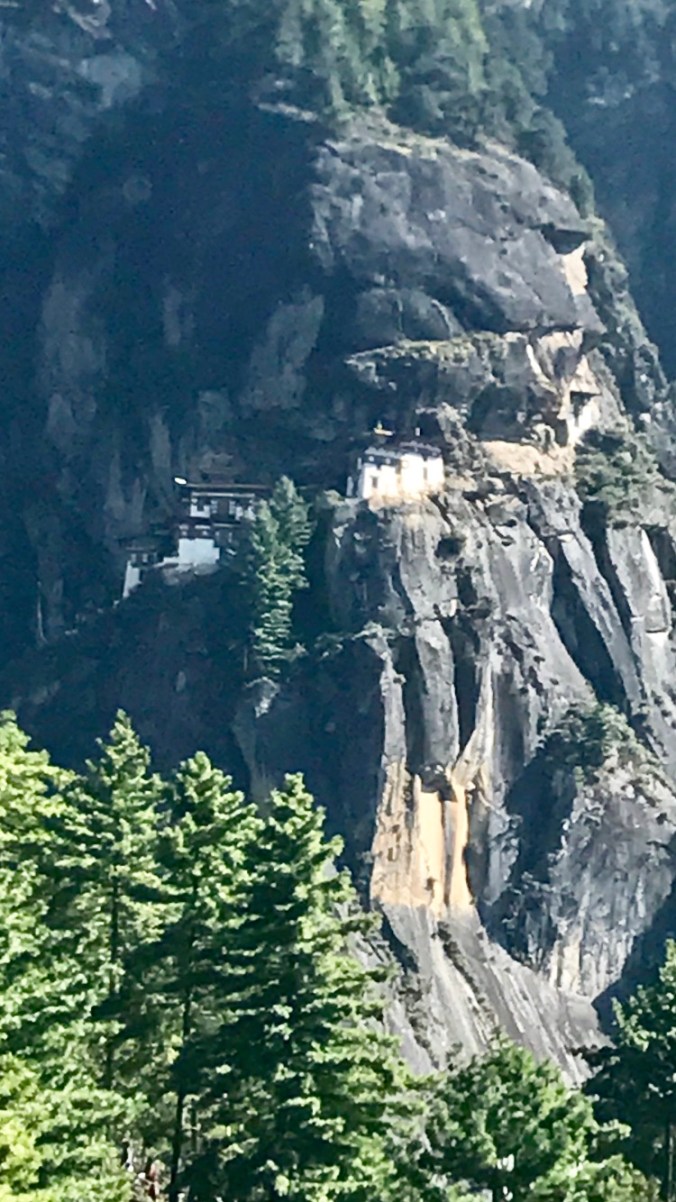
Yup, there it is, that white speck hanging onto the cliff. I was not counting on making it all the way.
First, the story. According to legend, Guru Rimpoche, the “second Buddha”, who is credited with introducing Buddhism to the kingdom, came to this place to suppress demons. He was carried here by his Tibetan consort, who transformed herself into a flying tiger.
Here we are, a third of the way up, a stop at the tea house.
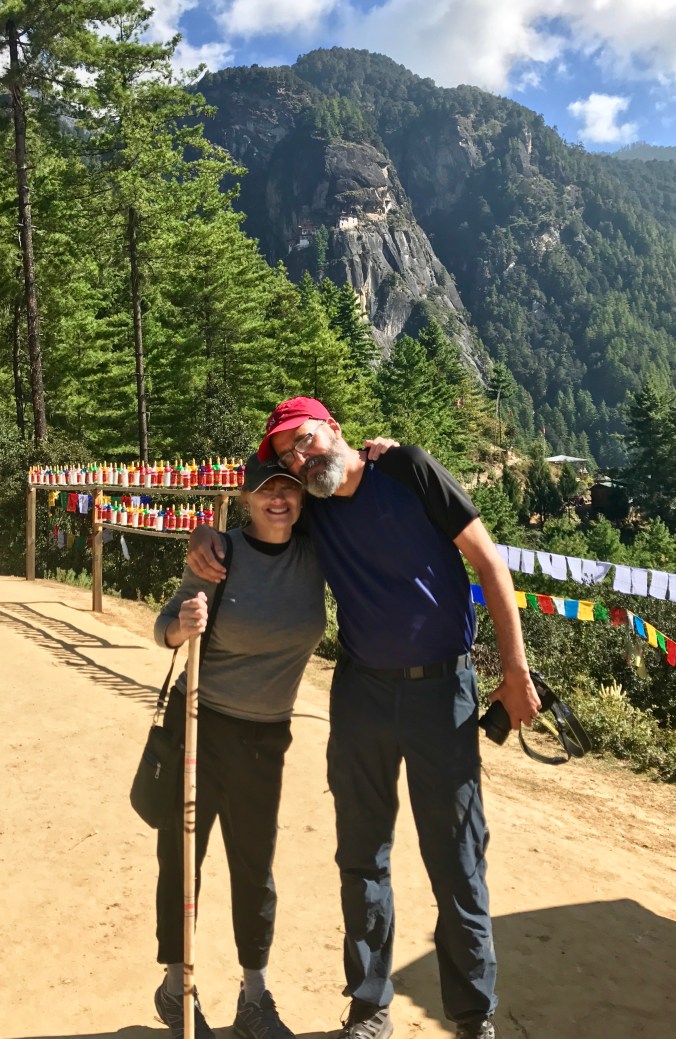
It looks so close! But it’s not. From this viewpoint you’re looking right at it, but to get there you have to go down, down, down, and then up, up, up.
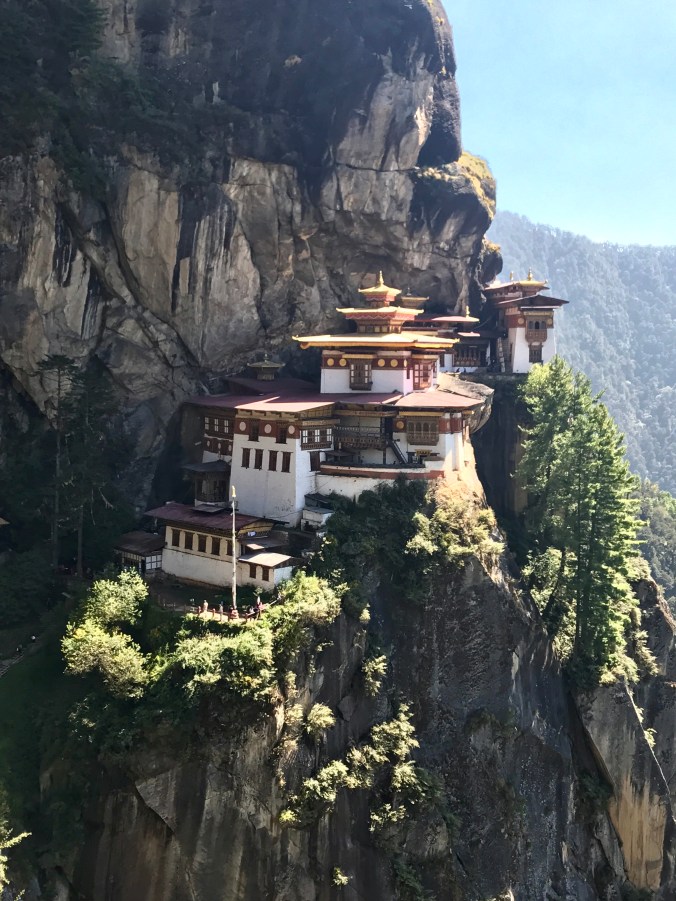
So, we did it, and we even made it back without too much trouble, just taking our time, and carried along by a wave of excitement about having done it, and relief about not having to do it tomorrow.

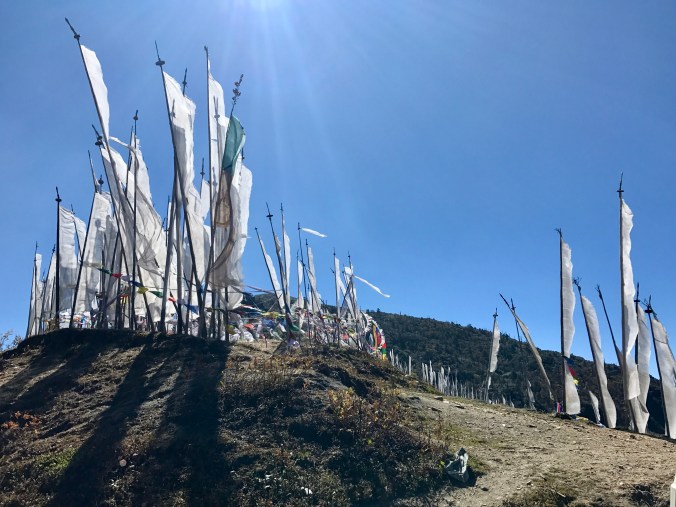
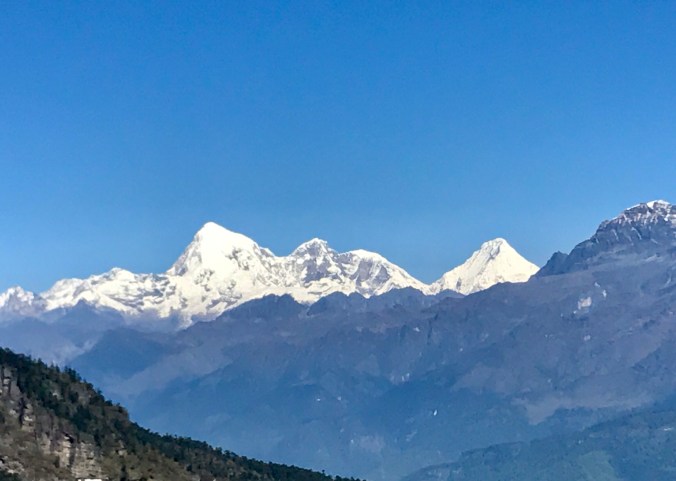
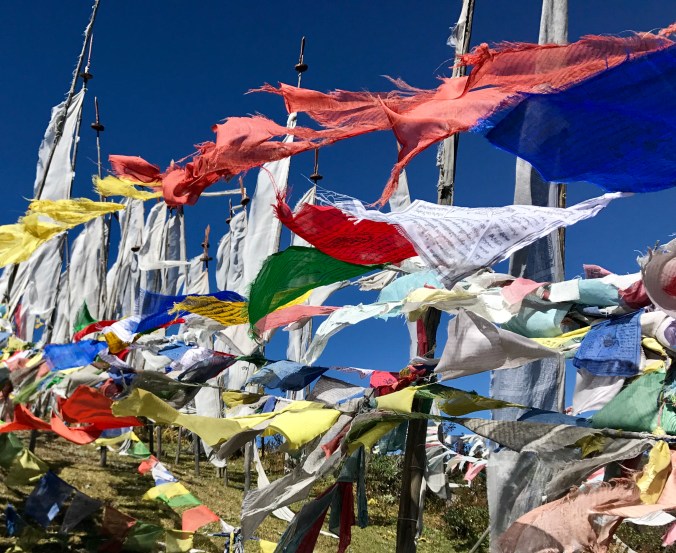
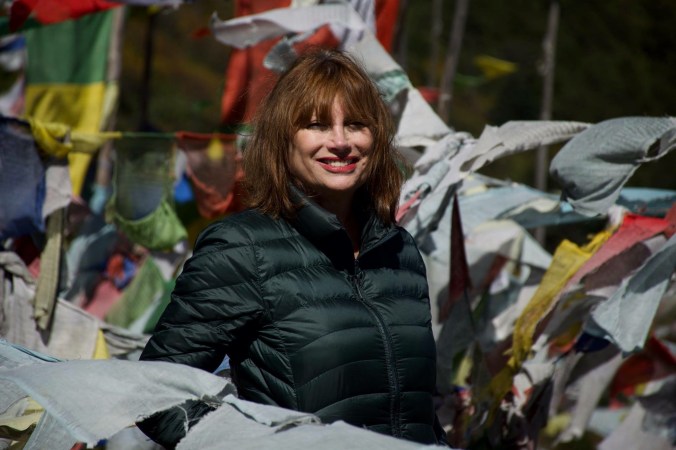
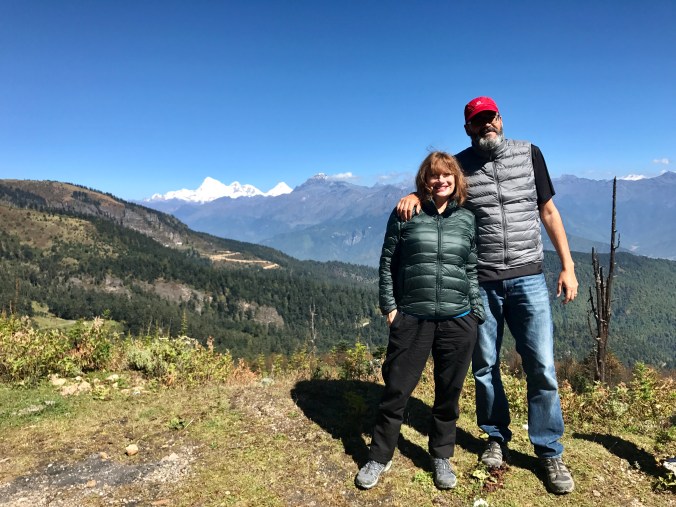
The next day we drove to Chele La, the highest motorable pass in Bhutan. From here you can see the Haa Valley on one side and the Paro Valley on the other. And on a clear day, the Himalayas.

~~~~~~~~~~~~~~~~~~~~~~~~~~~~~~~~~~~~~
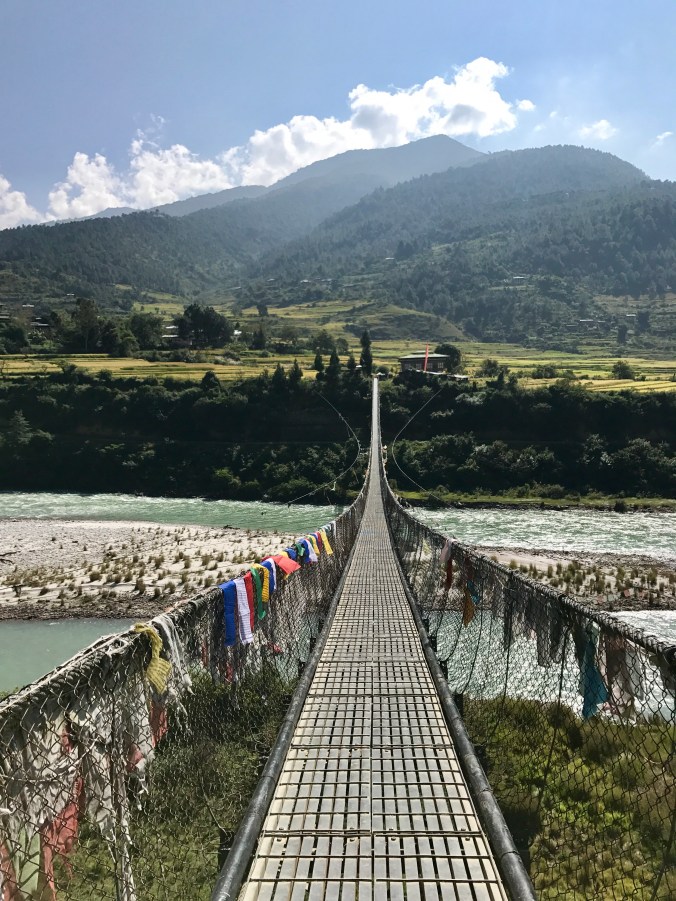
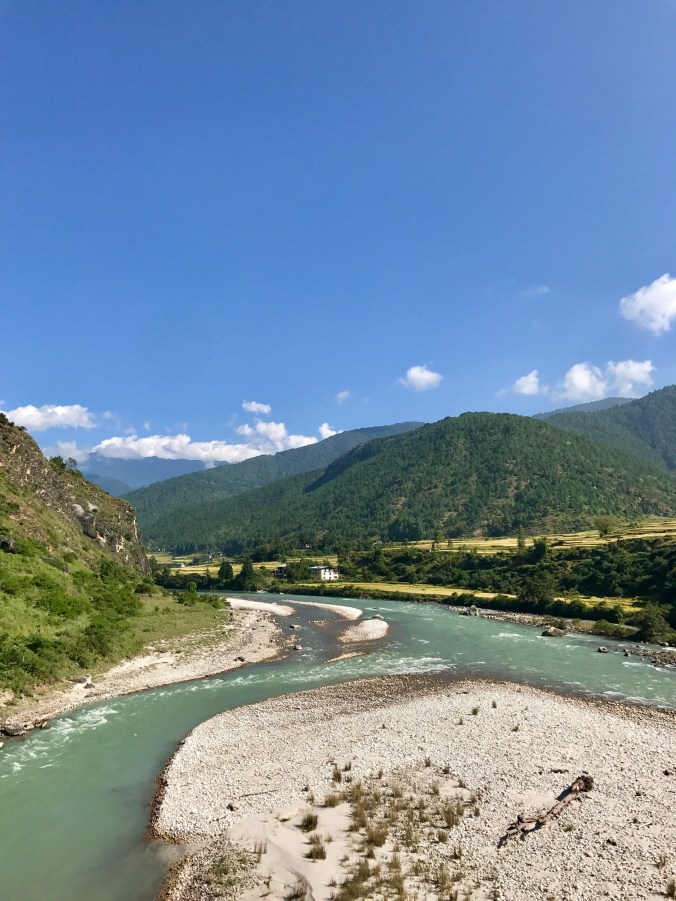
Before getting underway we stopped to see the longest suspension bridge in Bhutan. The bridge connects the Punakha Dzong to villages on the banks of the Po Chhu river, and is where two rivers converge.
Views of the Himalayas on the way to Paro
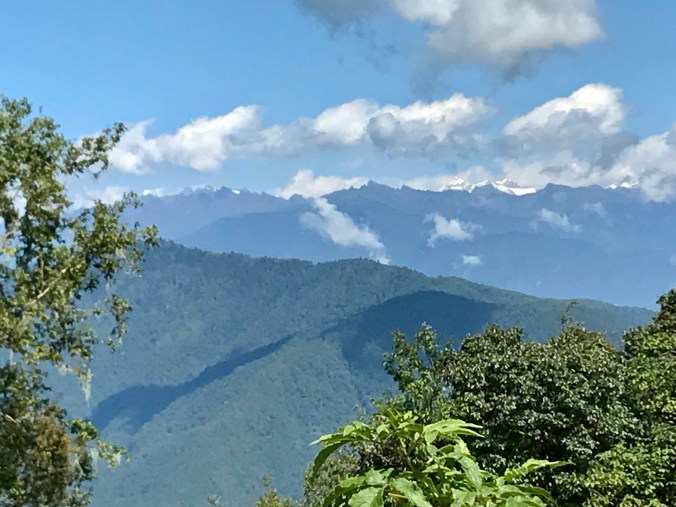
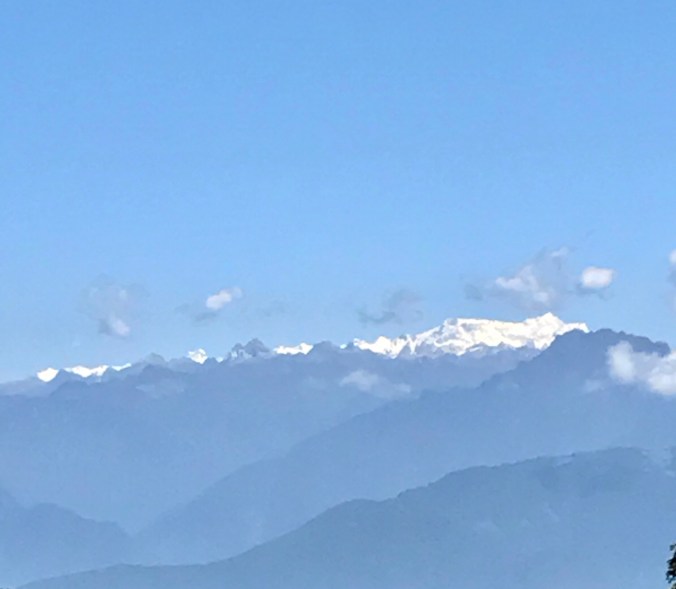
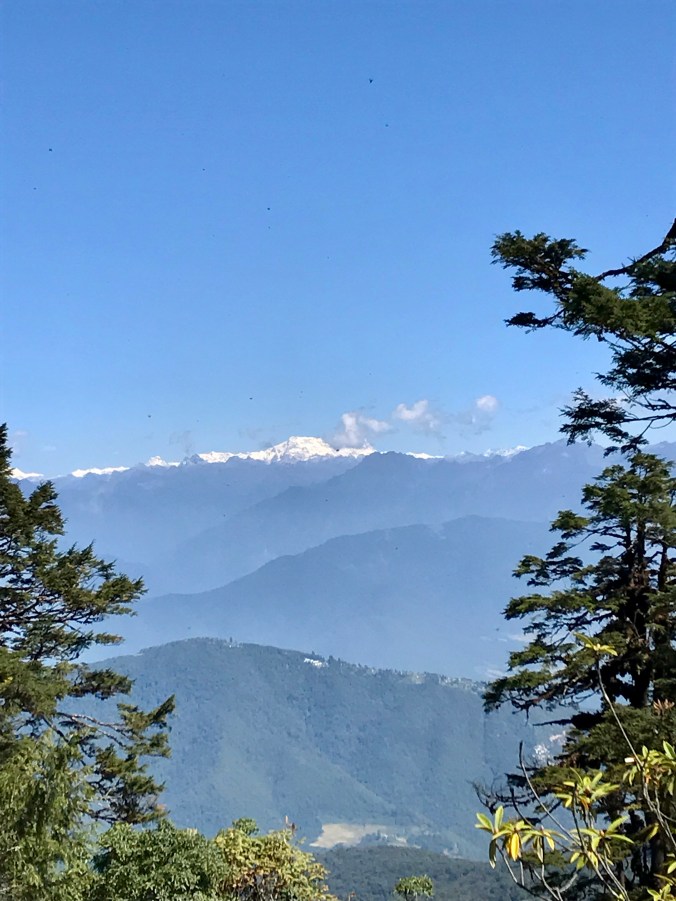
We arrived in the afternoon with time to visit the National Museum and the Paro Dzong. (our guide told us that some people are “dzonged out” by the time they get to Paro, but not us).

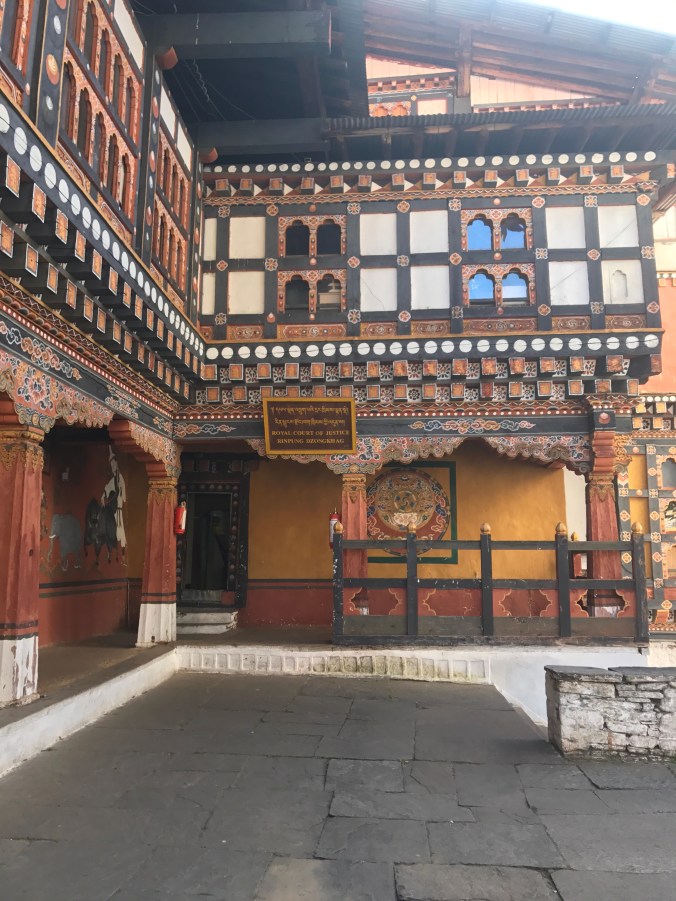
At the Museum we watched a film about the elaborate dances performed at festivals across the country at various times of the year. Each of these dances serves a particular purpose (suppressing demons, honoring holy men) and people come not simply to be entertained, but to pay their respects to the gods and receive blessings. Most of the dances date back to the Middle Ages.
web image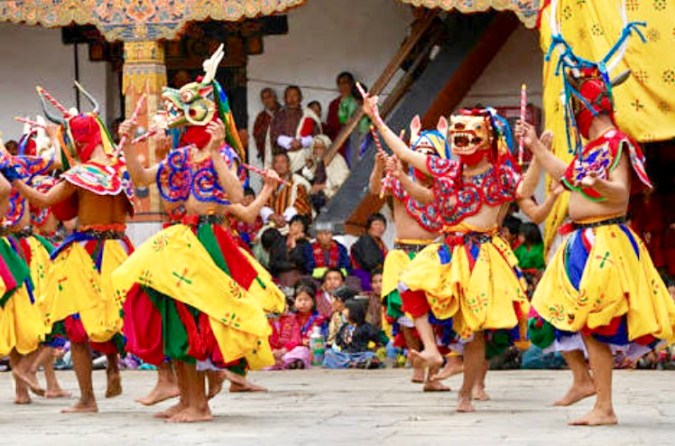
Of course, I was most interested in the Bardo Dance, also known as the Dance of the Judgement of the Dead.
From a guidebook:
“When all beings die, they wander in the intermediate state (Bardo) waiting to be led by their merits into their next destination until the ultimate goal of Nirvana.”
The Bardo Dance, which lasts over two hours, colorfully portrays this ultimate drama of human existence.
web images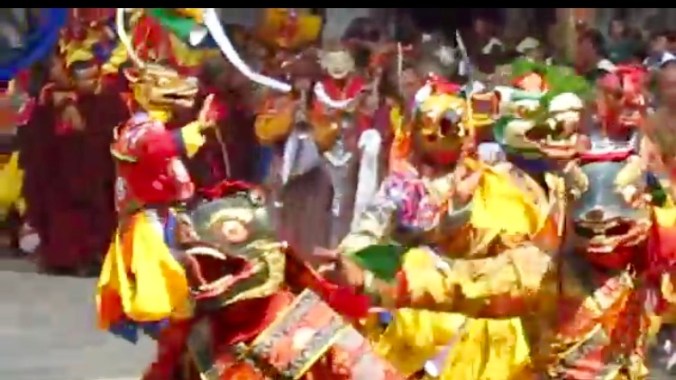
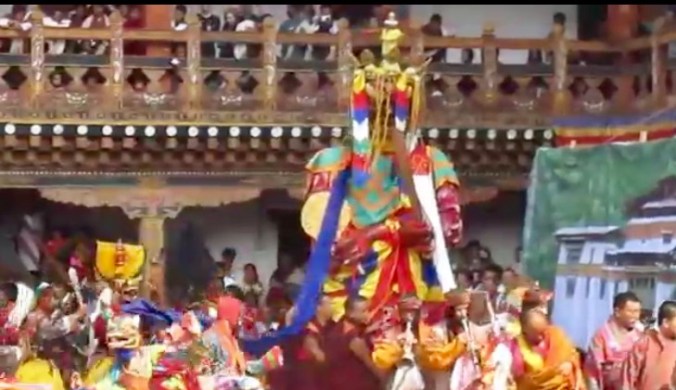
Our guide’s father had died within the last year, and he and I had a chance to talk about death related rituals in Bhutanese culture. They are hugely important – more important than, for example, weddings.
All in all it was a relatively easy day physically, which was a good thing given what lay in store for us the following day.
~~~~~~~~~~~~~~~~~~~~~~~~~~~~~~~~~~~
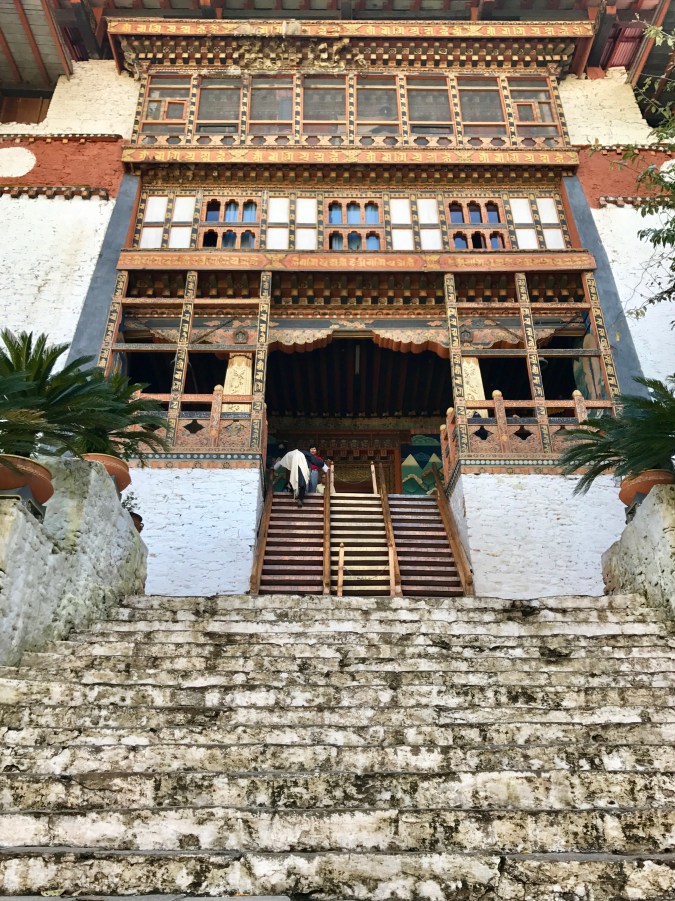
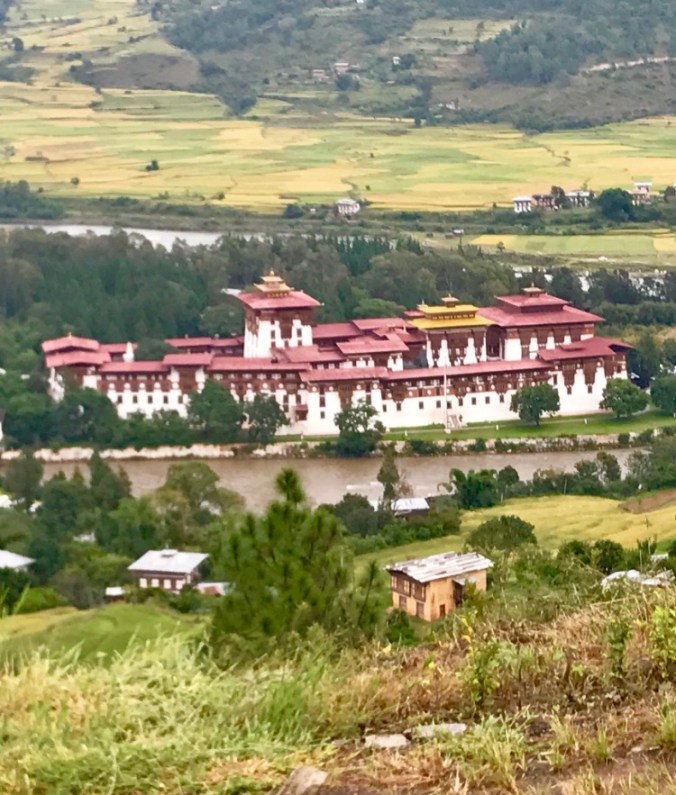
We set out on Sunday morning for several sites in Punaka, including the Punaka Dzong above, widely described as the most beautiful Dzong in Bhutan. Here’s a view of the complex from our hotel to give you a sense of its size.
On our way to see the sites we came upon some archers practicing Bhutan’s national sport. Two opposing teams stand by targets at either end.
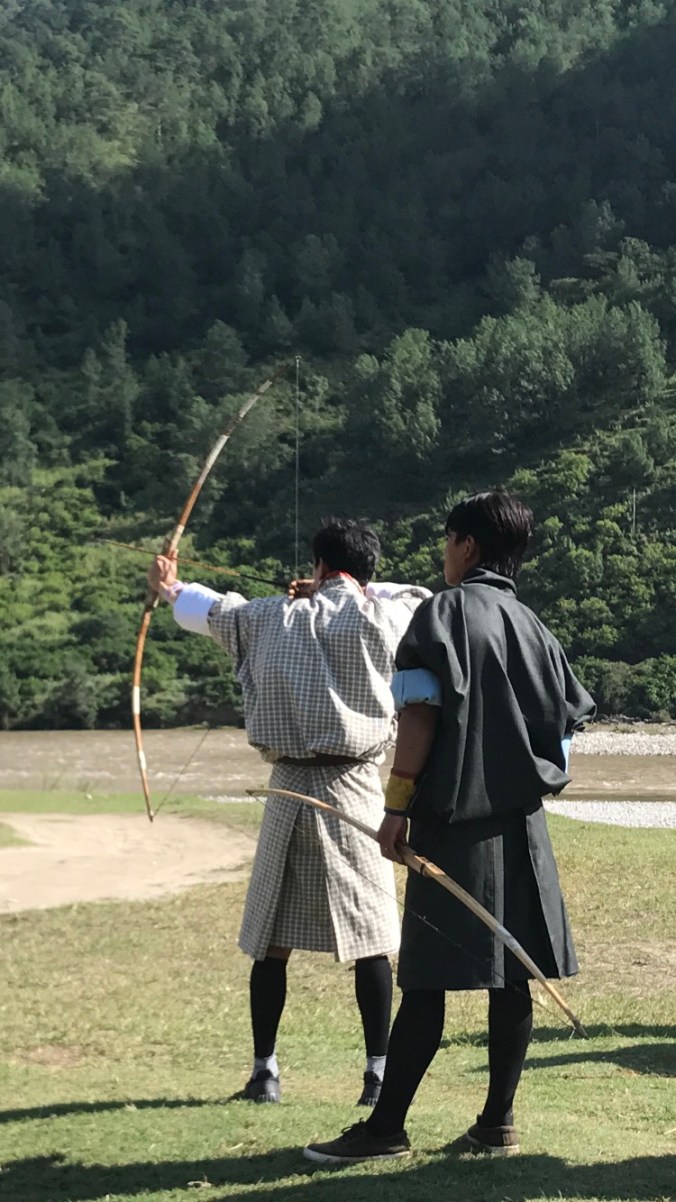
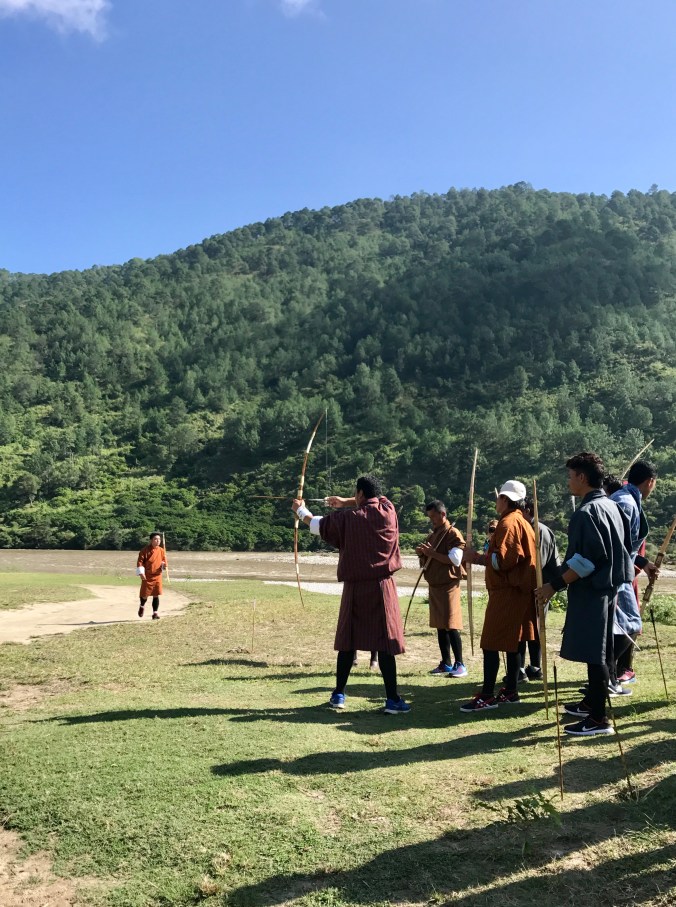
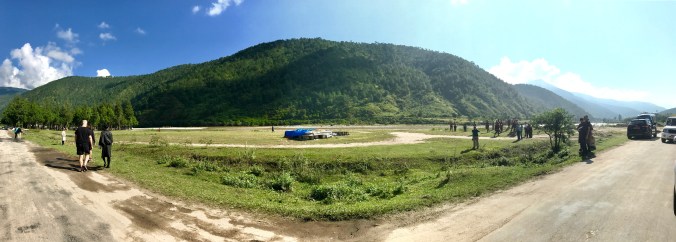
Above, a panorama; you can zoom in. There’s a lot of cheering and dancing every time someone takes a shot. I thought it was the shooter’s team mates celebrating a hit, but our guide explained that it’s the other team being jubilant about their opponent missing the target.
saw this little guy by the side of the field.
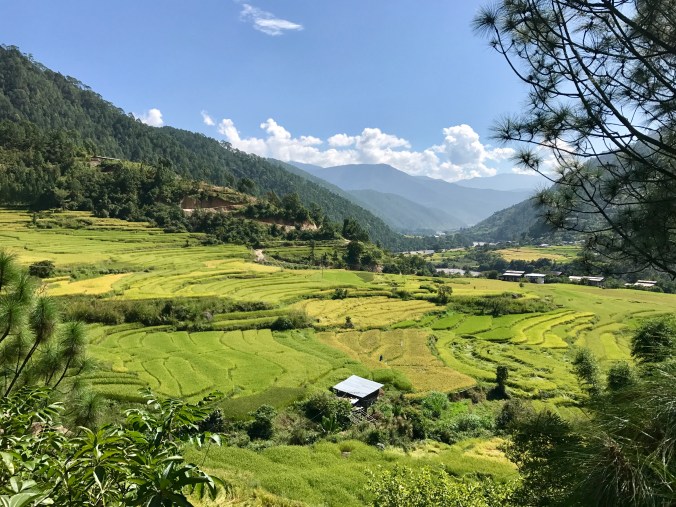
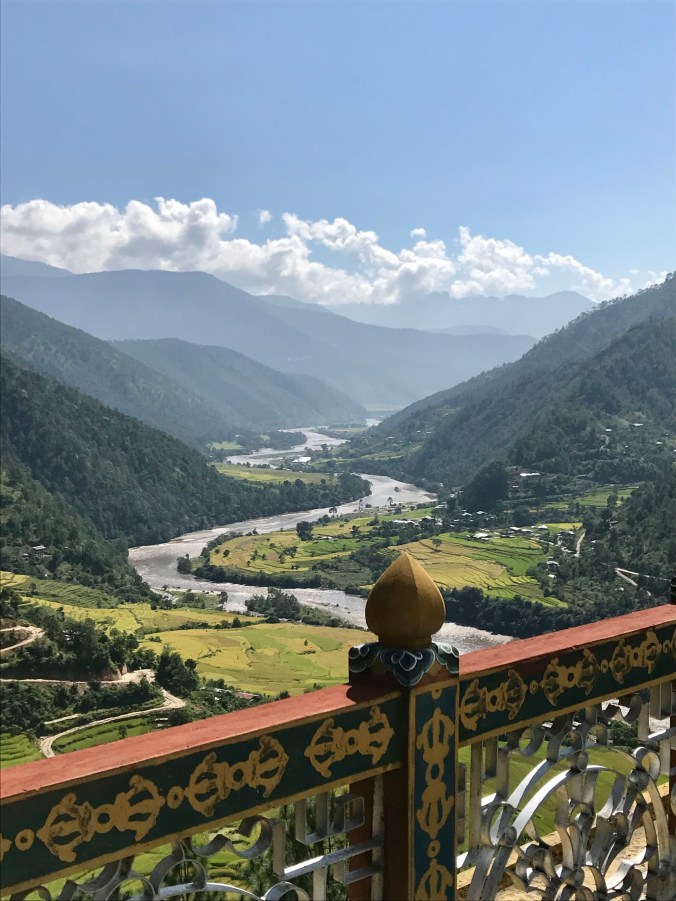
We stopped at the suspension bridge that leads to KhamsumYueling Memorial Chorten, built by the present king’s mother to commemorate her son’s coronation. Once over the bridge we hiked up the hill and were rewarded with some beautiful views of the Ponakha Valley.

Jay with our guide. 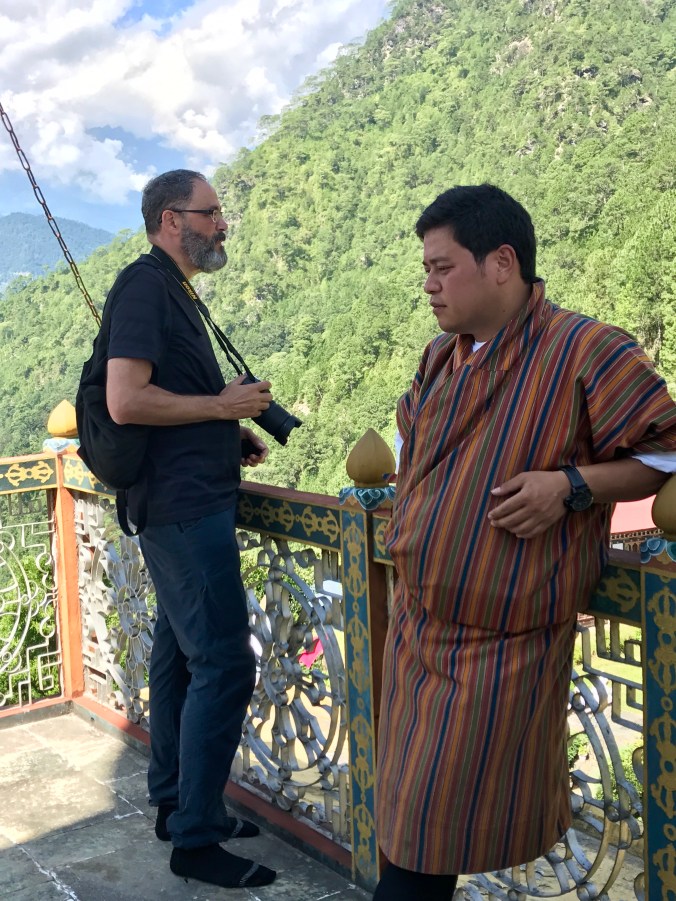
Then it was on to Punakha Dzong.
The final approach is across the Bazam Bridge. Like many structures in Bhutan, it has been rebuilt several times since its construction in the 17th century owing to damage from floods, fires and earthquakes.
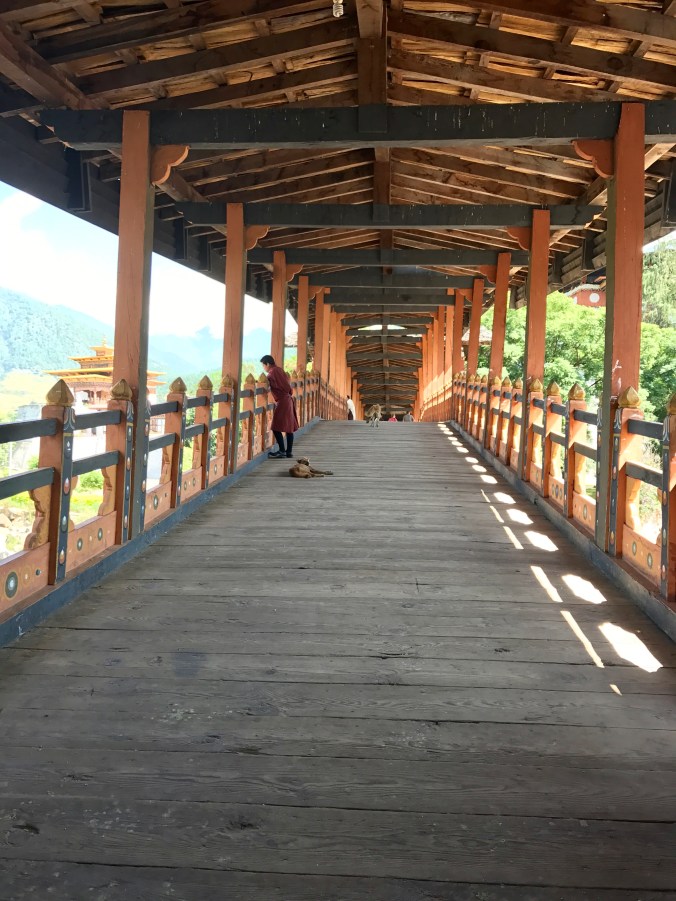
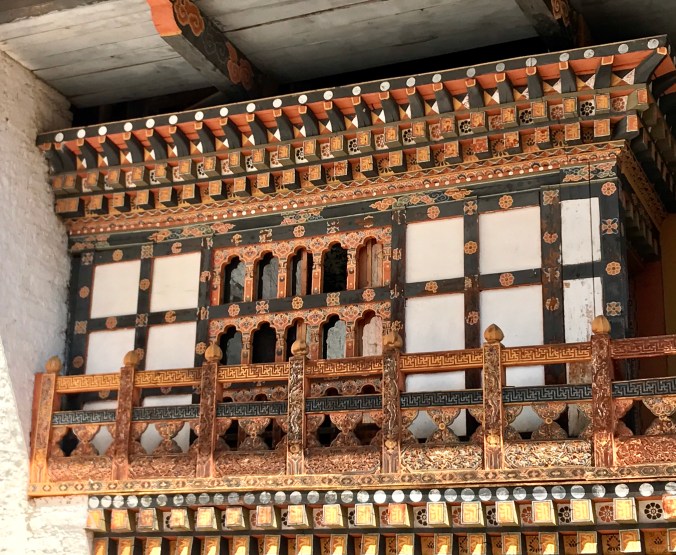
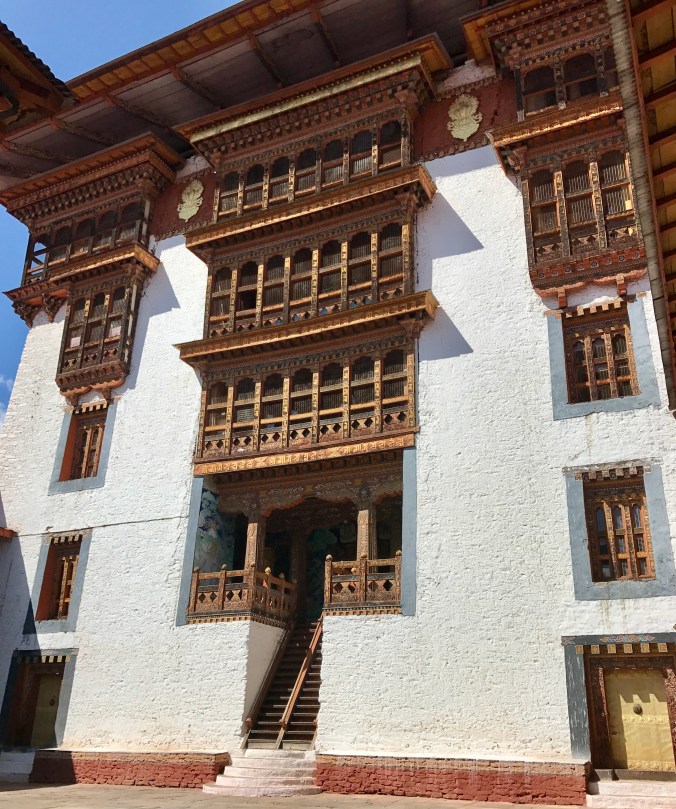
Like other repurposed dzongs (fortresses) this one is divided between a monastery area and an area of administrative offices (it served as the seat of government in Bhutan until the 1950’s). Also like other dzongs, there is a central tower and open squares. This Dzong is unique in that it has three courtyards rather than the usual two. Highly decorative inside and out.
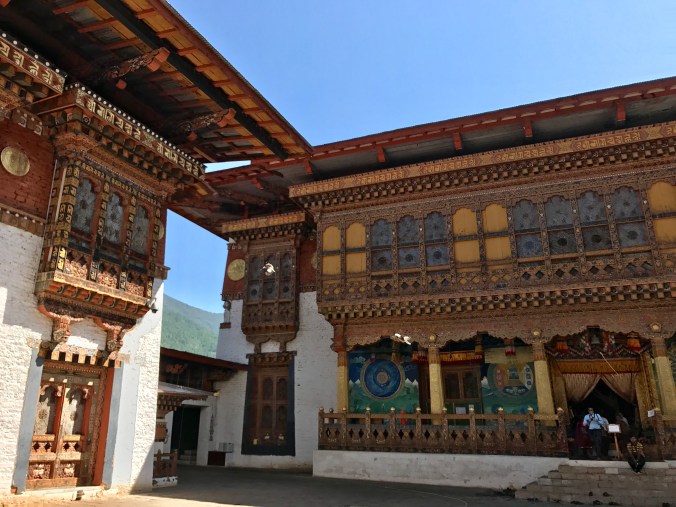
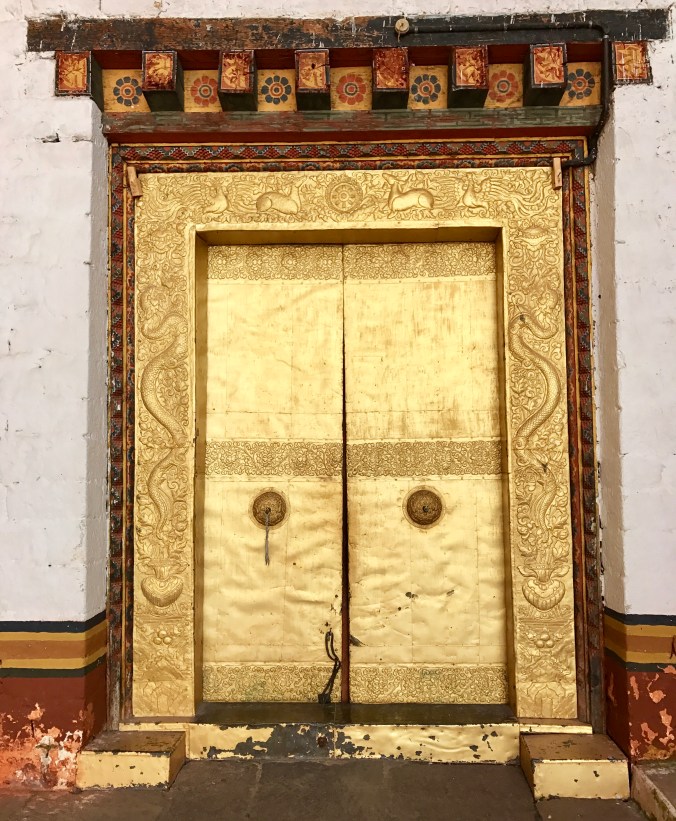
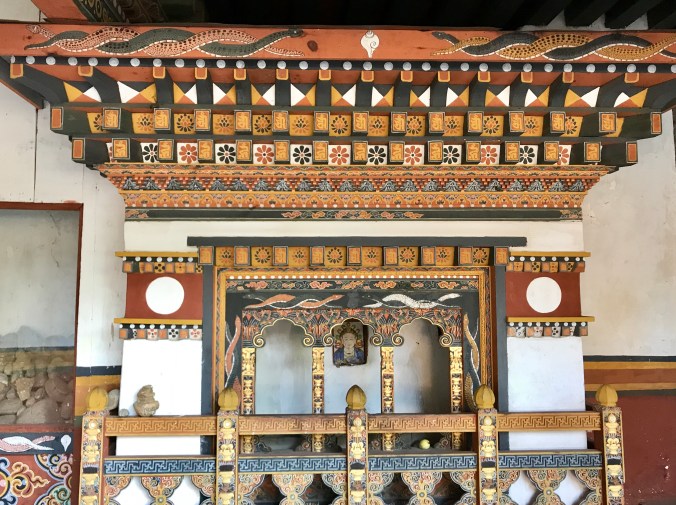

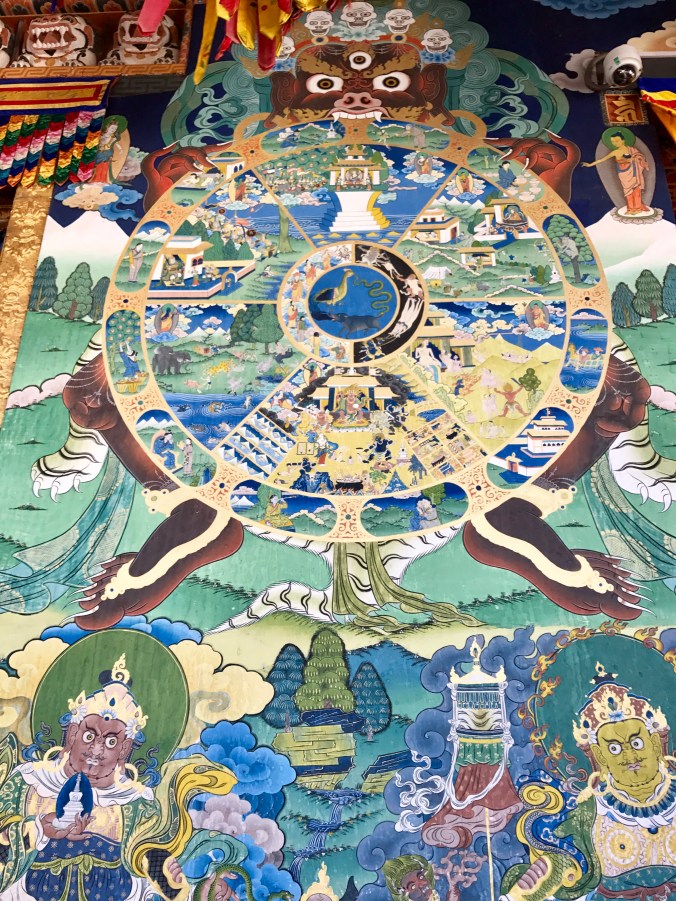 Above, paintings at the entrance to the monastery: the now familiar elephant, and the wheel of life.
In the afternoon we walked through a small village, stopped by the local temple, saw a college for monks and finished the day at a nunnery just outside of Punakha.

These dogs seemed to be kissing each other, not the form of greeting I’m used to seeing. 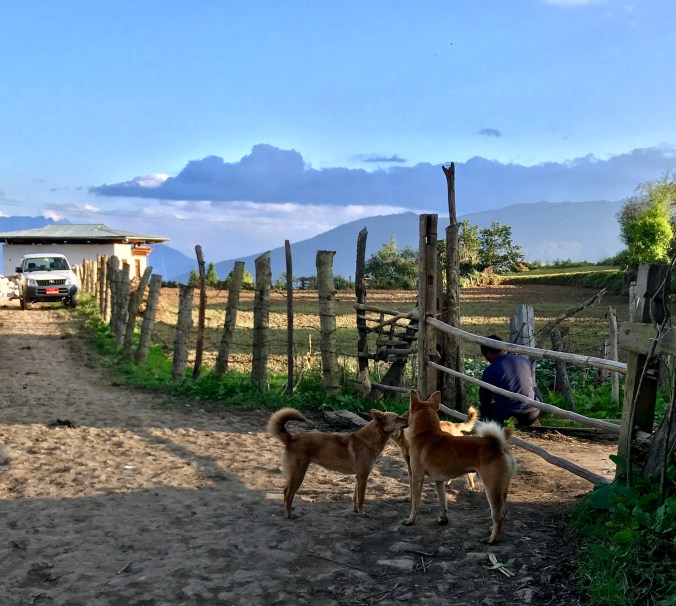

In the villages people live in small houses passed down in their families. In the cities (Thimphu, Paro) they live in rental apartments.
Below, walking to the local temple.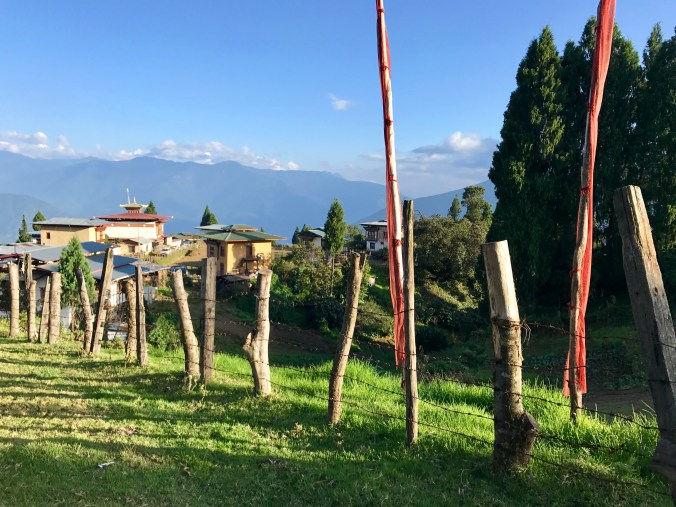
Everywhere, cows.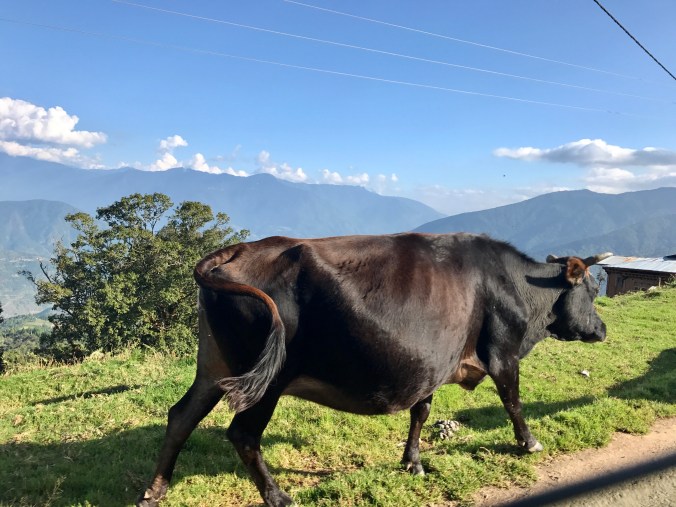
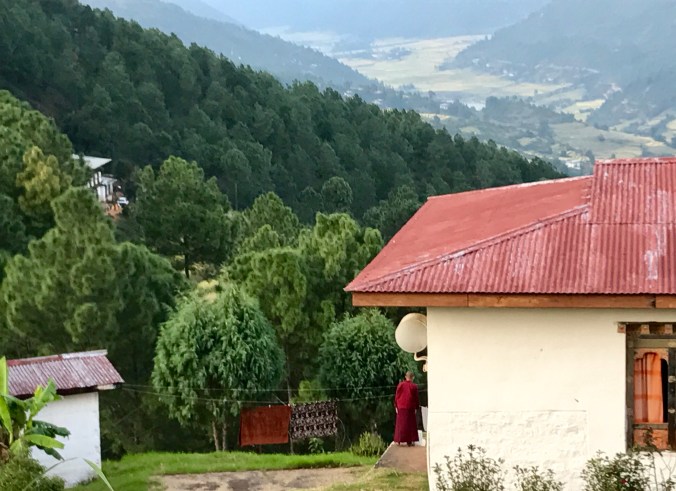
Monks’ robes drying on the line.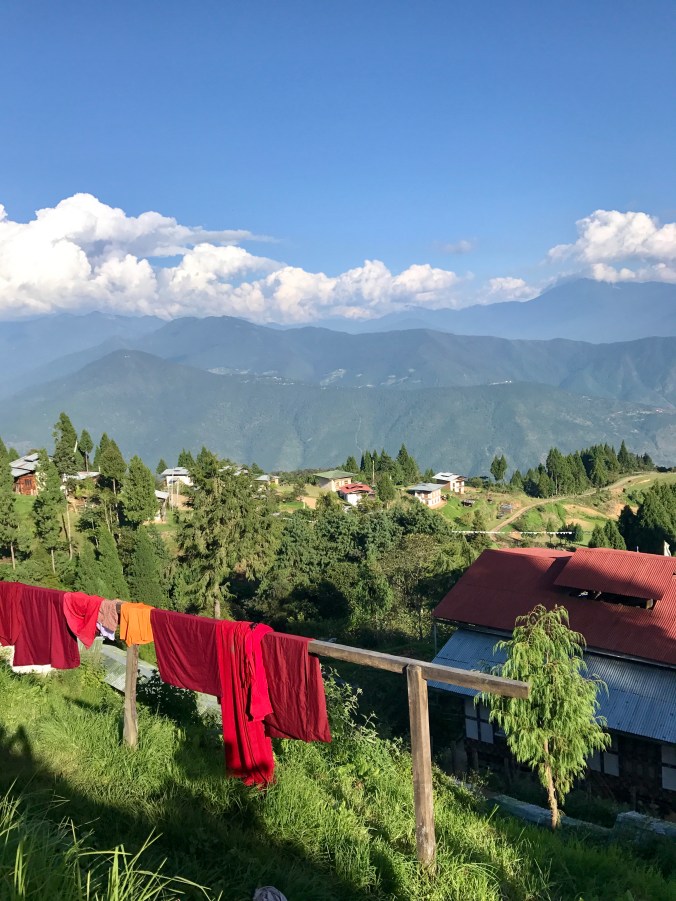
A field of white flags in memory of the dead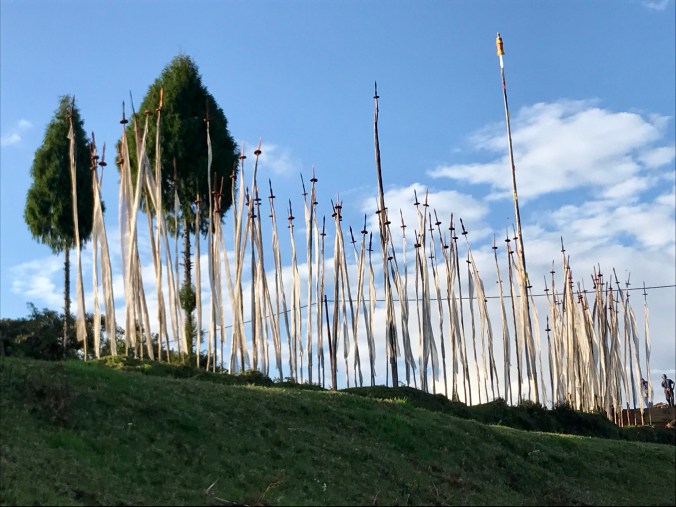
The nunnery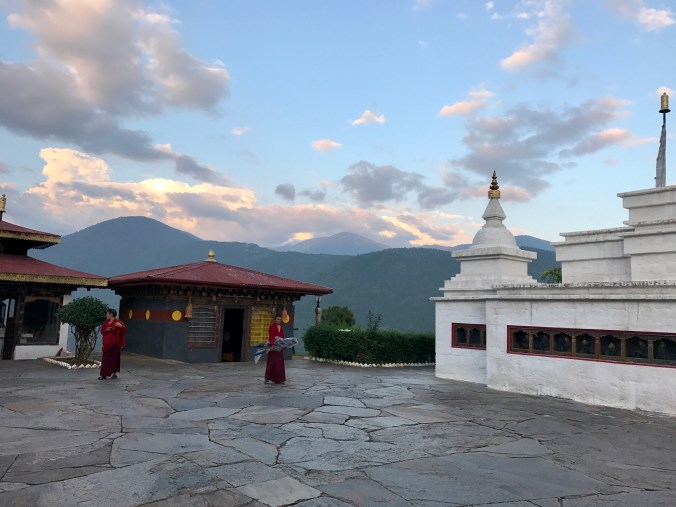
 ~~~~~~~~~~~~~~~~~~~~~~~~~~~~~~~~~~~~
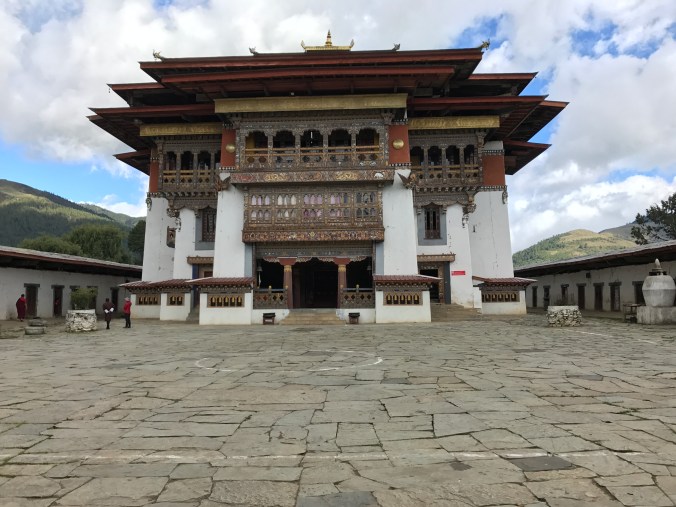
We started the day with a hike to the Gangte Monastery. This monastery was founded by the reincarnation of a 15th century monk (long story) who is regarded by the Bhutanese as the “second Buddha”. His statue appears in many temples here.
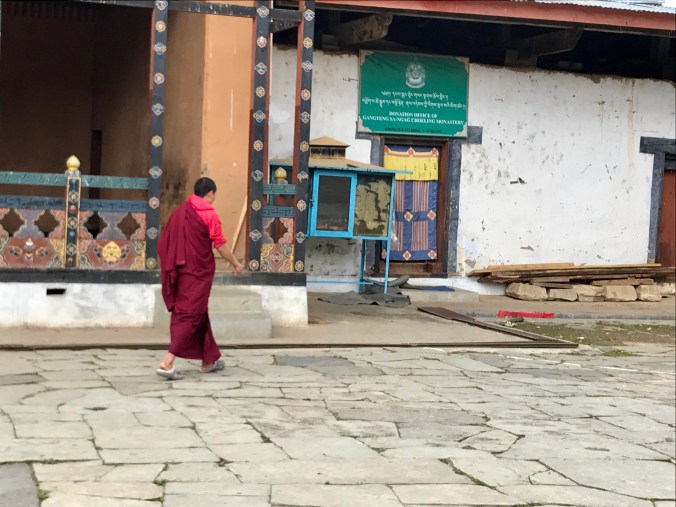
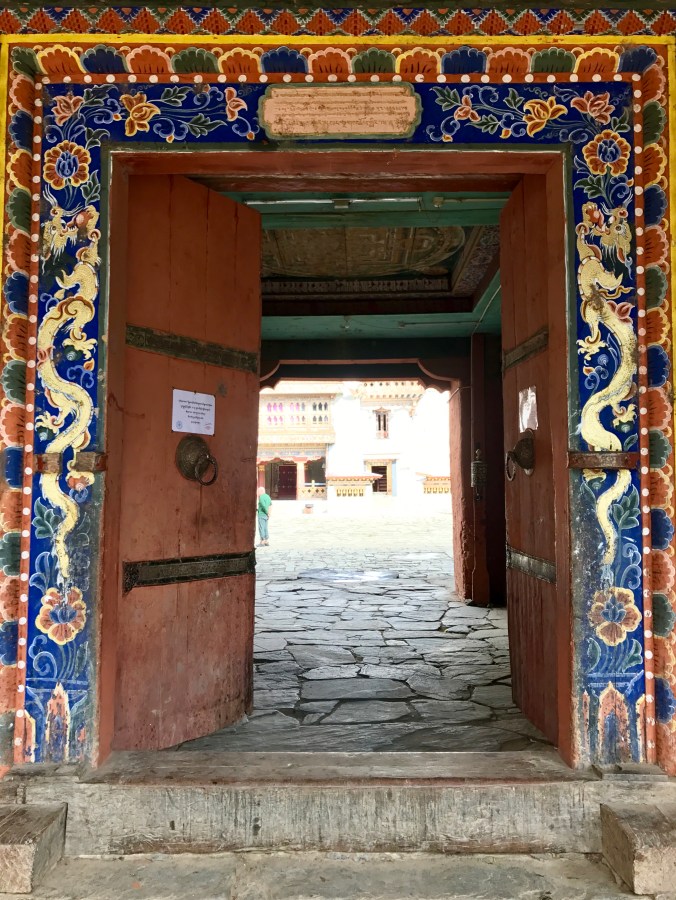
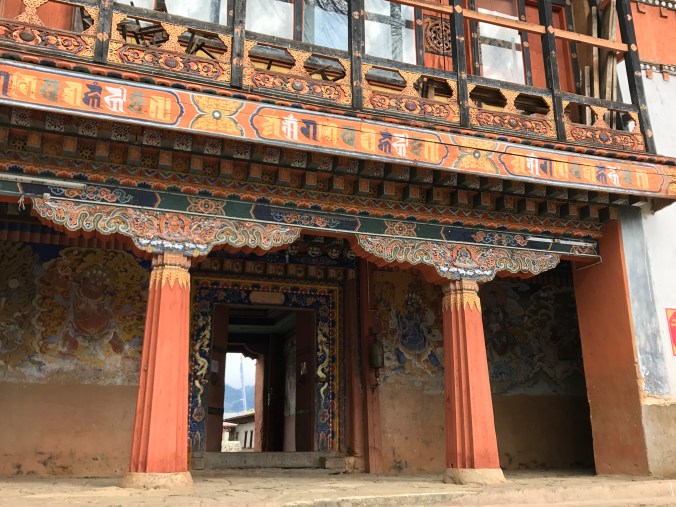
Along the way, we passed through rice fields at various stages of harvest.
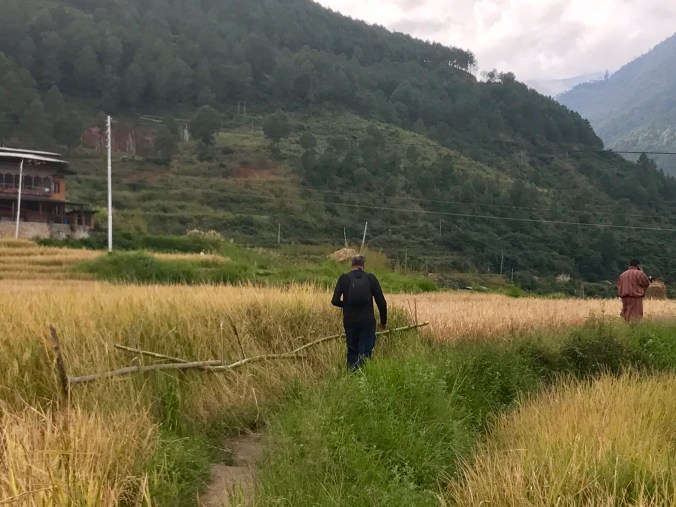
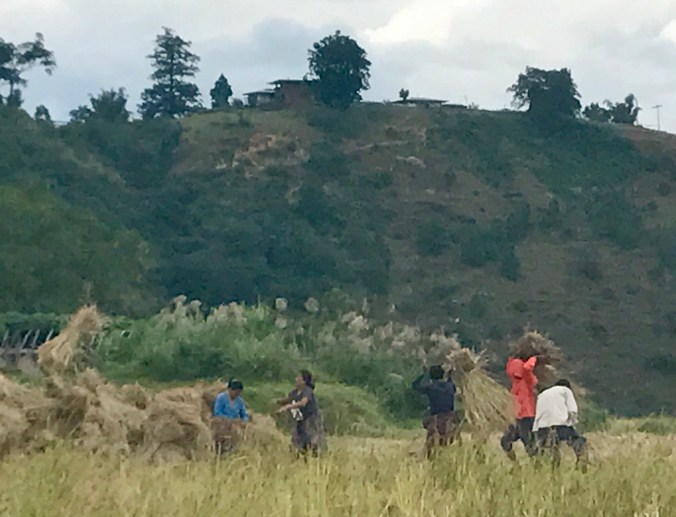
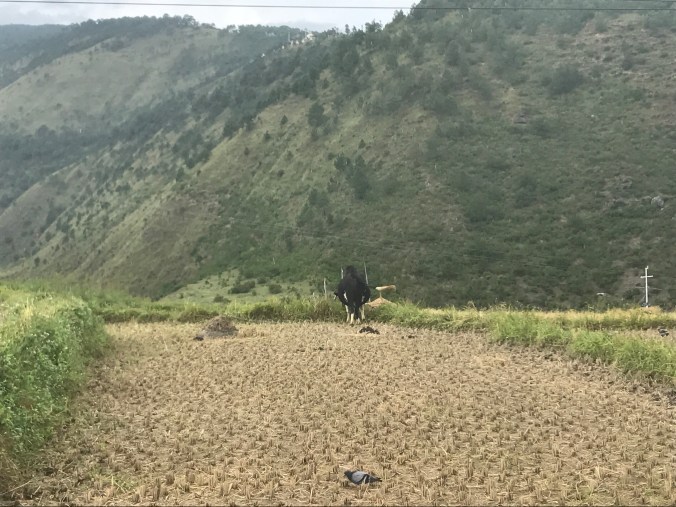
We stopped on our way to lunch to sit in a field and admire the view of the valley, keeping a respectful distance from a recumbent yak. Here we all are (that’s the yak behind us).
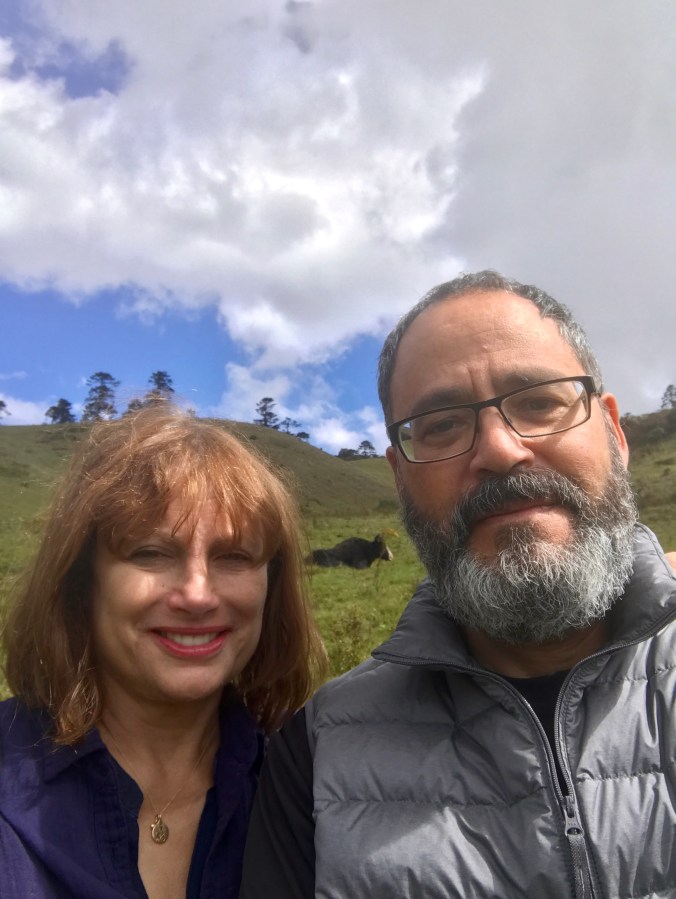
Here’s the view.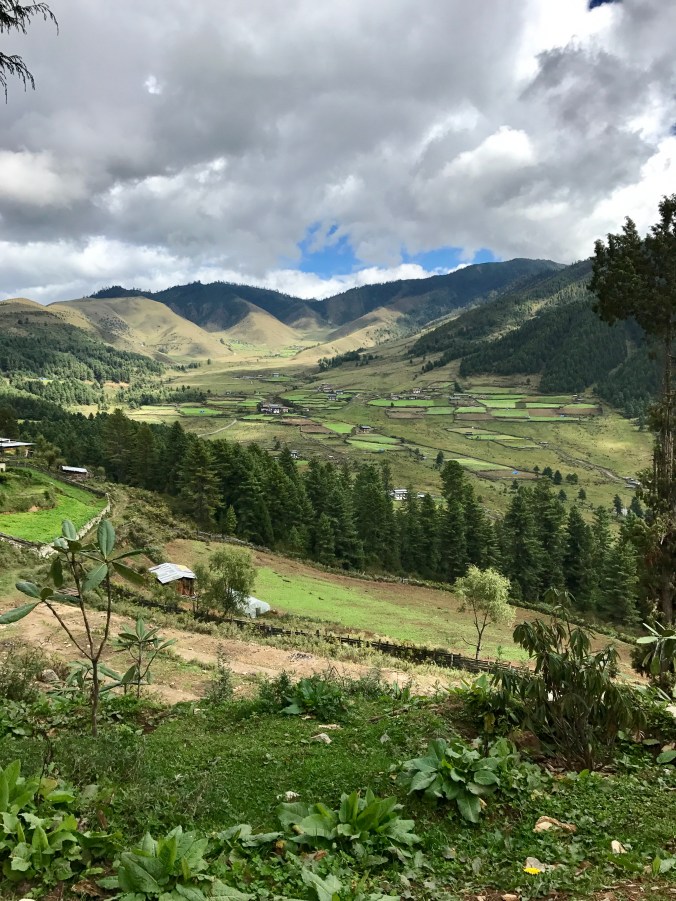
The view from our lunch stop 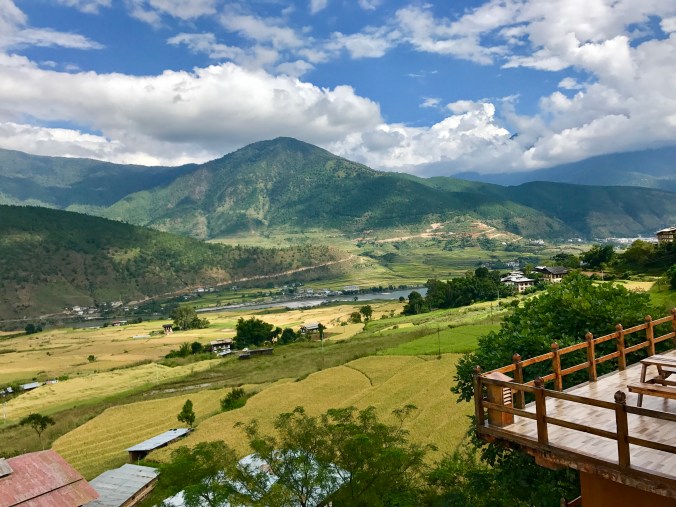
After lunch we hiked to the Chimi Lhakhang monastery, also known as the “Fertility Temple”.
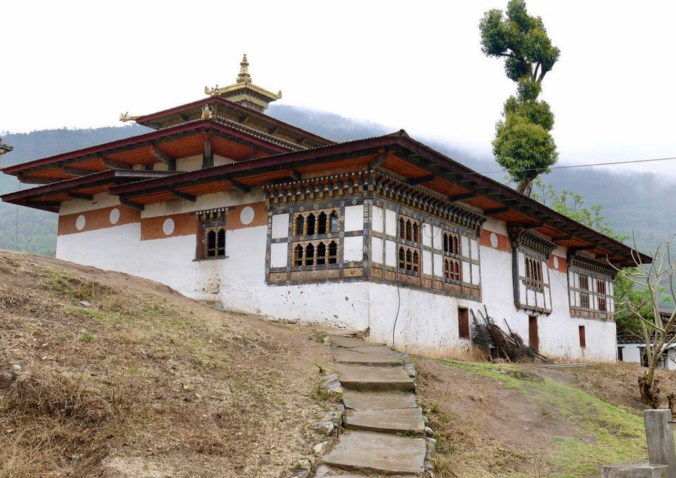
There’s no way around this so I’ll just say it: the temple, and especially the shops in the surrounding area, feature penises of every size and material, some purely decorative, others engineered for various practical purposes (penis spatulas, penis paper towel holders, that sort of thing).

But back to the temple.
Women and couples come here for rituals that will help them become pregnant. Families bring newborn babies to be blessed. When we were there we saw two families arrive with their babies, carrying bags filled with food, wine and other gifts for the Temple gods.
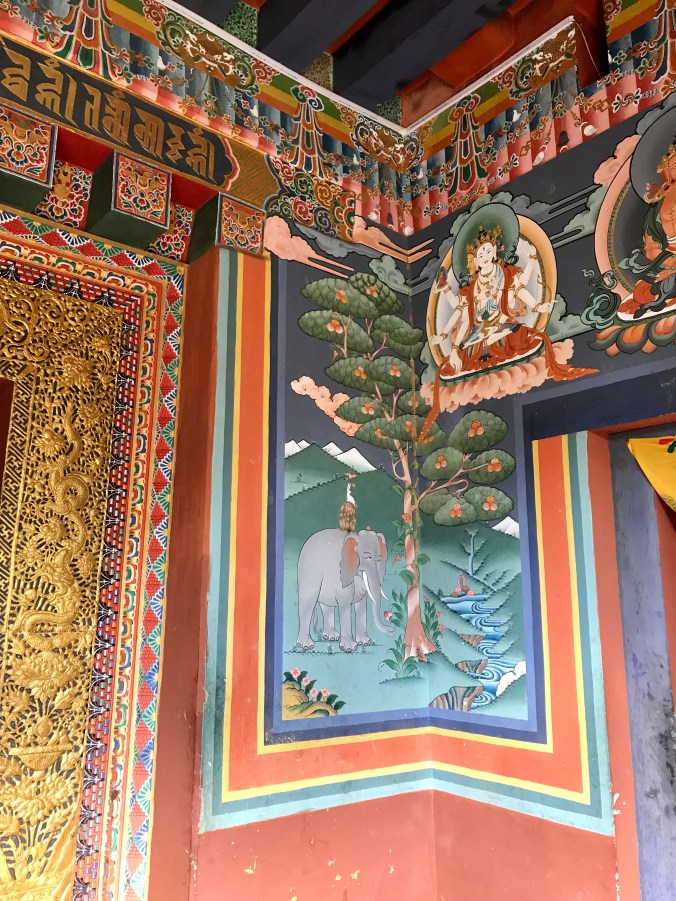
Today we learned that some of the paintings featured at the entrance to monasteries and dzongs (fortresses) are the same in every case. Artists replicate these images, all of which are associated with particular themes or stories. The wheel of life, for example. And this image, which we saw everywhere:
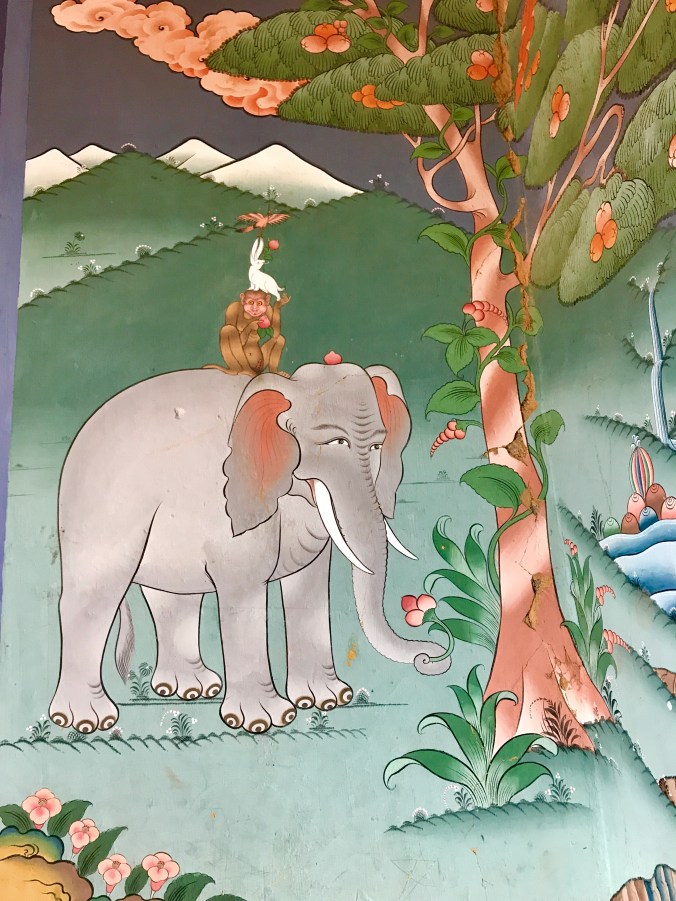
Several interpretations here, but the short and simple one is about all creatures living in harmony. The elephant supports the monkey, the monkey supports the rabbit, the bird sits on top of them all.
~~~~~~~~~~~~~~~~~~~~~~~~~~~~~~~~~~~~~
 Journey with Phyllis and Jay